
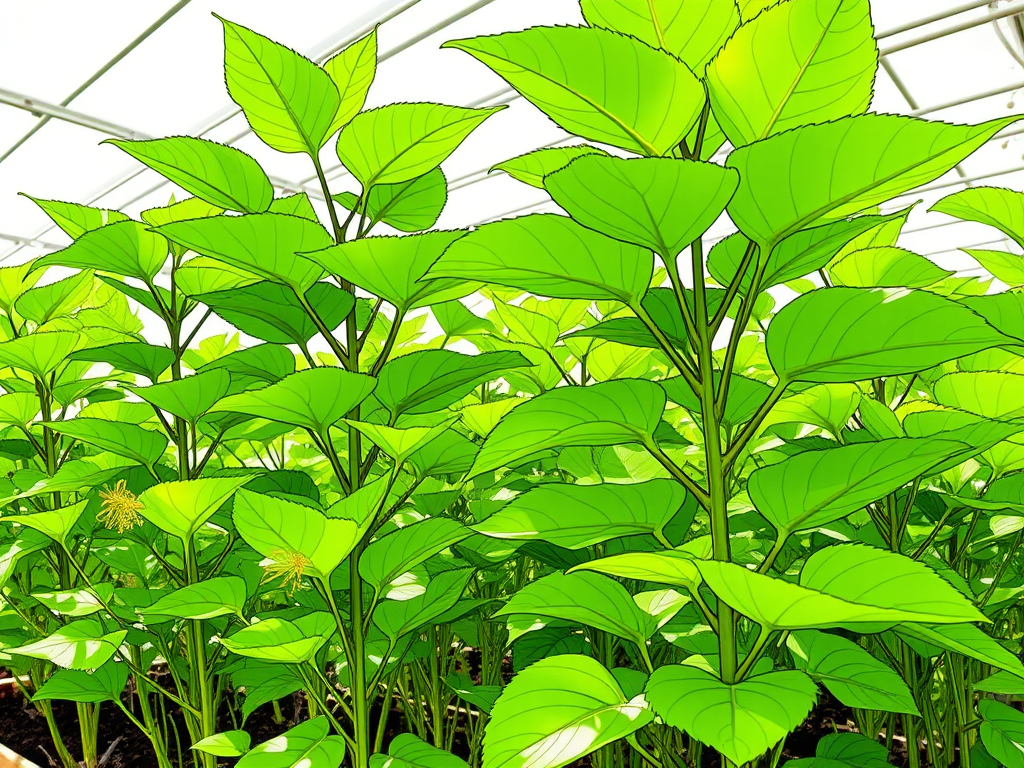
A greenhouse study by Mazibuko et al., published in Crops, examined the effects of rice husk biocharBiochar is a carbon-rich material created from biomass decomposition in low-oxygen conditions. It has important applications in environmental remediation, soil improvement, agriculture, carbon sequestration, energy storage, and sustainable materials, promoting efficiency and reducing waste in various contexts while addressing climate change challenges. More (RHB) on the growth, water stress response, and post-stress recovery of Hibiscus sabdariffa in Malawi. The results showed that biochar increased plant height by 16.5%, stem thickness by 12%, and total leaf area by 12.9%. Additionally, biochar-treated plants demonstrated better recovery after drought stress.
The study assessed H. sabdariffa grown in soil with and without 20% RHB amendment. Water stress significantly reduced all growth parameters (p < 0.05) except for total leaf area and average leaf area per plant. However, under drought conditions, biochar-treated plants remained taller (p < 0.05) and maintained higher specific leaf area, suggesting a positive effect on stress resilience.
Post-stress recovery analysis revealed that plants grown in biochar-amended soil fully regained height and biomassBiomass is a complex biological organic or non-organic solid product derived from living or recently living organism and available naturally. Various types of wastes such as animal manure, waste paper, sludge and many industrial wastes are also treated as biomass because like natural biomass these More, with partial recovery of root collar diameter and compensatory increases in total and average leaf area. This suggests biochar enhances plant resilience by improving soil water retention and nutrient availability.
These findings highlight biochar’s potential as a sustainable soil amendmentA soil amendment is any material added to the soil to enhance its physical or chemical properties, improving its suitability for plant growth. Biochar is considered a soil amendment as it can improve soil structure, water retention, nutrient availability, and microbial activity. More for improving growth and drought resistance in underutilized crops like H. sabdariffa, which is important for food security and climate adaptation efforts in regions like Malawi.
Source : Mazibuko, D. M., Maskey, S., Kurashina, K., Okazawa, H., Oshima, H., Kato, T., & Kikuno, H. (2025). Effects of biochar on growth, response to water stress, and post-stress recovery in underutilized vegetable Hibiscus sabdariffa from Malawi. Crops, 5(13).





Leave a Reply