
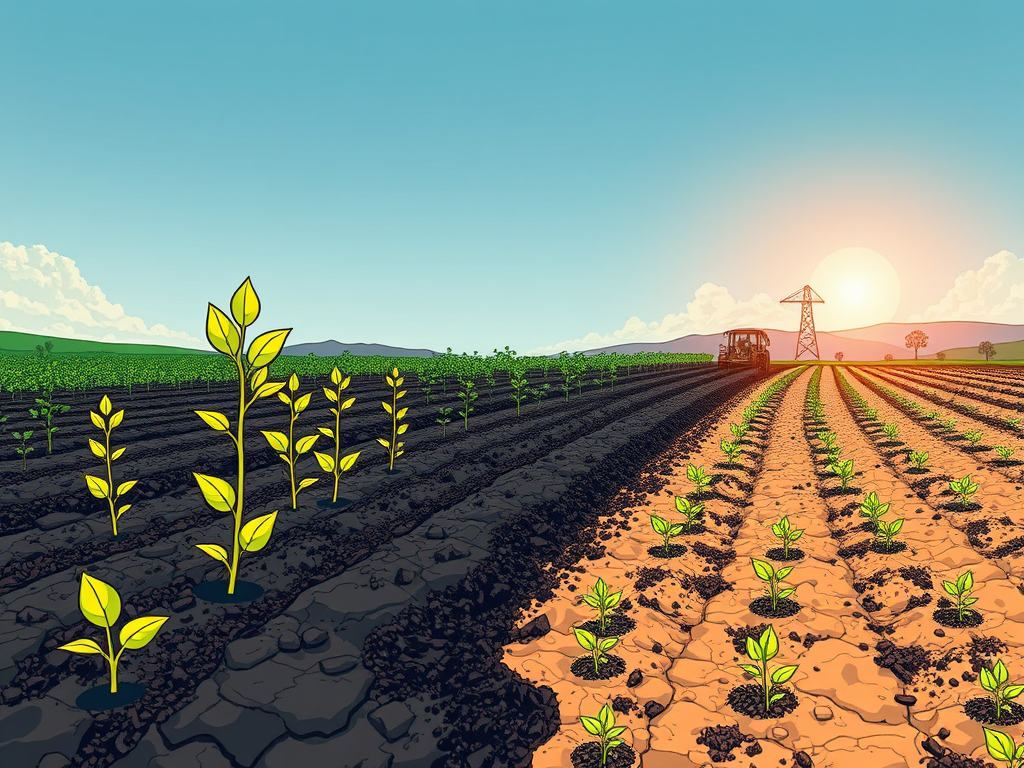
In the International Journal of Organic Agricultural Research & Development, Yetunde Bunmi Oyeyiola and colleagues explored a promising strategy for revitalizing farmlands degraded by the widespread use of agrochemicals. Their research delves into how pretreating atrazine-contaminated soil with different types of sawdust-based biocharBiochar is a carbon-rich material created from biomass decomposition in low-oxygen conditions. It has important applications in environmental remediation, soil improvement, agriculture, carbon sequestration, energy storage, and sustainable materials, promoting efficiency and reducing waste in various contexts while addressing climate change challenges. More influences the presence of essential nutrients and potentially harmful heavy metals. Using energy-dispersive X-ray (EDX) spectroscopy, the team provided a detailed elemental characterization, offering valuable insights for developing sustainable soil management practices in regions facing similar challenges.
The escalating issue of farmland degradation due to intensive herbicide application necessitates effective remediation strategies. This study focused on atrazine, a commonly used broad-spectrum herbicide in Africa, and investigated the impact of biochar amendment on soil composition. The researchers factorially combined atrazine treatment (at a rate of 2.5 kg active ingredient per hectare) with four distinct sawdust-based biochars under controlled screenhouse conditions. These biochars included sawdust pyrolyzed with poultry manure at 350°C (SD+PM@350) and 450°C (SD+PM@450), as well as sole sawdust biochar pyrolyzed at the same temperatures (SD-PM@350 and SD-PM@450). The elemental composition of the treated soil samples was then meticulously analyzed using EDX spectroscopy to determine the fate of organic carbon, heavy metals, and crucial macro- and micronutrientsThese are essential nutrients that plants need in small amounts, kind of like vitamins for humans. They include things like iron, zinc, and copper. Biochar can help hold onto these micronutrients in the soil, making them more available to plants. More.
One of the significant findings of this research highlights the effectiveness of specific biochar types in mitigating the presence of a potentially toxic heavy metal: cobalt. As illustrated in Figure 4 of their study, pretreating atrazine-treated soil with sawdust biochar co-pyrolyzed with poultry manure at 450°C (SD+PM@450) resulted in a substantial decrease in total cobalt content compared to soil treated with the herbicide alone. Specifically, cobalt levels plummeted from approximately 450 mg/kg in the herbicide-only treatment to below 200 mg/kg with the application of SD+PM@450 biochar at a rate of 10 tons per hectare. This represents a reduction of over 55%, suggesting a strong potential for this particular biochar type to immobilize or reduce the bioavailability of cobalt in contaminated soils.
Interestingly, the study also examined the influence of different pyrolysisPyrolysis is a thermochemical process that converts waste biomass into bio-char, bio-oil, and pyro-gas. It offers significant advantages in waste valorization, turning low-value materials into economically valuable resources. Its versatility allows for tailored products based on operational conditions, presenting itself as a cost-effective and efficient More temperatures and the inclusion of poultry manure during biochar production. The results indicate that the biochar produced at a higher temperature (450°C) in combination with poultry manure (SD+PM@450) exhibited a more pronounced effect on cobalt reduction compared to the other biochar types tested. This suggests that the specific properties of the biochar, influenced by both the feedstockFeedstock refers to the raw organic material used to produce biochar. This can include a wide range of materials, such as wood chips, agricultural residues, and animal manure. More and the pyrolysis conditionsThe conditions under which pyrolysis takes place, such as temperature, heating rate, and residence time, can significantly affect the properties of the biochar produced. More, play a critical role in its ability to interact with and retain heavy metals in the soil.
While the paper primarily focuses on the elemental characterization using EDX spectroscopy, the implications of these findings extend to broader soil health and agricultural sustainability. The reduction in potentially harmful heavy metals like cobalt, coupled with the potential influence of biochar on essential nutrient availability (which is also explored in the full paper), underscores the promise of biochar as a soil amendmentA soil amendment is any material added to the soil to enhance its physical or chemical properties, improving its suitability for plant growth. Biochar is considered a soil amendment as it can improve soil structure, water retention, nutrient availability, and microbial activity. More. Utilizing agricultural waste products like sawdust to create these beneficial materials not only offers a sustainable waste management solution but also presents a pathway towards remediating degraded farmlands and promoting healthier agricultural ecosystems. Further research can build upon these findings to optimize biochar production methods and application rates for specific soil contaminants and environmental conditions.
Source: Oyeyiola, Y. B., Egbinade, A. E., Begum, A. K., Olayioye, A., & Opeolu, B. O. (2025). Elemental characterization of atrazine treated soil pretreated with sawdust-based biochar types using Energy Dispersive X-ray (EDX) spectroscopy. International Journal of Organic Agricultural Research & Development, 20(1), 1-14.


Leave a Reply