
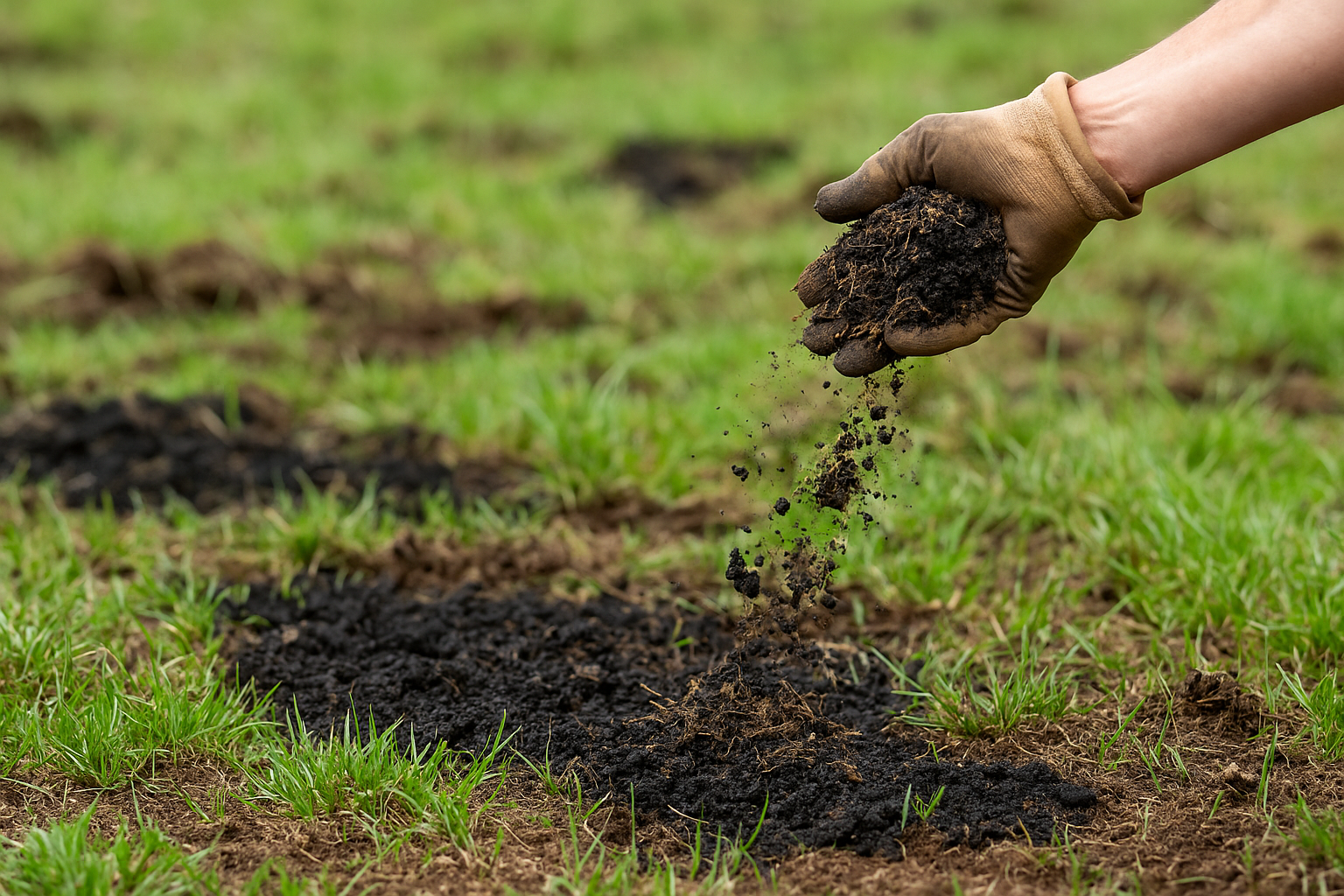
On their 40-hectare farm near Welshpool, Mick and Sandy Jones have quietly implemented a system that has transformed their soil health and farm resilience — all without relying on synthetic fertilisers or cattle concentrates. Over the past 15 years, they’ve managed to produce all feed on-farm for their 30-cow suckler herd, but a pivotal shift came in 2019 when they began enriching their farmyard manure (FYM) with biocharBiochar is a carbon-rich material created from biomass decomposition in low-oxygen conditions. It has important applications in environmental remediation, soil improvement, agriculture, carbon sequestration, energy storage, and sustainable materials, promoting efficiency and reducing waste in various contexts while addressing climate change challenges. More. The results have been measurable and significant.
Accidental Innovation with Biochar
The couple began producing biochar by accident — the byproduct of a malfunction during the development of a biochar combustion grate at their farm-based engineering business. Rather than discard it, Mick incorporated it into their FYM, using it to absorb urea in cattle bedding and reduce ammonia emissions. Since then, biochar has become a core part of their farming system, contributing to both soil and livestock health.
Quantifiable Improvements in Soil Health
Over four years, regular applications of biochar-enriched FYM have resulted in clear improvements in soil fertility:
- Soil pHpH is a measure of how acidic or alkaline a substance is. A pH of 7 is neutral, while lower pH values indicate acidity and higher values indicate alkalinity. Biochars are normally alkaline and can influence soil pH, often increasing it, which can be beneficial More increased from 6.6 to 7.1.
- Organic carbon rose by 0.48% annually, reaching 7.10%.
- Available phosphate climbed by 66%, now at 219kg/ha.
- Total Exchange Capacity (TEC) — a key indicator of soil fertility — increased by 68%.
According to independent analysis, these figures place the farm’s soil health metrics at the high end of regenerative systems. Enhanced organic matter and nutrient availability have improved soil structure, water retention, and biological activity.
Silage Yields and Clover Resilience
Before biochar use, the farm typically harvested three silage cuts annually. That has now increased to four, with larger yields, thanks to improved nutrient cycling and better clover performance. Clover now begins growing a month earlier in spring and persists longer into autumn, even under extreme weather conditions. This extended growth window provides more forage and improves nitrogen fixationNitrogen is a crucial nutrient for plant growth, but plants can’t directly absorb it from the air. Nitrogen fixation is a process where certain bacteria convert atmospheric nitrogen into a form that plants can use. Biochar can provide a home for these nitrogen-fixing bacteria, enhancing More, reducing the need for external inputs.
Healthier Cattle, Lower Vet Bills
Biochar also plays a role in animal welfare. When used as part of winter bedding mixed with tree fines, it reduces ammonia levels and supports beneficial microbial life. This change has led to significantly lower incidence and severity of calf scour. Over the past four years, vet costs have halved, and antibiotic use has declined markedly — the highest single dose this season being just 2ml per calf.
Cattle health has visibly improved, with more consistent energy levels even during the winter months. Weight gains from calving to finish now average 1.2–1.3kg per day — achieved entirely on haylage, without concentrates.
A Cost-Effective System
While biochar costs around £750 per tonne dry weight, the Joneses use it sparingly — just 5–10% of the FYM mixture — resulting in an annual expense of about £6,000. Yet, with no bills for fertiliser, lime, or concentrate feed, the system remains cost-effective. They’re exploring on-farm production using de-watered slurry, which could cut costs further to around £200 per tonne.
Regenerative Results
The integration of biochar into their farming system has enabled Mick and Sandy to create a more balanced, sustainable approach. “We now see soil not as something to be managed, but as something to be supported and nurtured,” Mick says. The gains in soil function, feed production, and animal health have made their operation not only more self-reliant but more in tune with nature.
READ MORE: How topping up manure with biochar has improved soil health



Leave a Reply