
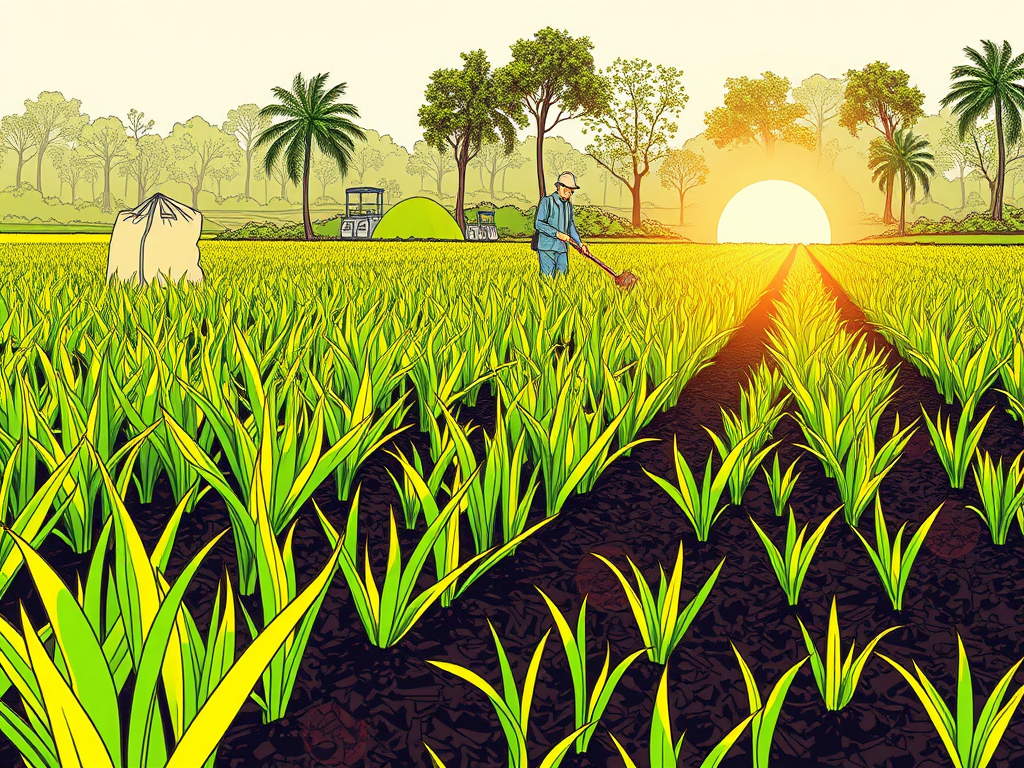
In a recent study published in Soil Systems, Kwadwo Owusu Boakye, and colleagues investigated the use of biocharBiochar is a carbon-rich material created from biomass decomposition in low-oxygen conditions. It has important applications in environmental remediation, soil improvement, agriculture, carbon sequestration, energy storage, and sustainable materials, promoting efficiency and reducing waste in various contexts while addressing climate change challenges. More to remediate heavy metal-contaminated paddy soil in Nobewam, Ghana. Biochar, a carbon-rich material produced from heating biomassBiomass is a complex biological organic or non-organic solid product derived from living or recently living organism and available naturally. Various types of wastes such as animal manure, waste paper, sludge and many industrial wastes are also treated as biomass because like natural biomass these More in low-oxygen conditions, was evaluated for its effectiveness in improving soil health and reducing heavy metal pollution.
The research revealed that biochar amendments led to a notable enhancement in soil quality. Specifically, soil pHpH is a measure of how acidic or alkaline a substance is. A pH of 7 is neutral, while lower pH values indicate acidity and higher values indicate alkalinity. Biochars are normally alkaline and can influence soil pH, often increasing it, which can be beneficial More increased by 1.01 to 1.20 units, indicating reduced acidity. Available phosphorus concentrations rose by 6.76 to 13.05 mg/kg of soil, and total nitrogen and organic carbon concentrations increased from 0.02% to 0.12%. The study also observed variations in electrical conductivity and effective cation exchange capacity across the treated soils.
The researchers used atomic absorption spectroscopy to analyze the concentrations of potentially toxic metals, including arsenic, cadmium, copper, mercury, lead, and zinc, in the paddy soils and rice. They found significant differences in metal concentrations among the soil samples. Notably, arsenic and lead levels in all soil samples exceeded the Canadian Council of Ministers of the Environment soil quality guidelines for agricultural soils, with untreated soils showing the highest contamination. Cadmium posed a high ecological risk, while arsenic and mercury contamination were primarily observed in untreated soils.
Among the biochar treatments, rice husk and its combinations, especially with cocoa pod ashAsh is the non-combustible inorganic residue that remains after organic matter, like wood or biomass, is completely burned. It consists mainly of minerals and is different from biochar, which is produced through incomplete combustion. Ash Ash is the residue that remains after the complete More, demonstrated the greatest effectiveness in reducing metal concentrations in the soils. Furthermore, the consumption of rice grown in biochar-treated soils presented lower potential non-carcinogenic human health risks for all metals compared to rice from untreated soils. The study suggests that biochar is a promising tool for remediating heavy metal-contaminated paddy soils, particularly in tropical climates.
SOURCE: Boakye, K.O.; Dodd, M.; Asante, M.D.; Logah, V.; Darko, G. Biochar Amendment in Remediation of Heavy Metals in Paddy Soil: A Case Study in Nobewam, Ghana. Soil Syst. 2025, 9, 38.




Leave a Reply