
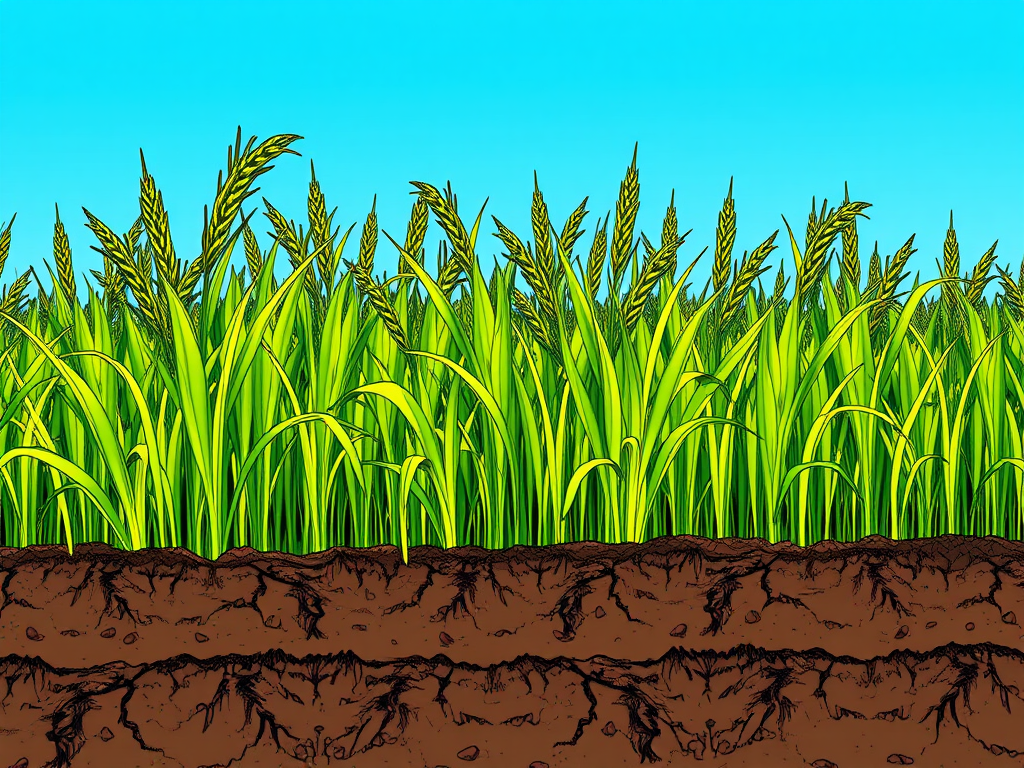
Growing demand for sustainable energy has led to increased interest in perennial energy crops like Miscanthus giganteus (M. giganteus), particularly for cultivation on marginal degraded lands that are unsuitable for traditional agriculture. These lands often pose challenges for plant growth and biomassBiomass is a complex biological organic or non-organic solid product derived from living or recently living organism and available naturally. Various types of wastes such as animal manure, waste paper, sludge and many industrial wastes are also treated as biomass because like natural biomass these More production. A multi-year field experiment, published in Industrial Crops & Products, investigated the impact of various organic amendments—biochar, sewage sludge, hemicellulose waste, and digestate—on M. giganteus biomass production and soil health bioindicators. The study revealed that biocharBiochar is a carbon-rich material created from biomass decomposition in low-oxygen conditions. It has important applications in environmental remediation, soil improvement, agriculture, carbon sequestration, energy storage, and sustainable materials, promoting efficiency and reducing waste in various contexts while addressing climate change challenges. More significantly enhanced crop yield and positively influenced the soil’s biological composition.
The research, conducted over three growing seasons, demonstrated that the biochar amendments notably increased M. giganteus biomass production. By the third growing season (November 2023), fresh biomass yield in biochar-treated plots saw a remarkable increase of up to 46% compared to the control group (from 27.00±4.10 t/ha to 41.00±2.94 t/ha). Dry biomass followed a similar trend, with biochar (BD2, 10% dosage) significantly outperforming the control with a yield of 19.40±2.15 t/ha. Even in the subsequent brown harvest (March 2024), biochar continued to show positive effects, achieving the highest dry weight of 22.70±1.07 t/ha. This sustained increase in yield highlights biochar’s long-term benefits on biomass production.
Beyond yield, the study found that the organic amendments, particularly biochar, positively impacted soil bioindicators. The composition of the soil nematode community was altered, leading to an increase in beneficial trophic groups such as omnivores and predatory nematodes, while reducing plant-parasitic nematodes. This shift is crucial as nematodes are vital bioindicators of soil health, playing key roles in nutrient cycling and regulating soil-borne pathogens.
Biochar, along with sewage sludge and digestate, also had a positive effect on key soil microbial groups, especially bacteria. Although biochar’s incorporation reduced overall bacterial abundance, it significantly decreased fungal populations, resulting in a lower fungi-to-bacteria ratio. This indicated a dominance of bacteria in biochar-amended soil, which correlated with an increase in fungivores within the nematode community structure. The prevalence of bacteria suggests increased availability of easily decomposable organic matter.
The study emphasizes that these organic amendments improve soil health and resilience, contributing to increased biomass production, more efficient nutrient cycling, and organic matter turnover. The findings suggest that integrating organic waste-derived amendments into M. giganteus cropping systems on marginal degraded soils is a sustainable strategy for enhancing both crop performance and soil health. Future research will focus on long-term monitoring to further understand the impact of these amendments on plant development, biomass chemical composition, soil microbial diversity, and carbon sequestration.
Source: Stefanovska, T., Pidlisnyuk, V., Skwiercz, A., Newton, R. A., Zhukov, O., Ust’ak, S., Szczech, M., & Kowalska, B. (2025). Field scale evaluation of the influence of organic amendments on Miscanthus giganteus biomass production and soil bioindicators in the marginal degraded land. Industrial Crops & Products, 232, 121281.





Leave a Reply