
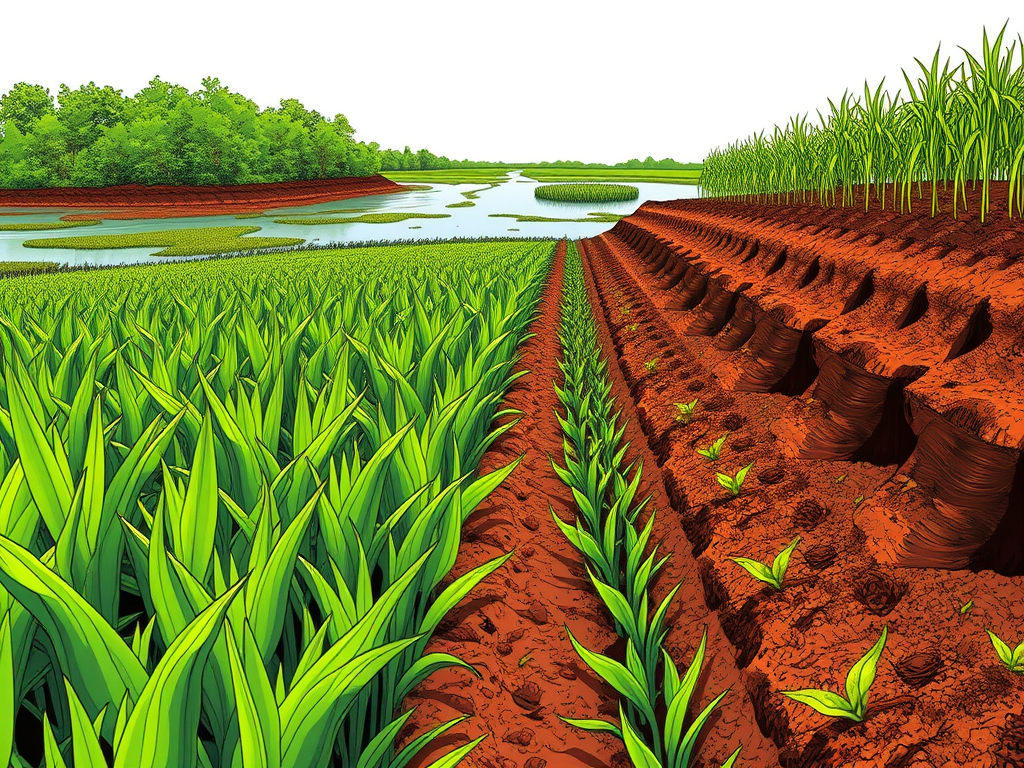
In a recent study published in Biology, Yuan Zhou et al. explored an innovative approach to soil remediation using biocharBiochar is a carbon-rich material created from biomass decomposition in low-oxygen conditions. It has important applications in environmental remediation, soil improvement, agriculture, carbon sequestration, energy storage, and sustainable materials, promoting efficiency and reducing waste in various contexts while addressing climate change challenges. More derived from sewage sludge and maize straw. The research highlights the potential of this biochar to address heavy metal contamination, specifically lead (Pb), in constructed wetlands. The study emphasizes the pressing need for effective and sustainable methods to manage sewage sludge and remediate polluted soils.
The authors explain that traditional methods of sewage sludge disposal, such as incineration, landfilling, and land application, have significant drawbacks. Incineration can release harmful pollutants, landfilling poses risks of soil contamination, and land application has limitations in land retention capacity. In contrast, pyrolysisPyrolysis is a thermochemical process that converts waste biomass into bio-char, bio-oil, and pyro-gas. It offers significant advantages in waste valorization, turning low-value materials into economically valuable resources. Its versatility allows for tailored products based on operational conditions, presenting itself as a cost-effective and efficient More, a process of heating materials in the absence of oxygen, has emerged as a promising method for sewage sludge disposal. This process transforms sewage sludge into biochar, a carbon-rich product with the ability to immobilize heavy metals and improve soil properties.
The study focused on producing biochar from a mixture of sewage sludge and maize straw using a co-pyrolysis method. The researchers hypothesized that combining these materials would create a biochar with enhanced properties for soil remediation. Maize straw, rich in inorganic minerals and lignocellulosic compounds, was chosen to complement the sewage sludge and improve the biochar’s effectiveness.
Key findings of the study reveal that the application of sewage sludge and maize straw-based biochar (SMB) significantly improved soil properties. Notably, increasing the dosage of SMB in Pb-contaminated soil elevated soil pHpH is a measure of how acidic or alkaline a substance is. A pH of 7 is neutral, while lower pH values indicate acidity and higher values indicate alkalinity. Biochars are normally alkaline and can influence soil pH, often increasing it, which can be beneficial More from 6.40 to 7.93 and increased cation-exchange capacity (CEC) from 30.59 to 79.03 cmol/kg, a 158% improvement. The biochar also increased soil organic carbon content by 65%. These improvements contribute to the soil’s ability to retain nutrients and immobilize heavy metals like lead.
Furthermore, the application of SMB influenced the soil’s microbial community and the speciation of lead. The biochar enriched Pb-resistant bacteria, which aids in the immobilization process. Over 55 days, the residual fraction of Pb in the soil increased, indicating enhanced stabilization of the heavy metal.
While the study demonstrates the substantial benefits of SMB in soil remediation, it also notes some trade-offs. The application of biochar led to a reduction in available phosphorus and potassium in the soil, and a minor decline (6%) in ryegrass leaf length was observed. However, the authors argue that the long-term benefits of heavy metal immobilization and soil improvement outweigh these minor negative impacts on plant growth.
In conclusion, this research provides valuable insights into using biochar derived from sewage sludge and maize straw for the effective remediation of Pb-contaminated soils. The study highlights the potential of this approach to transform waste materials into a valuable resource for environmental remediation and sustainable agriculture.
Source: Zhou, Y., Nie, X., Zhao, Y., Zhang, L., Cheng, Y., Jiang, C., Zhao, W., Wang, X., & Yang, C. (2025). Application of Biochar on Soil Improvement and Speciation Transformation of Heavy Metal in Constructed Wetland. Biology, 14, 515.




Leave a Reply