
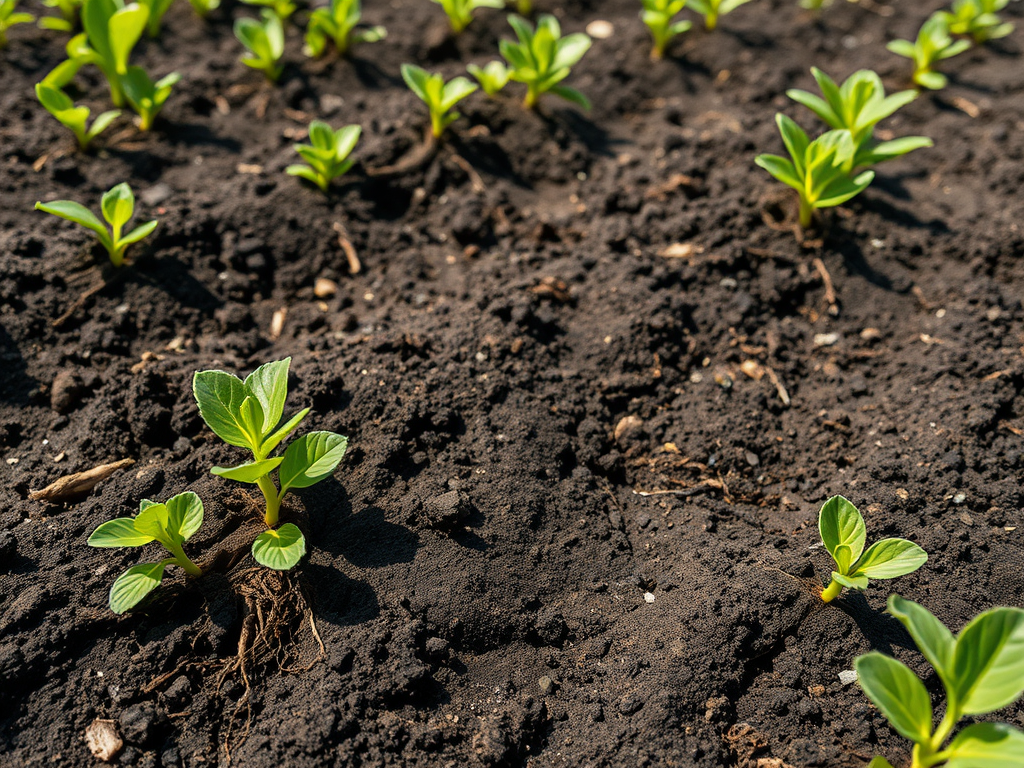
Black soil regions in Northeastern China are among the most fertile agricultural lands globally, but decades of intensive farming have led to significant soil degradation. Traditional solutions like chemical fertilizers often create new environmental problems, while other methods like conservation tillage fail to fully address the loss of organic matter. A promising alternative is biocharBiochar is a carbon-rich material created from biomass decomposition in low-oxygen conditions. It has important applications in environmental remediation, soil improvement, agriculture, carbon sequestration, energy storage, and sustainable materials, promoting efficiency and reducing waste in various contexts while addressing climate change challenges. More. Biochar’s porous structure provides a stable habitat for soil microorganisms and improves soil properties. A new study by Yu Hu, Yan Li, Kangmeng Liu, and their colleagues, published in the journal Biochar, investigates how different application rates of biochar influence the complex relationship between soil microbial communities and dissolved organic matter (DOM), and ultimately, crop productivity
The researchers conducted a six-year field experiment to observe the long-term effects of a single application of biochar at varying rates: a control with no biochar (0 t ha−1), and low (15.75 t ha−1), medium (31.50 t ha−1), and high (47.25 t ha−1) application rates. They utilized advanced techniques like fluorescence excitation-emission matrix-parallel factor analysis (EEM-PARAFAC) and high-throughput sequencing to analyze changes in soil chemistry and microbial populations. Their findings reveal a nuanced relationship between biochar application rate and soil health, with the medium rate of 31.50 t ha−1 showing the most beneficial outcomes.
Biochar application significantly altered the composition of dissolved organic matter (DOM) in the soil. DOM is a crucial indicator of the soil’s microenvironment and directly influences microbial communities and crop yields. The study found that biochar increased the proportion of stable, humic substances and protein-like components in the DOM, enhancing its aromaticity and overall stability. The high dose (47.25 t ha−1) treatment showed a significant increase in protein-like substances by 11.13% compared to the control group during the planting period. This is a key finding, as stable DOM components are essential for long-term carbon sequestration and nutrient cycling within the soil.
The study also provided critical insights into the effects of biochar on microbial communities. The medium application rate of 31.50 t ha−1 notably improved the alpha- and beta-diversity of the soil microbial community. This suggests that a balanced biochar application promotes a more diverse and resilient microbial ecosystem. This medium rate also optimized a co-occurrence network of microbes dominated by Proteobacteria and Acidobacteria, which are vital for DOM transformation and nutrient cycling. In contrast, the high application rate of 47.25 t ha−1 had a negative impact on the stability of these microbial communities, demonstrating that more biochar is not always better. The research found that the medium biochar application rate of 31.50 t ha−1 could effectively promote DOM humification and bacterial diversity.
The research used structural equation modeling (SEM) to connect these observations to agricultural productivity, revealing that biochar indirectly boosted crop yields by positively influencing DOM characteristics and microbial community dynamics. This long-term study, spanning six years, highlights the persistent effects of a single biochar application on the agroecosystem. The findings underscore that a well-calibrated biochar application strategy can enhance soil fertility, improve carbon sequestration, and optimize soil microbial health, providing a scientific foundation for sustainable agricultural management in black soil regions. This research provides valuable, practical guidance for farmers and policymakers on how to maximize the benefits of biochar while mitigating potential ecological risks.
Source: Hu, Y., Li, Y., Liu, K., Shi, C., Wang, W., Yang, Z., Xu, K., Li, S., Wang, Y., Jin, L., Wei, D., & Yan, L. (2025). Improving the stability of black soil microbial communities through long-term application of biochar to optimize the characteristics of DOM components. Biochar, 7(84).



Leave a Reply