

Key Takeaways
- BiocharBiochar is a carbon-rich material created from biomass decomposition in low-oxygen conditions. It has important applications in environmental remediation, soil improvement, agriculture, carbon sequestration, energy storage, and sustainable materials, promoting efficiency and reducing waste in various contexts while addressing climate change challenges. More produced from sewage sludge improves soil carbon fractions, though effects vary by pyrolysisPyrolysis is a thermochemical process that converts waste biomass into bio-char, bio-oil, and pyro-gas. It offers significant advantages in waste valorization, turning low-value materials into economically valuable resources. Its versatility allows for tailored products based on operational conditions, presenting itself as a cost-effective and efficient More temperature.
- Global evidence suggests biochar significantly increases total soil carbon and labile carbon pools.
- Local tropical field trials show that lower pyrolysis temperatures favor the retention of compounds that promote humification.
- The absolute carbon increase from sewage sludge biochar can surpass gains from traditional practices like no-till farming.
- Sustainable waste recycling through biochar production aids in climate change mitigation and improves soil health.
Managing soil carbon pools is essential for improving soil health and mitigating climate change. In a study published in Next Sustainability, authors Jhon Kenedy Moura Chagas and Cícero Célio de Figueiredo evaluated the impact of biochar produced from waste sewage sludge on soil carbon sequestration. By integrating a global meta-analysis of 586 paired comparisons with a long-term field trial in Brazil, the researchers aimed to clarify how biochar interacts with different soil carbon fractions across diverse environmental settings. Their approach highlights the potential of biochar as a carbon-rich material that can enhance soil fertility while reducing greenhouse gas emissions.
The global meta-analysis demonstrated that biochar application generally leads to significant increases in total carbon and various other carbon pools. These increases are often observed in both labile fractions, which are crucial for immediate nutrient cycling, and stable fractions, which contribute to long-term sequestration. However, the study also reveals that these global trends can mask significant site-specific variations influenced by feedstockFeedstock refers to the raw organic material used to produce biochar. This can include a wide range of materials, such as wood chips, agricultural residues, and animal manure. More type, pyrolysis conditionsThe conditions under which pyrolysis takes place, such as temperature, heating rate, and residence time, can significantly affect the properties of the biochar produced. More, and local climate. For instance, while global data showed massive gains in easily oxidizable organic carbon, local results in tropical soils were more conservative, underscoring the influence of high initial soil carbon content and rapid organic matter turnover.
One of the most promising results from the local tropical field trial was the significant enhancement of humic acid. When sewage sludge biochar pyrolyzed at a lower temperature was applied, humic acid levels increased by 21.03%. This finding is particularly important because humic substances represent an intermediate carbon pool that improves soil structure and nutrient retention. The research suggests that lower pyrolysis temperatures facilitate the transformation of dissolved organic matter into these beneficial humic substances by preserving oxygen-containing functional groups. In contrast, biochar produced at higher temperatures undergoes greater carbonization, which may limit its immediate contribution to soil humification.
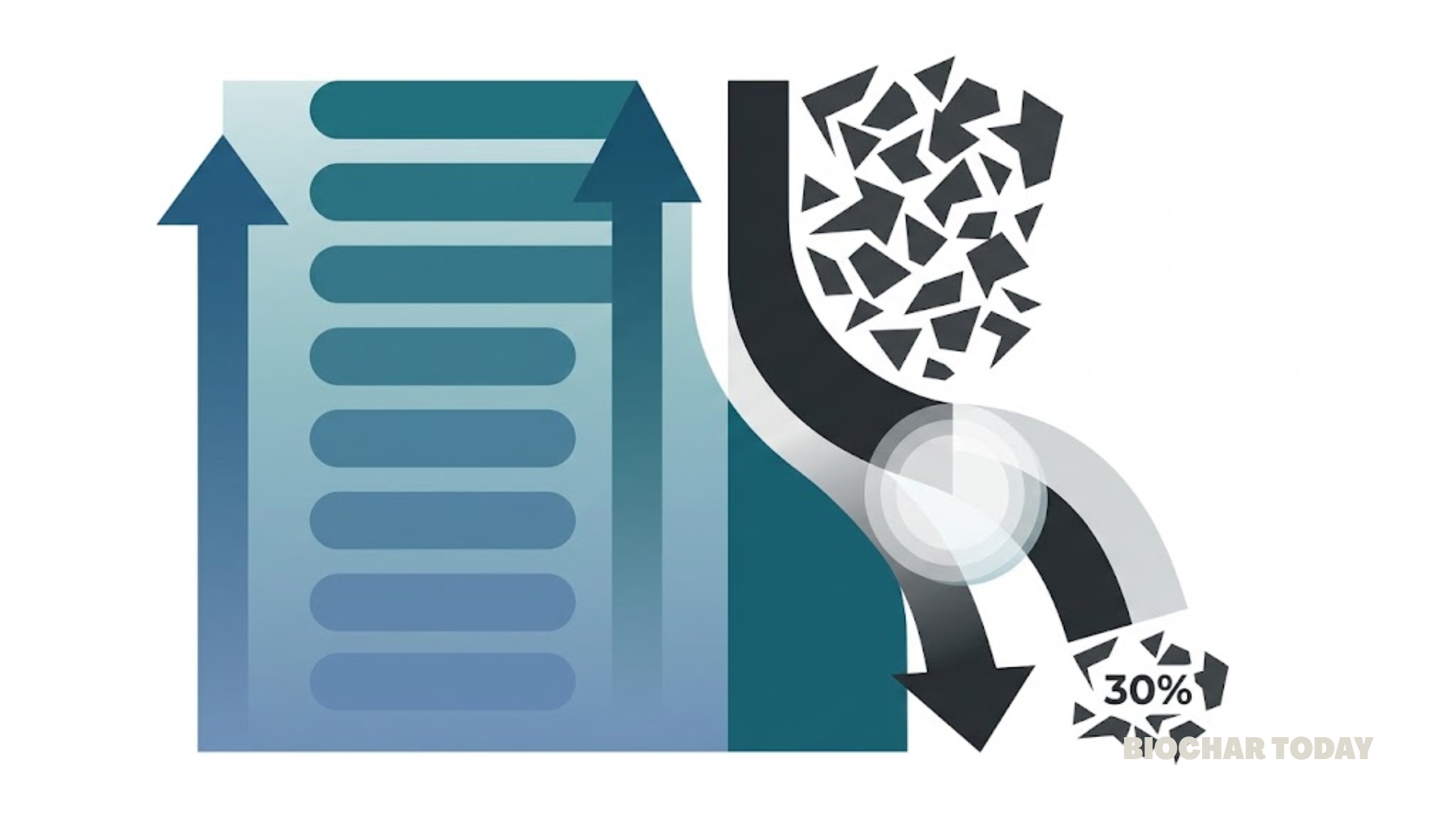
Beyond soil quality, the study quantifies the absolute carbon sequestration potential of sewage sludge biochar compared to other common agricultural practices. Over a four-year period, the average increase in total carbon for the low-temperature biochar treatment corresponded to 4.19 megagrams of carbon per hectare. This absolute gain surpassed the sequestration rates typically achieved through established practices such as no-till farming or the use of cover crops over the same timeframe. Even though the percentage increases might appear modest next to global averages, these results indicate that biochar is a highly effective tool for building soil carbon stocks in practical, real-world agricultural settings.
The integration of global and local data also serves as a critical check for the emerging carbon credit market. By providing reliable data on the efficacy of specific biochars like those derived from sewage sludge, researchers can help develop more accurate verified carbon standards. The study highlights that because sewage sludge biochar often has a lower carbon content than wood-based biochars, its impact on carbon buildup in tropical soils must be measured using context-specific metrics. Tailoring production and application strategies to local conditions ensures that carbon projects contribute meaningfully to verifiable climate benefits.
Ultimately, the research underscores that optimizing biochar use requires balancing immediate agronomic benefits with long-term carbon stability. While biochar may contribute more to stable carbon pools than labile ones in high-carbon tropical soils, the study calls for further long-term field trials to fully understand these interactions over decades. By adjusting pyrolysis conditions to match specific soil needs, stakeholders can promote sustainable agriculture and aid in climate change mitigation. This dual approach of waste valorization and soil enhancement provides a clear path forward for sustainable resource management in the tropics.
Source: Chagas, J. K. M., & Figueiredo, C. C. (2026). Combining meta-analysis and local assessment: An in-depth approach on biochar use towards soil carbon sequestration. Next Sustainability, 7, 100243.




Leave a Reply