
Key Takeaways
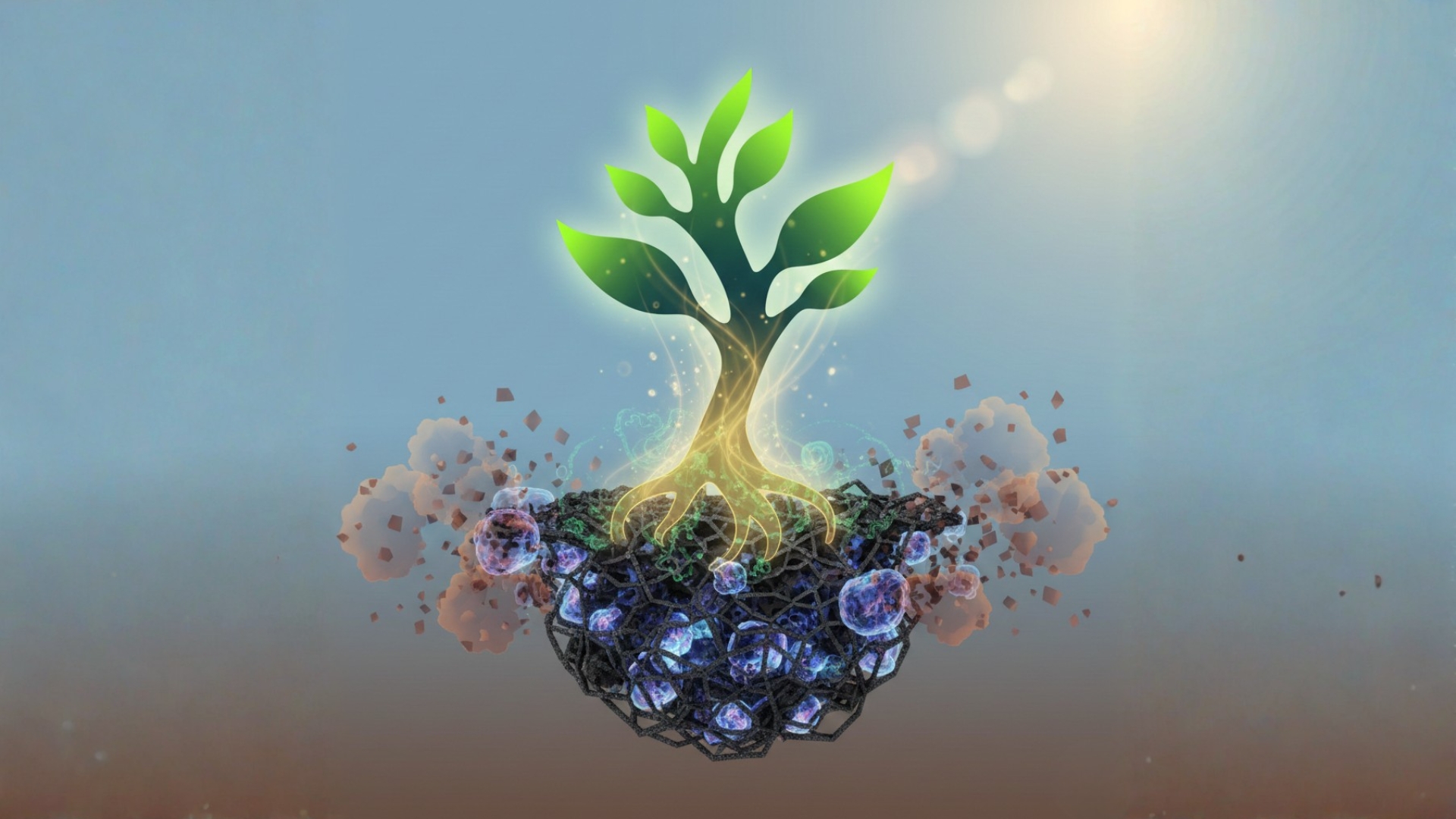
- A combination of biocharBiochar is a carbon-rich material created from biomass decomposition in low-oxygen conditions. It has important applications in environmental remediation, soil improvement, agriculture, carbon sequestration, energy storage, and sustainable materials, promoting efficiency and reducing waste in various contexts while addressing climate change challenges. More and Trichoderma can drastically improve the health of tobacco plants growing in cadmium-contaminated soil.
- This combined approach not only enhances photosynthesis by 86.84% but also significantly restricts cadmium accumulation and movement within the plant.
- The treatment improves soil quality by boosting beneficial microbial populations and increasing essential enzyme activities like urease and catalase.
- Biochar works by binding the toxic cadmium, while the microorganisms actively promote plant resilience and soil health.
- This sustainable method provides a cost-effective and environmentally friendly way to remediate contaminated agricultural land
The study “Biochar and microbial synergy: enhancing tobacco plant resistance and soil remediation under cadmium stress” by Ren et al., published in Biochar, highlights a significant advance in addressing heavy metal contamination in agricultural soils. Cadmium, a toxic heavy metal, poses a serious threat to food safety and crop productivity, especially in tobacco cultivation, as tobacco plants readily absorb this pollutant. The researchers investigated the impact of applying biochar both alone and in combination with a microbial inoculant, specifically the beneficial fungus Trichoderma.
The experiment focused on four treatments: a clean control (G0C0), a cadmium-contaminated control (G1C0), cadmium with biochar only (G1C1), and cadmium with biochar and a Trichoderma microbial inoculant (G1C2). The results clearly demonstrated the negative effects of cadmium stress, which caused a substantial drop in the net photosynthetic rate (Pn) and overall dry matter accumulation in tobacco plants. For instance, the total dry matter accumulation in the cadmium-only group (G1C0) decreased by up to 77.41% compared to the clean control (G0C0) during early growth stages. However, the addition of biochar, particularly in the G1C2 combination, proved highly effective in mitigating these adverse effects.
The most striking improvements were observed in the group treated with the biochar and microorganism combination (G1C2). This treatment significantly enhanced the characteristic parameters of photosynthesis, which were impaired by the cadmium. Specifically, the maximum photosynthetic rate (Pmax) in G1C2 increased by 86.84% compared to the cadmium-only control (G1C0), and the Light Saturation Point (LSP) saw an increase of 62.35%. This physiological resilience directly translated to better growth, as the total dry matter accumulation in G1C2 was the highest among the cadmium-stressed groups.
Crucially, the combined treatment also proved effective in limiting the uptake and movement of cadmium within the tobacco plant. The presence of biochar significantly restricted the upward transport of cadmium. The overall enrichment coefficient of cadmium—a measure of how much cadmium a plant accumulates from the soil—was dramatically reduced in the combined treatment. Compared to the cadmium-only control (G1C0), the enrichment coefficients in the G1C2 group were significantly decreased by over 70% across various plant parts. This reduction is vital for reducing health risks associated with cadmium-contaminated crops. The mechanism involves biochar’s ability to adsorb cadmium ions, reducing their bioavailability in the soil, while the Trichoderma microorganisms further restrict uptake by mechanisms such as biosorption, bioaccumulation, and inducing plant detoxification responses.
Furthermore, the study showed that cadmium contamination negatively impacted soil health, notably reducing the activity of essential soil enzymes like urease and catalase, and diminishing microbial biomassBiomass is a complex biological organic or non-organic solid product derived from living or recently living organism and available naturally. Various types of wastes such as animal manure, waste paper, sludge and many industrial wastes are also treated as biomass because like natural biomass these More. The application of biochar and microorganisms reversed this trend. Urease activity, which is important for nitrogen cycling, increased by 63.89% in the G1C2 group compared to G1C0, and catalase activity improved by 14.17%. The combined treatment also resulted in a significant increase in microbial biomass carbon and nitrogen. Analysis of the soil microbial communities revealed that the combination treatment enhanced soil microbial diversity and community structure, increasing the abundance of beneficial fungi and bacteria, such as Mucoromycota, Chaetomium, and Bacillus, all of which contribute to a healthier soil ecosystem.
These findings suggest that the co-application of biochar and microorganisms offers a sustainable, cost-effective, and highly effective strategy for the remediation of cadmium-contaminated agricultural soils. This integrated approach simultaneously improves plant physiological health and actively restores the soil micro-ecology, demonstrating its potential for long-term ecological restoration and safe food production in contaminated environments.
Source: Ren, T., Feng, H., Mahari, W. A. W., Yun, F., Li, M., Ma, N. L., … & Lam, S. S. (2025). Biochar and microbial synergy: enhancing tobacco plant resistance and soil remediation under cadmium stress. Biochar, 7(1), 119.




Leave a Reply