
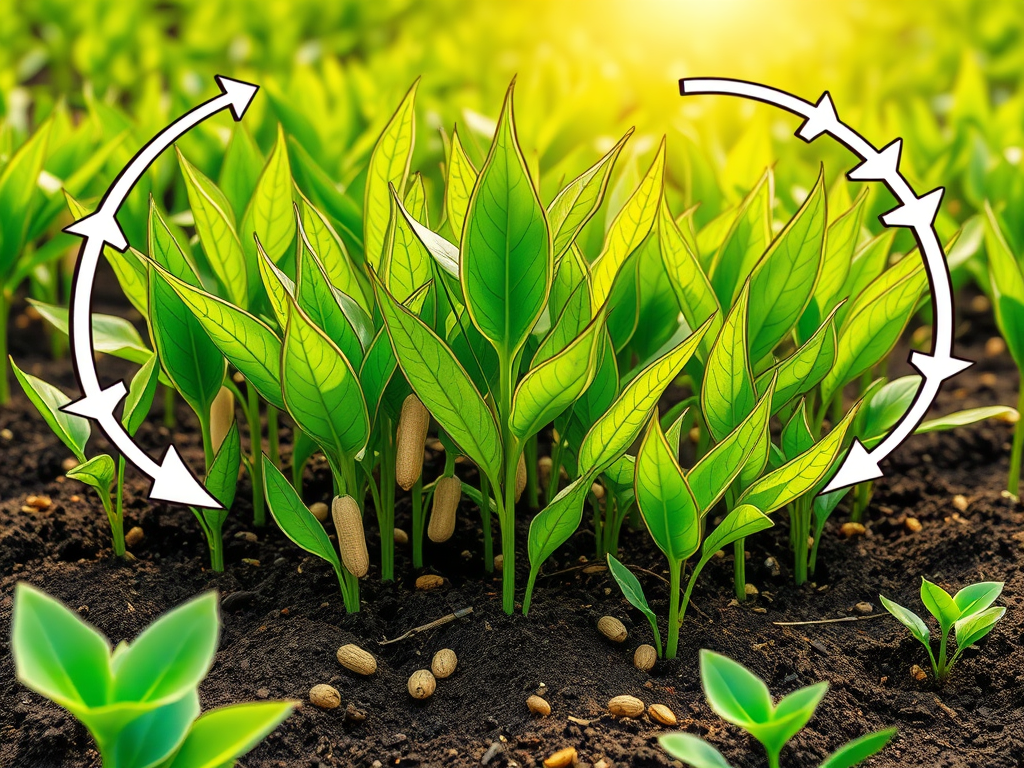
A recent study published in Chemical Engineering Journal Advances by Likun He, Yan Wang, Ruhai Liu, and colleagues explores the effectiveness of using biocharBiochar is a carbon-rich material created from biomass decomposition in low-oxygen conditions. It has important applications in environmental remediation, soil improvement, agriculture, carbon sequestration, energy storage, and sustainable materials, promoting efficiency and reducing waste in various contexts while addressing climate change challenges. More combined with iron-based materials to clean up agricultural soils polluted with metolachlor (MET) and S-metolachlor (S-MET) herbicides. These herbicides, while widely used in agriculture, pose environmental pollution risks due to their persistence in soil and potential to leach into water systems. The research focused on a field experiment conducted over a peanut growing season to assess the remediation efficacy of biochar and iron-based materials.
The study revealed that the combined application of biochar and iron-based materials had a synergistic effect in remediating soil contaminated with MET and S-MET. Biochar’s porous structure effectively adsorbs the herbicides, reducing their bioavailability and slowing down their degradation. Simultaneously, iron-based materials, including zero-valent iron (Fe0) and magnetite (Fe3O4), accelerate the degradation of the adsorbed MET and S-MET through dechlorination processes. This combination not only enhances the removal of herbicides from the soil but also mitigates their accumulation in crops.
Furthermore, the co-application of biochar and iron was found to improve soil health. Biochar’s alkaline nature helps to neutralize acidic soils, while also increasing total organic carbon content, which is beneficial for soil microorganisms that aid in the degradation of pollutants. The study’s findings suggest that this remediation strategy offers a promising approach for managing MET and S-MET contamination in agricultural soils, contributing to both environmental safety and sustainable agriculture.
SOURCE: He, L., Wang, Y., Liu, R., Wang, Y., Wang, Y., Li, Y., … & Li, F. (2025). Co-application of biochar and iron-based materials for remediating agricultural soil polluted with metolachlor and s-metolachlor: field research evidence. Chemical Engineering Journal Advances, 10, 100758.



Leave a Reply