
Key Takeaways
- Waste bamboo can be transformed into a high-quality carbon material called biocharBiochar is a carbon-rich material created from biomass decomposition in low-oxygen conditions. It has important applications in environmental remediation, soil improvement, agriculture, carbon sequestration, energy storage, and sustainable materials, promoting efficiency and reducing waste in various contexts while addressing climate change challenges. More to improve everyday plastic products.
- Adding a small amount of this specially treated bamboo charcoalCharcoal is a black, brittle, and porous material produced by heating wood or other organic substances in a low-oxygen environment. It is primarily used as a fuel source for cooking and heating. More makes flexible films significantly stronger and more resistant to stretching.
- The new material can withstand much higher temperatures before breaking down compared to standard clear plastics.
- This technology provides a way to recycle invasive or waste wood into high-performance components for building and manufacturing.
- The process is eco-friendly and uses a simple water-based method to combine the natural charcoal with the plastic base.
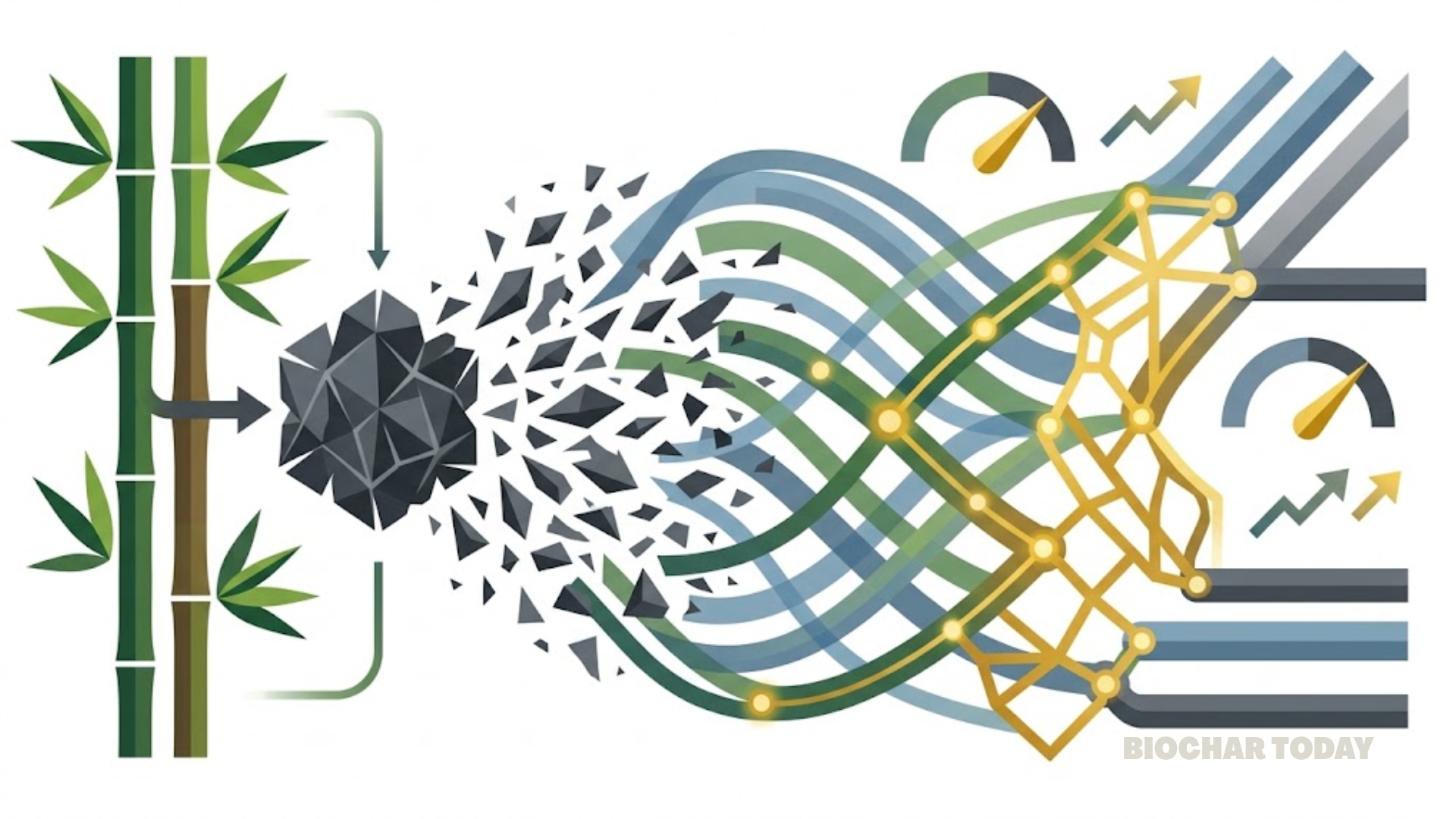
In a study published in the Journal of Materials Science: Composites, lead author Kunal Joshi and a team of international researchers explored the potential of upcycling Himalayan weeping bamboo waste into high-performance engineering materials. The team focused on enhancing polyvinyl alcohol, a common biodegradable plastic known for its water solubility and non-toxicity but often limited by poor mechanical strength and low thermal resistance. By converting raw bamboo into a refined carbon filler, the scientists aimed to create a composite that maintains environmental benefits while meeting the rigorous demands of structural applications. This research represents a significant step in the sustainable development of nanocomposites, shifting the focus from expensive synthetic fillers like graphene or carbon nanotubes toward abundant, low-cost agricultural residues.
The core of the study involved the synthesis of biochar through a two-stage heating process followed by a specialized chemical treatment using ammonium persulfate. This treatment, known as functionalization, was crucial because it introduced oxygen, nitrogen, and sulfur groups onto the surface of the carbon particles. These chemical groups act as molecular anchors, allowing the biochar to bond tightly with the plastic matrix. Without this step, carbon fillers often clump together, creating weak points in the material. The results confirmed that the treated bamboo biochar dispersed uniformly throughout the plastic, creating a dense network of hydrogen bonds that effectively transferred mechanical stress from the flexible polymer to the rigid carbon particles.
The mechanical improvements observed in the study were substantial and scaled with the amount of biochar added to the mixture. While pure plastic films were relatively weak, the addition of just five percent biochar by weight transformed the material’s structural integrity. The tensile strength rose from approximately 44 megapascals to over 71 megapascals, representing a dramatic 62.43 percent improvement. Even more striking was the change in the material’s stiffness, measured as Young’s modulus. The modulus more than doubled, increasing from 3088 megapascals in the pure plastic to 7496 megapascals in the five percent composite. These figures suggest that the bamboo-reinforced plastic can support much heavier loads and resist deformation far more effectively than standard versions of the polymer.
Beyond physical strength, the study reported a significant boost in how the material handles heat. Thermal stability is a vital factor for materials used in construction or automotive parts where temperatures can fluctuate. The researchers found that the temperature at which the material lost half of its weight increased from 325.70 degrees Celsius to 384.81 degrees Celsius. This 59-degree improvement means the composite can operate in much harsher environments without degrading. The biochar acts as a protective barrier, slowing down the release of volatile gases and dissipating heat more evenly throughout the plastic structure. Additionally, the presence of the carbon particles helped the plastic crystallize more quickly and at higher temperatures during the manufacturing process, which often leads to more consistent product quality.
While the material became much stronger and stiffer, the study also noted a decrease in ductility, meaning the films became more brittle and less likely to stretch before breaking. The elongation at break dropped from 1.36 percent in the pure plastic to roughly 0.93 percent in the reinforced versions. This is a common trade-off in materials science known as the reinforcement-induced stiffening mechanism. However, the overall toughness of the material remained stable or improved at lower loading levels, indicating that the composite is still robust enough for practical use. The researchers concluded that the synergistic combination of natural bamboo waste and biodegradable plastic creates an eco-friendly, cost-effective, and mechanically superior material suitable for advanced structural and sustainable packaging needs.
Source: Joshi, K., Arya, T., Rawat, N., Rawat, K. S., Linthoinganbi, R., Negi, P. B., Tewari, C., Jung, Y. C., & Sahoo, N. G. (2026). Agriculture waste derived biochar based polyvinyl alcohol composites for structural applications. Journal of Materials Science: Composites, 7(9).


Leave a Reply