
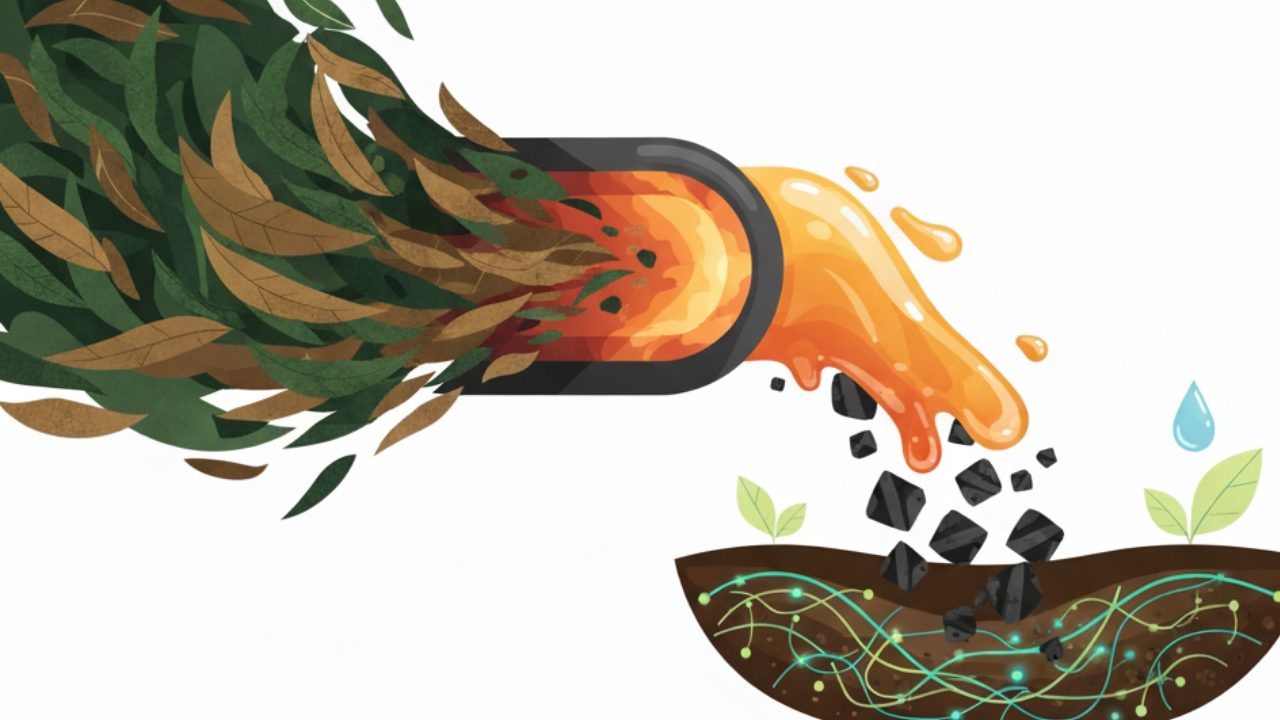
Argentine scientists at CONICET in Mendoza have successfully converted yerba mate waste into commercially valuable bio-oil, marking a significant step in sustainable resource management. Led by Martín Palazzolo from the Instituto de Biología Agrícola de Mendoza (IBAM, CONICET-UNCuyo), the initiative addresses the substantial waste generated by Argentina’s high yerba mate consumption, with over 220,000 tons of residue produced annually.
In collaboration with the University of Groningen, Netherlands, the research team developed an economical pyrolysisPyrolysis is a thermochemical process that converts waste biomass into bio-char, bio-oil, and pyro-gas. It offers significant advantages in waste valorization, turning low-value materials into economically valuable resources. Its versatility allows for tailored products based on operational conditions, presenting itself as a cost-effective and efficient More process to transform yerba mate waste into bio-oil, rich in aromatic compounds derived from lignin. This innovative approach not only reduces waste but also creates a renewable alternative to petroleum-based products.
The pyrolysis process involves heating biomassBiomass is a complex biological organic or non-organic solid product derived from living or recently living organism and available naturally. Various types of wastes such as animal manure, waste paper, sludge and many industrial wastes are also treated as biomass because like natural biomass these More at high temperatures without oxygen, yielding biocharBiochar is a carbon-rich material created from biomass decomposition in low-oxygen conditions. It has important applications in environmental remediation, soil improvement, agriculture, carbon sequestration, energy storage, and sustainable materials, promoting efficiency and reducing waste in various contexts while addressing climate change challenges. More, gases, and bio-oil. The team focused on bio-oil, which Palazzolo suggests can replace petroleum-derived compounds, supporting a shift towards renewable energy sources. The bio-oil has potential applications across the chemical, pharmaceutical, and food industries.
This development offers a sustainable model for waste management and resource utilization. The resulting biochar can serve as a fertilizer, while the gases produced during pyrolysis can be harnessed as renewable energy. This comprehensive approach minimizes waste and converts it into valuable resources, creating a closed-loop system.
Palazzolo emphasizes the scientific, logistical, and environmental viability of this model, highlighting its potential to decrease waste and generate renewable products. This advancement positions Mendoza as a leader in sustainable processes and biomass reutilization, setting a precedent for other regions.
Source: Made in Mendoza: cómo lograron que la yerba usada tenga valor comercial





Leave a Reply