
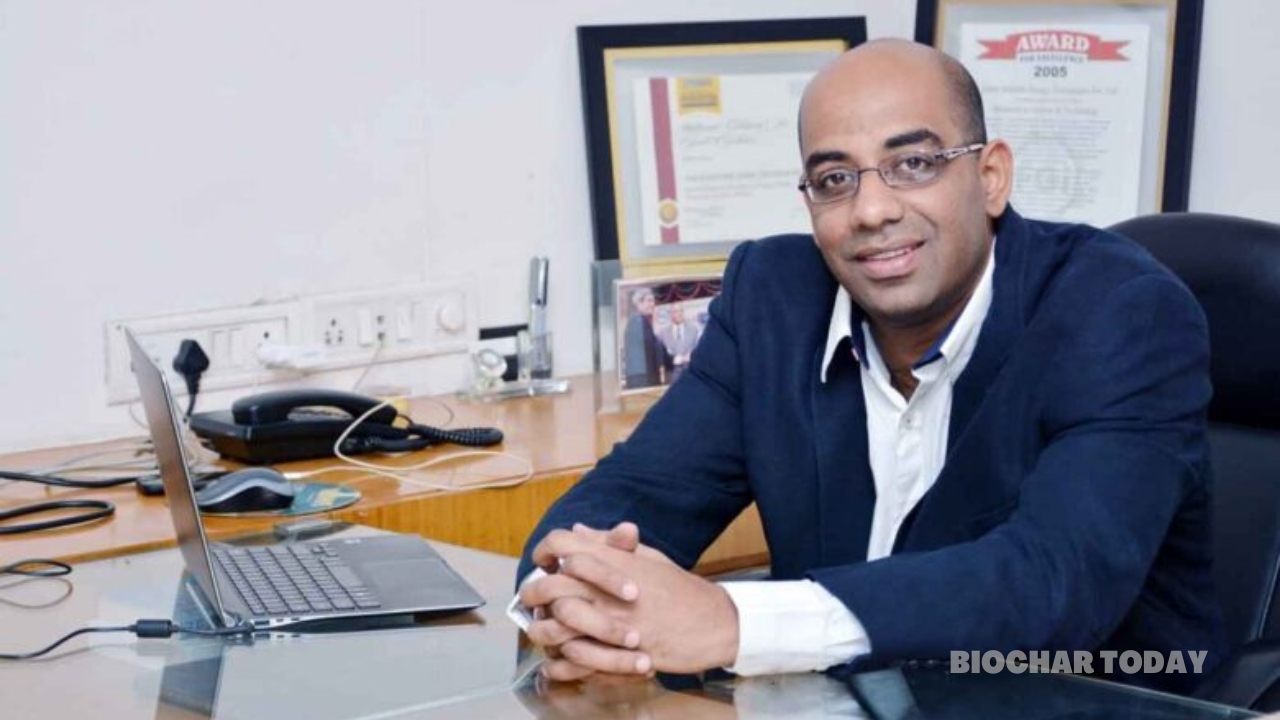
Recent geopolitical conflicts and fuel supply disruptions in India have highlighted the vulnerability of energy-intensive industrial sectors to imported fossil fuel shocks. At a virtual panel discussion hosted by Vadodara-based bioenergy pioneer Ankur Scientific, industry experts examined how India’s hard-to-abate sectors, such as ceramics, cement, and steel, face simultaneous pressures to safeguard energy security and reduce carbon emissions. Facing rising regulatory requirements under India’s Carbon Credit Trading Scheme and global mechanisms like the European Union’s Carbon Border Adjustment Mechanism, industrial manufacturers are increasingly forced to re-evaluate their reliance on imported fossil fuels like liquefied petroleum gas and natural gas.
The primary challenge facing Indian industrial clusters is the difficulty of decarbonizing high-temperature operations where direct electrification is technically or economically impractical. Thermal processes operating at extreme temperatures, such as industrial kilns and furnaces, cannot rely on intermittent renewable power sources like solar panels. Furthermore, supply disruptions—such as recent propane and natural gas shortages in the ceramic manufacturing hub of Morbi—demonstrate that reliance on imported fossil fuels introduces severe operational and financial risks alongside environmental impacts. Industries require continuous, high-temperature thermal energy solutions that simultaneously comply with emerging carbon-pricing policies.
To address these challenges, Ankur Scientific outlined an integrated biomassBiomass is a complex biological organic or non-organic solid product derived from living or recently living organism and available naturally. Various types of wastes such as animal manure, waste paper, sludge and many industrial wastes are also treated as biomass because like natural biomass these More gasificationGasification is a high-temperature, thermochemical process that converts carbon-based materials into a gaseous fuel called syngas and solid by-products. It takes place in an oxygen-deficient environment at temperatures typically above 750°C. Unlike combustion, which fully burns material to produce heat and carbon dioxide (CO2), gasification More approach that combines carbon avoidance with carbon capture and removal. By converting agricultural residues into syngasSyngas, or synthesis gas, is a fuel gas mixture consisting primarily of hydrogen and carbon monoxide. It is produced during gasification and can be used as a fuel source or as a feedstock for producing other chemicals and fuels. More, industrial facilities can replace fossil fuels in kilns, boilers, and dryers while generating biocharBiochar is a carbon-rich material created from biomass decomposition in low-oxygen conditions. It has important applications in environmental remediation, soil improvement, agriculture, carbon sequestration, energy storage, and sustainable materials, promoting efficiency and reducing waste in various contexts while addressing climate change challenges. More as a coproduct. Ankur Scientific’s advanced gasification technology operates at over 90% thermal conversion efficiency, converts crop residues that are typically burned in fields, and delivers a biochar yield exceeding 25%. This dual-benefit approach enables fuel switching at the source while permanently sequestering carbon.
Through real-world industrial deployments across India, Southeast Asia, and West Africa, Ankur Scientific’s technologies have eliminated 1.5 million tonnes of carbon dioxide emissions, generated 350,000 megawatt-hours of green power, and sequestered 185,000 tonnes of carbon. Recent projects include a cotton-stalk biochar carbon removal facility in Bhuj, a 12-tonne-per-day biochar and steam project in Jalgaon, and a cement-sector decarbonization initiative projected to avoid approximately 6,000 tonnes of carbon dioxide equivalent annually. By transforming agricultural waste into energy and high-value biochar, these deployments strengthen industrial resilience while creating sustainable revenue streams for rural communities.


Leave a Reply