

Key Takeaways
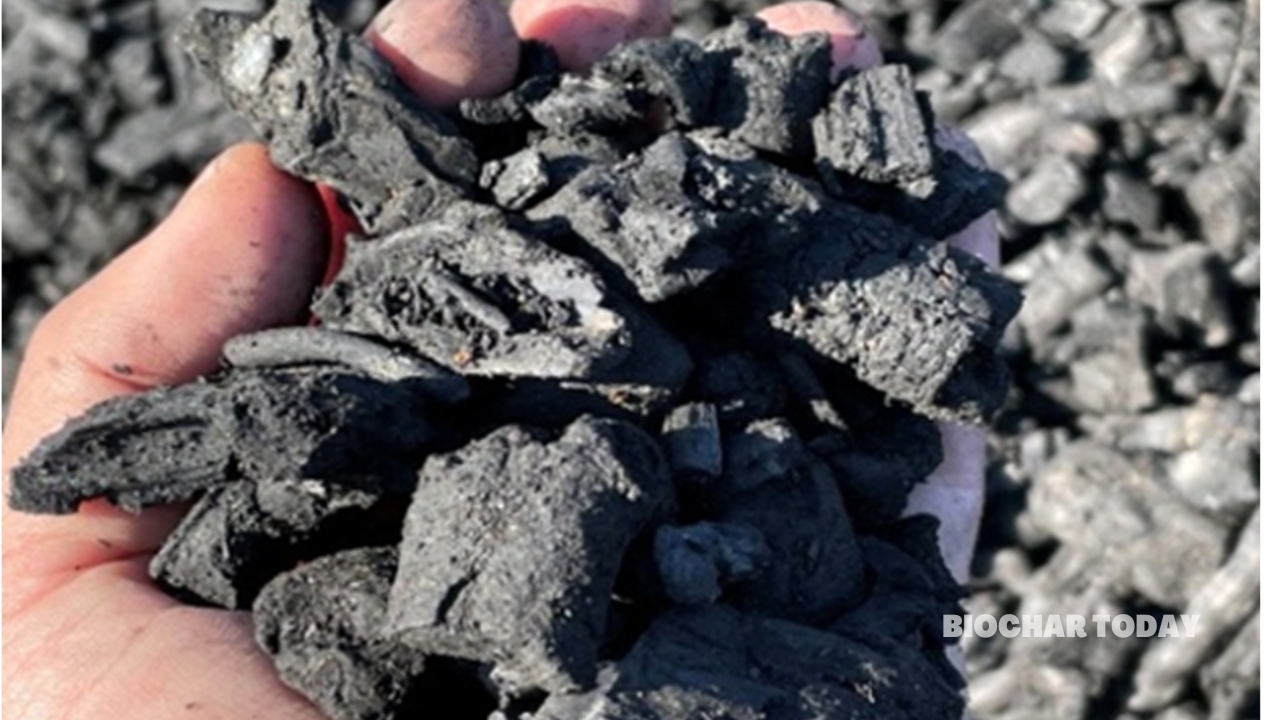
- High-Tech Recycling for Waste: This AI-driven system turns palm kernel shells (a common agricultural waste) into high-quality biocharBiochar is a carbon-rich material created from biomass decomposition in low-oxygen conditions. It has important applications in environmental remediation, soil improvement, agriculture, carbon sequestration, energy storage, and sustainable materials, promoting efficiency and reducing waste in various contexts while addressing climate change challenges. More, an energy-rich, stable carbon material.
- AI Models Are Near-Perfect Predictors: Advanced machine learning was used to create highly reliable models that can predict the final biochar quality with over 99% accuracy, eliminating costly trial-and-error experiments.
- Significantly Higher Quality Biochar: The optimized settings produced biochar quality superior to previous methods, achieving 13% more stable carbon (Fixed Carbon Content) and 22% fewer undesirable volatile compounds.
- Clear Operating Instructions for Industry: The research provides precise guidance: for maximum energy content, use shorter reaction times and less feedstockFeedstock refers to the raw organic material used to produce biochar. This can include a wide range of materials, such as wood chips, agricultural residues, and animal manure. More; for maximum carbon purity, use longer reaction times and more feedstock.
- Flexible Factory Operations: The system offers ten ready-to-use production recipes, allowing a factory operator to quickly switch between prioritizing energy production or carbon purity based on market prices or environmental regulations.
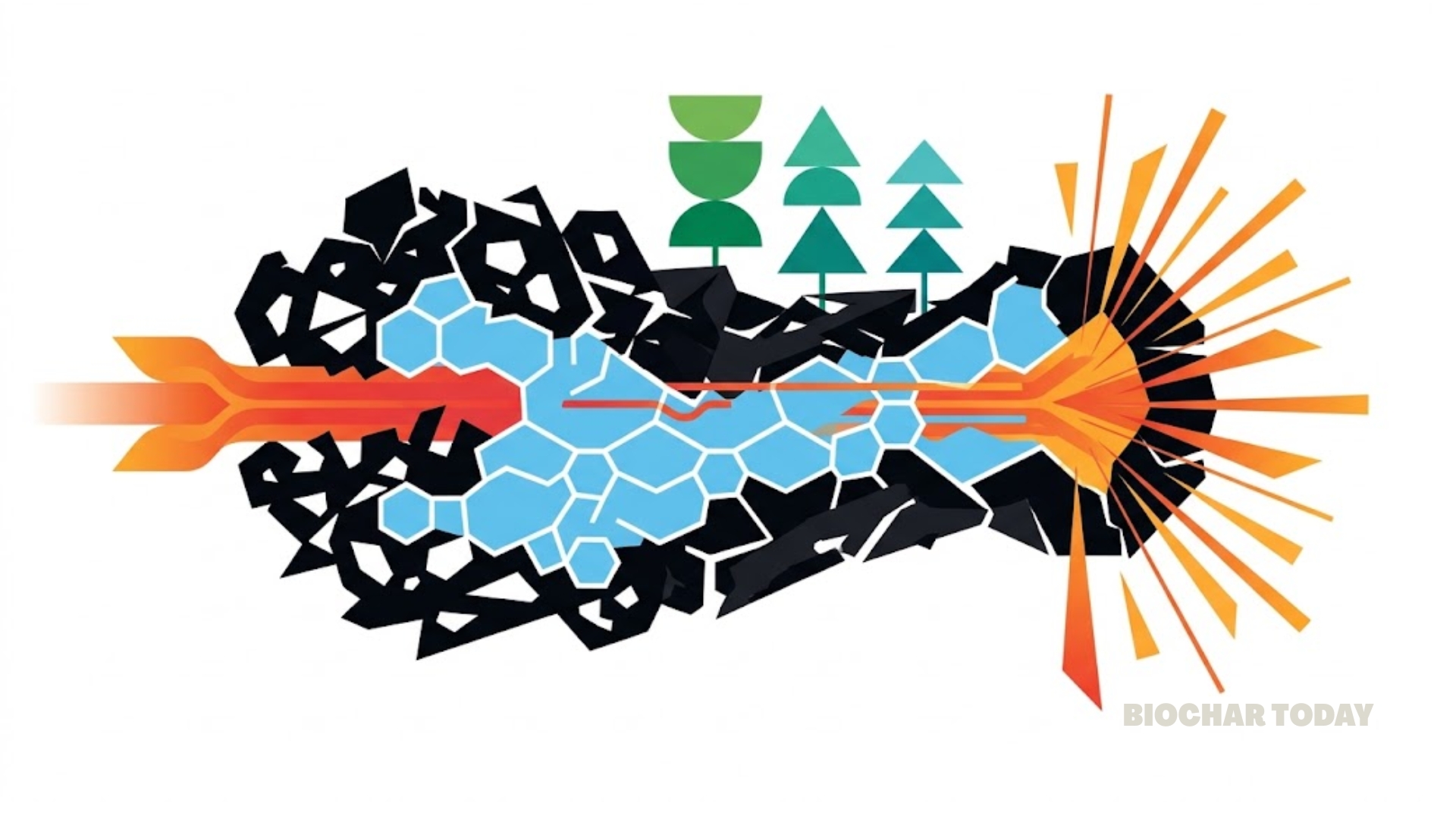
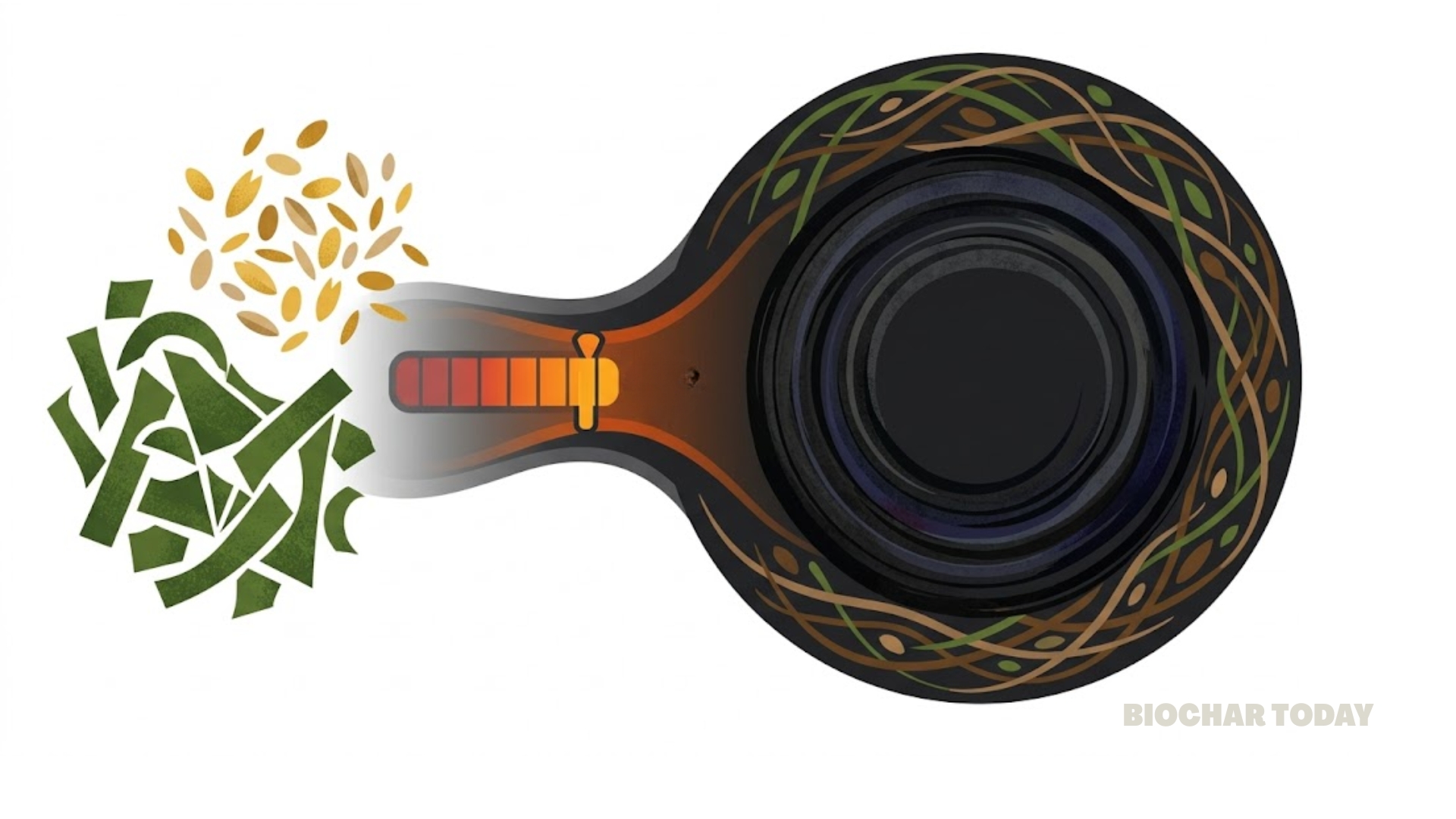
A study published in the Journal of Radiation Research and Applied Sciences by Narinderjit Singh Sawaran Singh, Rashid Khan, As’ad Alizadeh, Mohamed Shaban, Mazen M. Othayq, Abdellatif M. Sadeq, Husam Rajab, and Joy Djuansjah has unveiled an advanced artificial intelligence (AI) framework to assist the conversion of palm kernel shells (PKS) into high-quality biochar using microwave-assisted pyrolysisPyrolysis is a thermochemical process that converts waste biomass into bio-char, bio-oil, and pyro-gas. It offers significant advantages in waste valorization, turning low-value materials into economically valuable resources. Its versatility allows for tailored products based on operational conditions, presenting itself as a cost-effective and efficient More (MAP). The research addresses the challenge of optimizing this complex, radiation-driven thermochemical process, which is often hindered by its non-linearity and the conflicting goals of maximizing energy content (Calorific Value, CV) and structural stability (Fixed Carbon Content, FCC) while minimizing undesirable Volatile MatterVolatile matter refers to the organic compounds that are released as gases during the pyrolysis process. These compounds can include methane, hydrogen, and carbon monoxide, which can be captured and used as fuel or further processed into other valuable products. More Content (VMC). This approach, which seamlessly integrates machine learning, metaheuristic multi-objective optimization, and multi-criteria decision-making, offers a flexible and robust decision-support system for transforming agricultural waste into a valuable resource, directly contributing to Sustainable Development Goals (SDGs).
The success of the optimization hinged on the accuracy of the predictive models. The researchers utilized the Combinatorial (COMBI) algorithm to create surrogate models that could reliably forecast the pyrolysis outputs (CV, FCC, and VMC) based on key operational inputs: Reaction Time (RT), Sample Mass (SM), and Nitrogen Gas Flow Rate (NGFR). The COMBI models demonstrated outstanding predictive performance. For example, the Calorific Value (CV) predictions achieved an exceptionally low testing Mean Absolute Percentage Error (MAPE) of just 1.002%, and a near-perfect coefficient of determination (R2) of 0.9986. Similarly, predictions for FCC and VMC also maintained high statistical accuracy, with R2 values greater than 0.99 on testing data, confirming their ability to generalize reliably to unseen conditions. This level of accuracy is a significant improvement over previous methods like response surface methodology, which had lower R2 values (e.g., 0.9657 for CV). The highly accurate surrogate models formed a solid, dependable foundation for the subsequent optimization phase.
With the reliable COMBI models in place, the team used the Multi-Objective Grey Wolf Optimizer (MOGWO) to explore the inherent trade-offs between the three competing objectives (maximizing CV and FCC, while minimizing VMC). The optimization results revealed clear dependencies between the process inputs and the biochar quality.
Analysis of the Pareto front—the set of optimal trade-off solutions—showed that over 55% of the solutions favored shorter reaction durations (38.79–40.31 min), suggesting that these offer the most favorable overall compromise. Furthermore, the MOGWO-optimized conditions yielded a higher performance than a previous experimental optimum: an approximate 4% increase in CV, a 13% increase in FCC, and a remarkable 22% reduction in VMC. This demonstrates the superior ability of the AI framework to identify more effective and thermally stable biochar production settings.
To make the Pareto-optimal solutions actionable, the framework incorporated the Weighted Tchebycheff Method (WTM), a Multi-Criteria Decision-Making (MCDM) technique. The WTM was used to generate ten distinct operating scenarios, each reflecting a different set of industrial priorities (e.g., prioritizing maximum fuel value, maximum carbon stability, or minimum emissions).
This robust flexibility allows bioenergy practitioners to dynamically adjust pyrolysis operations—for instance, maximizing fuel value during peak energy demand or shifting to higher carbon purity for specialty products—aligning production with evolving market and environmental needs.
Source: Sawaran Singh, N. S., Khan, R., Alizadeh, A., Shaban, M., Othayq, M. M., Sadeq, A. M., Rajab, H., & Djuansjah, J. (2025). AI-driven design and optimization of microwave radiation-induced pyrolysis systems using machine learning and metaheuristic algorithms. Journal of Radiation Research and Applied Sciences, 18, 101989.


Leave a Reply