
Key Takeaways
- Transforming agricultural biowaste into biocharBiochar is a carbon-rich material created from biomass decomposition in low-oxygen conditions. It has important applications in environmental remediation, soil improvement, agriculture, carbon sequestration, energy storage, and sustainable materials, promoting efficiency and reducing waste in various contexts while addressing climate change challenges. More provides a dual solution for managing solid waste and purifying water in an eco-friendly manner.
- Engineering biochar with metals or magnetic nanoparticles significantly boosts its ability to trap and remove even the smallest microplastic particles.
- Biochar acts as a versatile adsorbent, capable of eliminating up to 99.46% of microplastics from wastewater through various physical and chemical interactions.
- Repurposing agricultural residues for water treatment aligns with United Nations Sustainable Development Goals by promoting clean water and responsible production.
- Biochar-based materials are cost-effective, reusable, and more scalable than conventional technologies, making them ideal for large-scale industrial water purification.
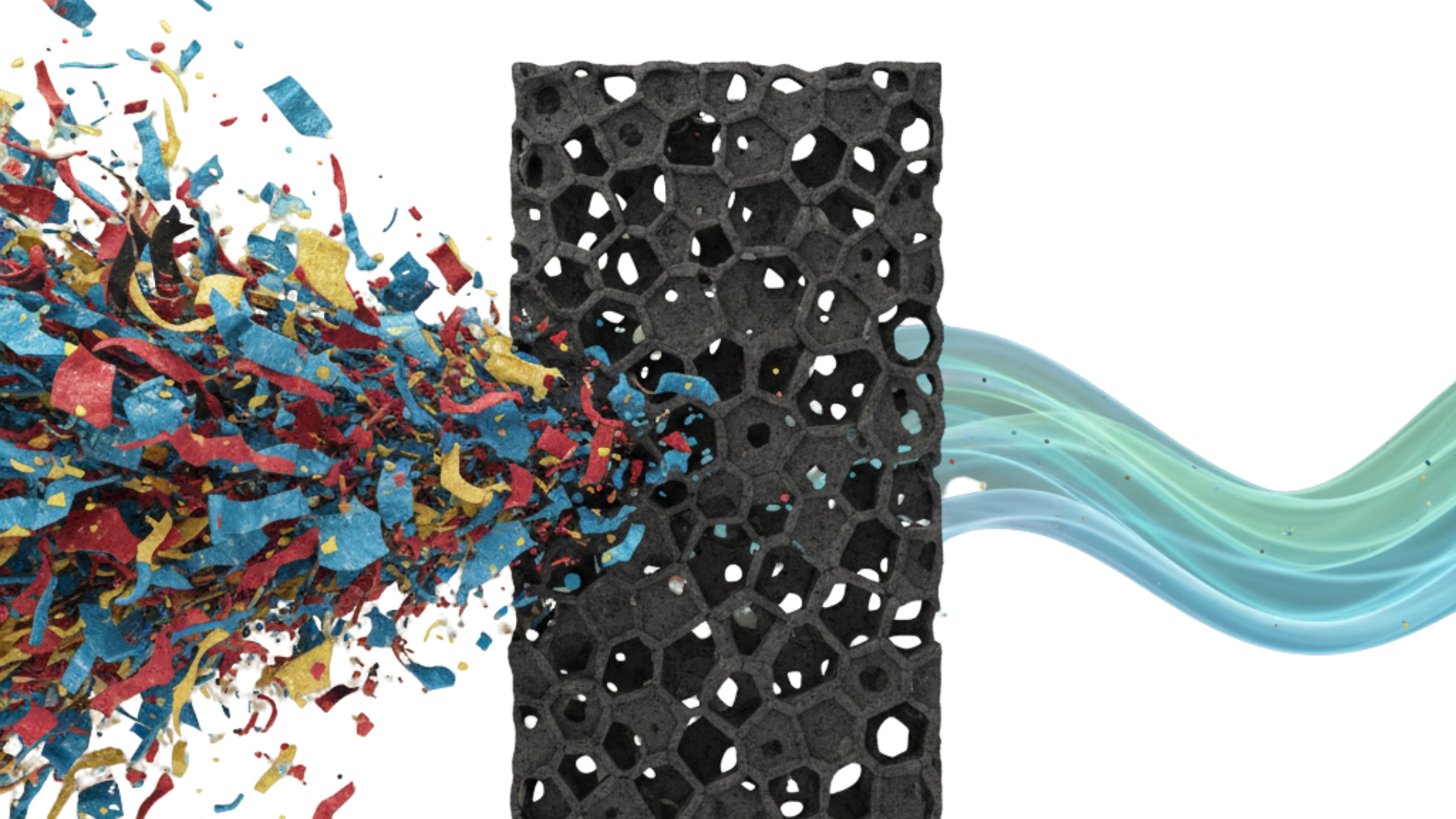
In a comprehensive review published in RSC Sustainability, authors Rinki Chaudhary, Gunjan Sangwan, Sanjay Kumar, and Vivek Sharma examine the transformative potential of repurposing agricultural biowaste into high-performance materials for environmental protection. As global microplastic pollution reaches a crisis point with over five trillion particles currently contaminating the world’s oceans, the need for sustainable remediation strategies has never been more urgent. This research highlights how plentiful agricultural residues—often burned in open fields, leading to air pollution—can instead be converted through thermal treatments like pyrolysisPyrolysis is a thermochemical process that converts waste biomass into bio-char, bio-oil, and pyro-gas. It offers significant advantages in waste valorization, turning low-value materials into economically valuable resources. Its versatility allows for tailored products based on operational conditions, presenting itself as a cost-effective and efficient More into biochar. This process not only fixes carbon in a stable solid form but also creates a highly porous material with a large surface area perfectly suited for trapping microscopic pollutants in wastewater.
The study emphasizes that the efficacy of biochar is rooted in its unique physicochemical properties, which can be further optimized through advanced surface modifications. By fabricating composites with metals, magnetic nanoparticles, or layered double hydroxides, researchers have developed materials that achieve near-total removal of various plastic polymers, including polystyrene and polyethylene. For example, magnesium and zinc-modified magnetic biochars have demonstrated removal rates as high as 99.46%, maintaining high efficiency even after five reuse cycles. These engineered “tools” allow for rapid extraction of microplastics using magnets, overcoming the clogging and secondary sludge issues typically associated with traditional filtration and coagulation methods.
Furthermore, the review aligns this green technology with circular economy principles and several United Nations Sustainable Development Goals, specifically targeting clean water, sanitation, and responsible consumption. While the research identifies challenges such as the heterogeneity of biomassBiomass is a complex biological organic or non-organic solid product derived from living or recently living organism and available naturally. Various types of wastes such as animal manure, waste paper, sludge and many industrial wastes are also treated as biomass because like natural biomass these More feedstocks and the need for standardized production, the potential for large-scale application remains immense. By shifting from a linear “take-make-dispose” model to one that valorizes waste, the agricultural sector can provide a sustainable, low-cost substitute for commercial activated carbonActivated carbon is a form of carbon that has been processed to create a vast network of tiny pores, increasing its surface area significantly. This extensive surface area makes activated carbon exceptionally effective at trapping and holding impurities, like a molecular sponge. It is commonly More. Ultimately, transforming trash into these effective purification tools represents a viable pathway toward a cleaner planet and the protection of both aquatic ecosystems and human health from the persistent threat of plastic contamination.
Source: Chaudhary, R., Sangwan, G., Kumar, S., & Sharma, V. (2026). Turning trash into tools: Agricultural waste-derived biochar and composites for microplastic removal from wastewater. RSC Sustainability.


Leave a Reply