
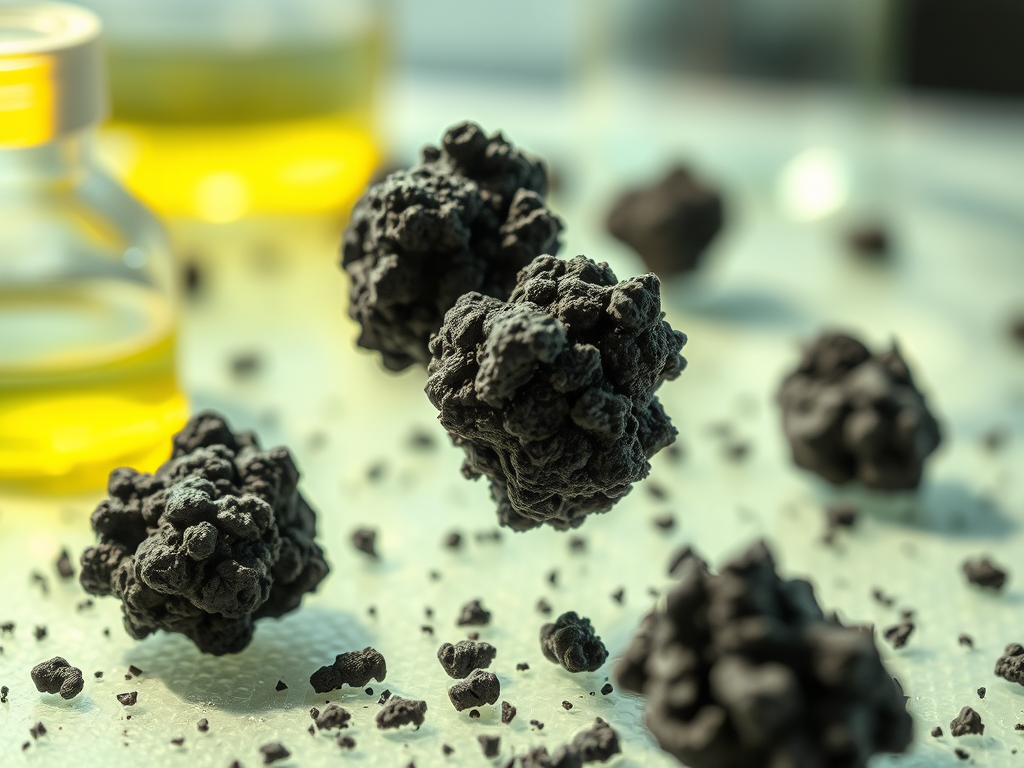
The presence of fluoroquinolone antibiotics in water is a growing environmental concern due to their persistence and potential to promote antimicrobial resistance. Conventional wastewater treatment processes are often unable to fully remove these compounds, necessitating the investigation of new and effective methods for remediation. A recent study by Kawtar Ezzahi, Imad Rabichi, and colleagues, published in the journal Results in Engineering, explores a promising solution: the use of activated biocharBiochar is a carbon-rich material created from biomass decomposition in low-oxygen conditions. It has important applications in environmental remediation, soil improvement, agriculture, carbon sequestration, energy storage, and sustainable materials, promoting efficiency and reducing waste in various contexts while addressing climate change challenges. More derived from olive mill solid waste for antibiotic removal. The findings highlight the potential of this low-cost, sustainable material to address a pressing global health issue.
The study utilized olive mill solid waste (OMSW) as a raw material to produce biochar (BC) and then a chemically activated carbonActivated carbon is a form of carbon that has been processed to create a vast network of tiny pores, increasing its surface area significantly. This extensive surface area makes activated carbon exceptionally effective at trapping and holding impurities, like a molecular sponge. It is commonly More (AC) variant. A key finding was that the activation process with potassium hydroxide significantly enhanced the material’s surface properties. The activated carbon (AC) had a BET surface area of 829.76 m²/g, which was substantially higher than the 258.72 m²/g measured for the raw biochar (BC). This increase in surface area was directly linked to a more developed porous structure and a greater number of active adsorption sites.
To understand how the biochar interacted with the antibiotics, the researchers performed a kinetics study. The results showed that the adsorption process followed the pseudo-second-order kinetic model, indicating that chemisorption was the primary mechanism. This suggests that the removal of antibiotics was driven by the formation of chemical bonds between the pollutants and the biochar surface, rather than simple physical attraction. The kinetics data also revealed that the adsorption was rapid, with equilibrium being reached within approximately 50 to 100 minutes.
Adsorption equilibrium was further analyzed using isotherm models. The Langmuir model provided the best fit for the experimental data, which indicates that the adsorption occurred in a single layer on a homogeneous surface. This model was particularly effective for ciprofloxacin adsorption on both activated carbon and biochar. The study determined the maximum adsorption capacity for AC was 147.68 mg/g for ciprofloxacin, demonstrating the material’s superior performance for removing this specific antibiotic. The adsorption capacities for levofloxacin and enrofloxacin were also high, at 134.29 mg/g and 128.53 mg/g, respectively. The competitive adsorption affinity followed the order of ciprofloxacin, then enrofloxacin, and finally levofloxacin. A thermodynamic analysis confirmed that the adsorption process was spontaneous and endothermic, meaning that it was a favorable reaction that benefited from higher temperatures.
To provide a deeper understanding of the process, the researchers used Density Functional Theory (DFT) to study the adsorption mechanisms at a molecular level. The computational analysis revealed that the adsorption of fluoroquinolones was a combination of electrostatic interactions, hydrogen bonding, and π-π stacking. The DFT study also found that ciprofloxacin, which had the highest adsorption capacity, was the most reactive of the three antibiotics, aligning with the experimental results.
A crucial aspect of the study was its focus on reusability and economic viability. The biochar and activated carbon were produced from olive mill solid waste, an abundant and low-cost agricultural byproduct. This aligns with circular economy principles by turning waste into a useful product. The activated carbon also demonstrated high stability and reusability. After five regeneration cycles, the activated carbon retained a high percentage of its removal efficiency: 93.23% for ciprofloxacin, 91.14% for levofloxacin, and 89.85% for enrofloxacin. This high reusability significantly contributes to the material’s potential as a sustainable and cost-effective solution for wastewater treatment.
Source: Ezzahi, K., Rabichi, I., Befenzi, H., Record, E., Bouzid, T., Yaacoubi, A., Baçaoui, A., Habibi, Y., & El Fels, L. (2025). Optimization, Characterization, and DFT Study of Activated-Biochar from Lignocellulosic BiomassBiomass is a complex biological organic or non-organic solid product derived from living or recently living organism and available naturally. Various types of wastes such as animal manure, waste paper, sludge and many industrial wastes are also treated as biomass because like natural biomass these More for Fluoroquinolone Antibiotic Adsorption. Results in Engineering



Leave a Reply