

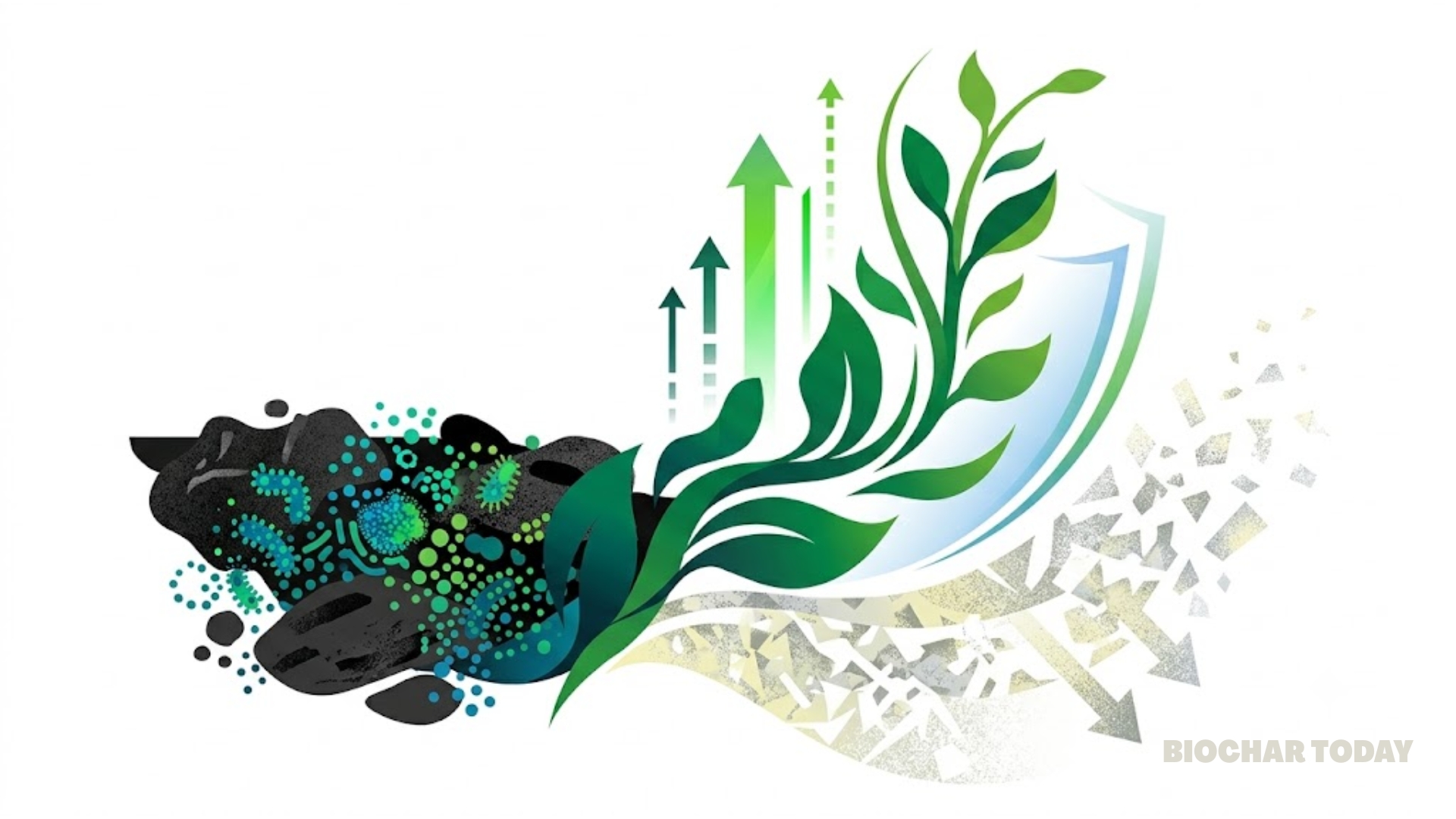
Human activities, including industrialization and urbanization, have led to a concerning increase in heavy metal pollution, particularly cadmium (Cd). Cadmium is highly toxic, persistent, and bioaccumulative, posing severe risks to plants, animals, and human health. Traditional methods for remediation are often expensive or environmentally harmful. In response, a recent study published in Scientific Reports by Dayse Gonzaga Braga and her team, including Raphael Leone da Cruz Ferreira and Camylle Barbosa da Silva, investigates the mitigating effects of biocharBiochar is a carbon-rich material created from biomass decomposition in low-oxygen conditions. It has important applications in environmental remediation, soil improvement, agriculture, carbon sequestration, energy storage, and sustainable materials, promoting efficiency and reducing waste in various contexts while addressing climate change challenges. More derived from açaí seeds on Virola surinamensis plants grown in cadmium-contaminated Amazonian soil. This research offers a sustainable approach to phytoremediationThis is a technique that uses plants to clean up contaminated soil or water. Biochar can enhance phytoremediation by improving soil conditions and promoting plant growth, allowing plants to absorb and break down pollutants more effectively. More, utilizing a native Amazonian species and an agro-industrial waste product.
Phytoremediation, a bioremediation method, involves using plants to absorb or reduce the bioavailability of metal compounds from the soil. Virola surinamensis, an endangered forest species popularly known as ucuúba, was chosen for this study due to its relatively fast growth, high biomassBiomass is a complex biological organic or non-organic solid product derived from living or recently living organism and available naturally. Various types of wastes such as animal manure, waste paper, sludge and many industrial wastes are also treated as biomass because like natural biomass these More production, and adaptation to Amazonian floodplain ecosystems. This species, while susceptible to contamination, exhibits a certain tolerance to heavy metals, making it a good candidate for evaluating remediation potential in degraded areas.
Biochar, a charcoalCharcoal is a black, brittle, and porous material produced by heating wood or other organic substances in a low-oxygen environment. It is primarily used as a fuel source for cooking and heating. More produced from the pyrolysisPyrolysis is a thermochemical process that converts waste biomass into bio-char, bio-oil, and pyro-gas. It offers significant advantages in waste valorization, turning low-value materials into economically valuable resources. Its versatility allows for tailored products based on operational conditions, presenting itself as a cost-effective and efficient More of biomass, is known for its ability to improve soil properties, enhance water retention, prevent degradation, and increase nutrient sequestration. Importantly, biochar can immobilize heavy metals in contaminated soils through processes like ion exchange, specific adsorption, and complexation, thereby reducing their absorption and phytotoxicity in plants. The açaí seed biochar used in this study was produced at 600°C , yielding a material with high pHpH is a measure of how acidic or alkaline a substance is. A pH of 7 is neutral, while lower pH values indicate acidity and higher values indicate alkalinity. Biochars are normally alkaline and can influence soil pH, often increasing it, which can be beneficial More, greater recalcitrance, and improved water retention capacity.
The experiment involved growing V. surinamensis seedlings in soils treated with varying doses of cadmium (0, 10, 20, and 30 mg/L) and different proportions of açaí biochar (0%, 5%, and 10%). The researchers assessed several biometric and physiological responses, including the number of leaves, root length, chlorophyll content (a, b, and total), photosynthesis rate, stomatal conductance, transpiration, and intercellular CO2 concentration.
The results demonstrated that the addition of 5% biochar was particularly effective in attenuating cadmium toxicity. For plants exposed to 10 mg/L of cadmium, the inclusion of 5% biochar significantly increased photosynthesis rates by 256.71% (from 2.82 to 10.06 µmol m-2s-1). Similarly, at 20 mg/L of cadmium, 5% biochar led to a 349.33% increase in photosynthesis (from 2.23 to 10.02 µmol m-2s-1). The 5% biochar also proved more effective in maintaining chlorophyll ‘a’ content in the presence of cadmium. Plants treated with 20 mg/L of cadmium showed higher transpiration rates with 5% biochar application. Furthermore, for soils contaminated with 10 mg/L of Cd, the addition of biochar increased the intercellular carbon concentration. While 5% biochar generally yielded the most favorable results, higher concentrations like 10% biochar occasionally showed detrimental effects, reducing chlorophyll indices and root length under certain cadmium doses.
The study concluded that a 5% biochar application is recommended for mitigating cadmium-contaminated soils. This approach not only aids in the phytoremediation of heavy metals but also promotes the reuse of agro-industrial waste, aligning with sustainable agricultural practices and contributing to environmental preservation. Future field studies are crucial to validate the efficiency of this biochar proportion in real-world scenarios.
Source: Braga, D. G., Ferreira, R. L. C., Silva, C. B. da, Cabral, J. A. da C., Alves, A. C. B., Brito, A. E. de A., … & Neto, C. F. de O. (2025). Biometric and physiological responses of Virola Surinamensis to cadmium and biochar in amazonian soil. Scientific Reports, 15(1), 21325.



Leave a Reply