

In a recent viewpoint article published in the Journal of Agricultural and Food Chemistry, Cornelissen et al., propose a “virtuous cycle” to address the pervasive problem of per- and polyfluoroalkyl substances (PFAS) contamination in agricultural lands. PFAS, a group of persistent and potentially harmful chemicals, pose a significant threat to human and environmental health due to their widespread presence in soil, water, and food chains.
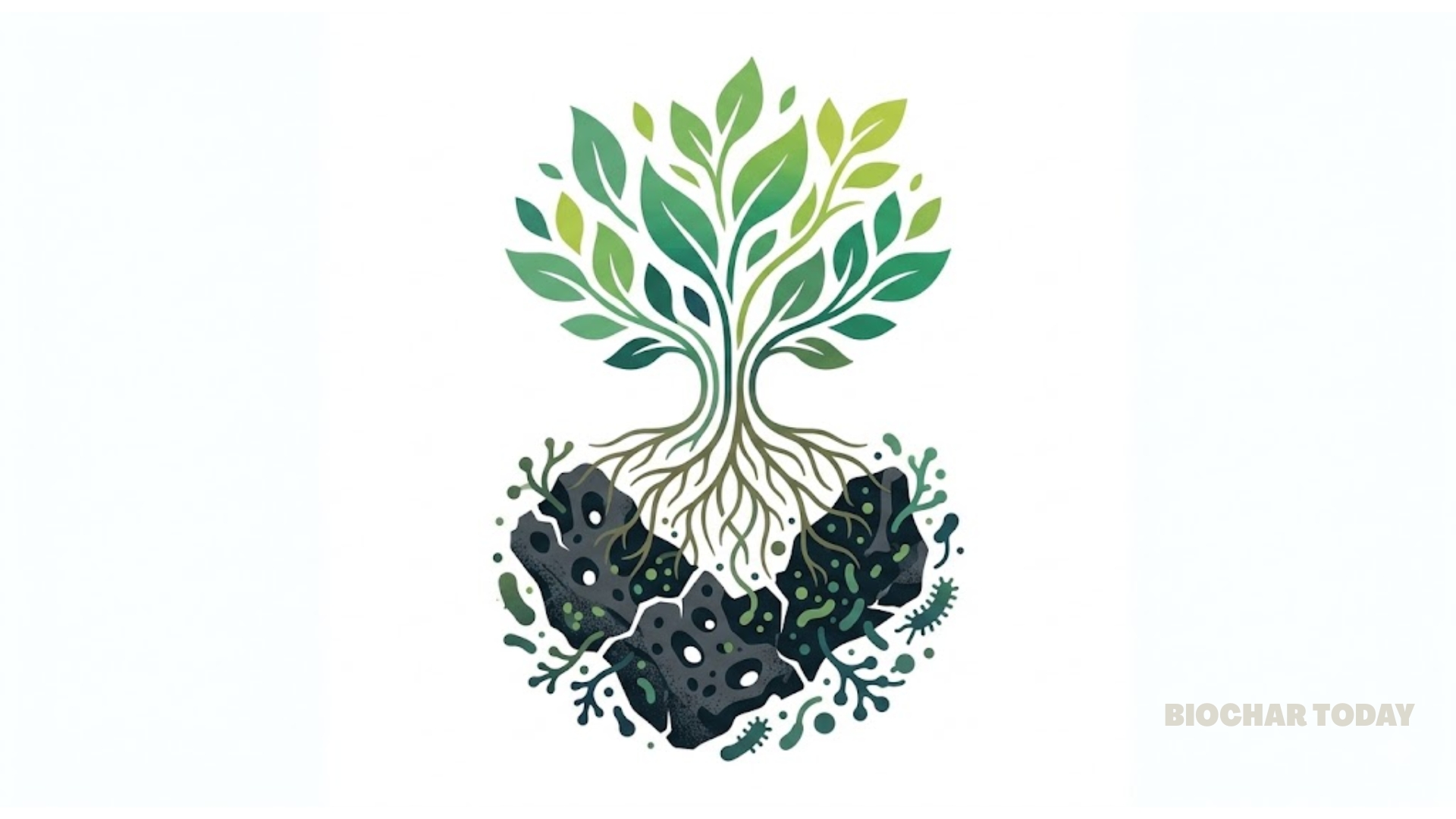
The authors suggest a three-pronged approach that leverages the natural ability of plants to accumulate PFAS, the transformative power of pyrolysisPyrolysis is a thermochemical process that converts waste biomass into bio-char, bio-oil, and pyro-gas. It offers significant advantages in waste valorization, turning low-value materials into economically valuable resources. Its versatility allows for tailored products based on operational conditions, presenting itself as a cost-effective and efficient More, and the soil-amending properties of biocharBiochar is a carbon-rich material created from biomass decomposition in low-oxygen conditions. It has important applications in environmental remediation, soil improvement, agriculture, carbon sequestration, energy storage, and sustainable materials, promoting efficiency and reducing waste in various contexts while addressing climate change challenges. More. First, phytoremediationThis is a technique that uses plants to clean up contaminated soil or water. Biochar can enhance phytoremediation by improving soil conditions and promoting plant growth, allowing plants to absorb and break down pollutants more effectively. More utilizes plants to extract PFAS from contaminated soils. The harvested plant biomassBiomass is a complex biological organic or non-organic solid product derived from living or recently living organism and available naturally. Various types of wastes such as animal manure, waste paper, sludge and many industrial wastes are also treated as biomass because like natural biomass these More, now containing concentrated PFAS, is then subjected to pyrolysis, a thermochemical process that uses high temperatures to decompose organic materials in the absence of oxygen. This process not only destroys the PFAS but also converts the biomass into biochar, a charcoal-like material with numerous environmental benefits. Finally, the PFAS-free biochar is applied back to the soil as a sorbent, effectively immobilizing any remaining long-chain PFAS and preventing their further uptake by plants and subsequent entry into the food chain.
This integrated approach offers a sustainable and potentially cost-effective solution for PFAS remediation. By combining phytoremediation with pyrolysis and biochar application, the authors envision a closed-loop system that effectively removes PFAS from the environment while also generating a valuable soil amendmentA soil amendment is any material added to the soil to enhance its physical or chemical properties, improving its suitability for plant growth. Biochar is considered a soil amendment as it can improve soil structure, water retention, nutrient availability, and microbial activity. More. The proposed virtuous cycle holds promise for restoring PFAS-contaminated farmland and safeguarding human and environmental health.
SOURCE: Cornelissen, G., Briels, N., Bucheli, T. D., Estoppey, N., Gredelj, A., Hagemann, N., Lerch, S., Lotz, S., Rasse, D., Schmidt, H. P., Sørmo, E., & Arp, H. P. H. (2025). A virtuous cycle of phytoremediation, pyrolysis, and biochar applications toward safe PFAS levels in soil, feed, and food. Journal of Agricultural and Food Chemistry, 73(7), 3283-3285.https://doi.org/10.1021/acs.jafc.5c00651



Leave a Reply