
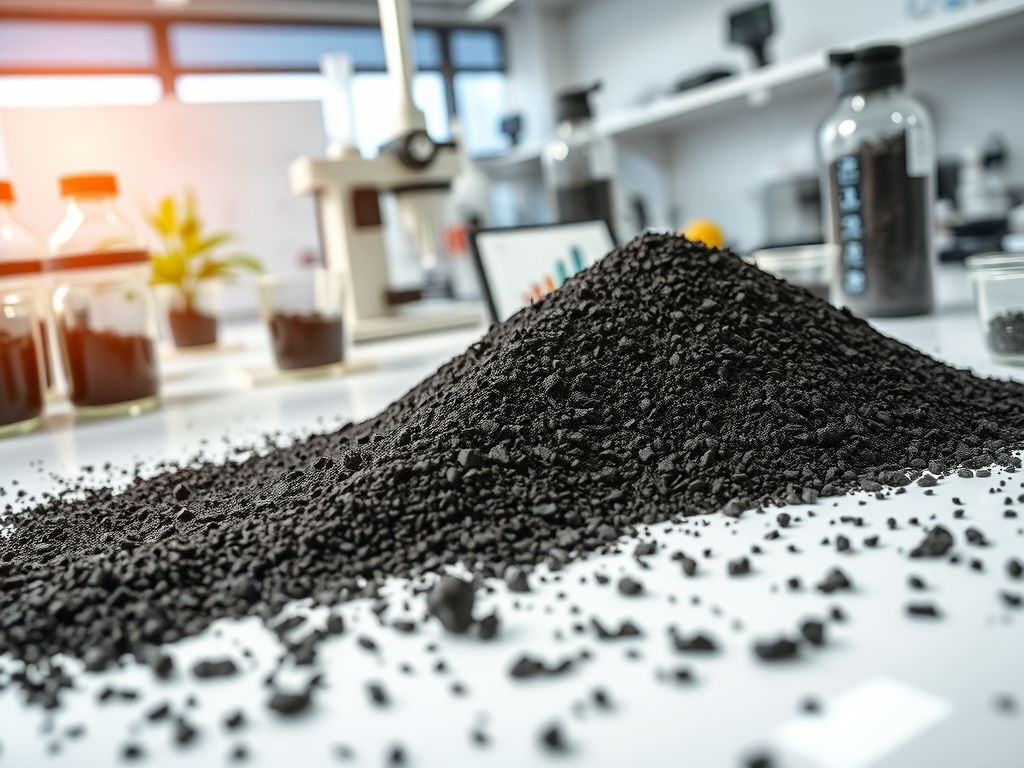
BiocharBiochar is a carbon-rich material created from biomass decomposition in low-oxygen conditions. It has important applications in environmental remediation, soil improvement, agriculture, carbon sequestration, energy storage, and sustainable materials, promoting efficiency and reducing waste in various contexts while addressing climate change challenges. More research is in the midst of a remarkable boom, with an annual publication growth rate that has surged by 1099% since 2018. This dramatic increase signals a shift in focus from anecdotal evidence to a more serious, scientific approach to biochar’s role in environmental cleanup. In a new article published in the journal Biochar, authors Mbezele Junior Yannick Ngaba, Olive Mekontchou Yemele, Bin Hu, and Heinz Rennenberg provide a comprehensive overview of this rapidly expanding field, using a bibliometric analysis to track its evolution and pinpoint key trends. They reveal that while biochar’s traditional uses were in fuel and carbon sequestration, it is now a leading solution for improving soil and mitigating a wide range of pollutants.
The study, which analyzed over 7,000 research records from the Web of Science Core Collection from 2007 to 2023, shows a clear two-stage growth pattern. Between 2007 and 2017, publications grew at a steady 125% per year, but from 2018 to 2023, that rate skyrocketed to 1099% per year. This acceleration highlights a growing global interest in biochar as a sustainable solution. The research spans 95 categories, but is heavily concentrated in ten core areas, including environmental sciences, soil sciences, and engineering.
The analysis also reveals a geographical shift in research leadership. While China has emerged as the clear leader in both publication volume and citations (2,163 articles, 69,882 citations), a notable trend shows increased collaboration between China and other developing nations, such as Pakistan and India. This marks a change from China’s earlier collaborations, which were primarily with developed countries like the United States and Australia. Despite this, the United States still holds substantial influence in research impact and international networks, with 570 articles and 35,840 citations. In terms of institutional influence, the Chinese Academy of Science (CAS) stands out as the most productive, contributing 410 publications alone. The authors suggest that this dominance is driven by government funding and policies that promote collaboration and research.
The research has evolved over time, moving from foundational studies to more complex, targeted applications. Early research (2007–2012) focused on basic characterization and agricultural uses, with keywords like charcoalCharcoal is a black, brittle, and porous material produced by heating wood or other organic substances in a low-oxygen environment. It is primarily used as a fuel source for cooking and heating. More and pyrolysisPyrolysis is a thermochemical process that converts waste biomass into bio-char, bio-oil, and pyro-gas. It offers significant advantages in waste valorization, turning low-value materials into economically valuable resources. Its versatility allows for tailored products based on operational conditions, presenting itself as a cost-effective and efficient More dominating the literature. This era established biochar’s potential in improving soil properties like water retention and fertility, as well as its capacity for carbon sequestration. From 2013 to 2018, the focus expanded to include water remediation, with research exploring biochar’s effectiveness in removing specific pollutants like heavy metals and persistent organic pollutants. This was driven by its porous structure and large surface area, which allow it to effectively adsorb contaminants.
The most recent period, from 2019 to 2023, shows a new emphasis on air pollution control and nanotechnology, with keywords such as greenhouse gas emissions and nanoparticles gaining prominence. Research is now exploring how biochar can mitigate air pollutants like methane and nitrous oxide, and how its efficiency can be boosted through the integration of nanomaterials. The study points to several promising future trends, suggesting a move toward a circular economy model. Biochar is now being explored as an additive in sustainable construction materials like cement and asphalt to reduce their carbon footprint. The authors also highlight the integration of biochar with other green cleanup methods, such as phytoremediationThis is a technique that uses plants to clean up contaminated soil or water. Biochar can enhance phytoremediation by improving soil conditions and promoting plant growth, allowing plants to absorb and break down pollutants more effectively. More, which uses plants to remove contaminants from soil and water.
Furthermore, researchers are beginning to investigate the long-term interactions between biochar and plant molecular biology, with the aim of developing plants that are more resilient to environmental stresses. While there is a recognized lack of a precise legal definition for biochar as a soil amendmentA soil amendment is any material added to the soil to enhance its physical or chemical properties, improving its suitability for plant growth. Biochar is considered a soil amendment as it can improve soil structure, water retention, nutrient availability, and microbial activity. More in the United States, this evolving research landscape underscores the substance’s versatility and growing importance as a sustainable tool for global environmental management and a circular economy.
Source: Ngaba, M.J.Y., Yemele, O.M., Hu, B. et al. Biochar application as a green clean-up method: bibliometric analysis of current trends and future perspectives. Biochar 7, 83 (2025).





Leave a Reply