
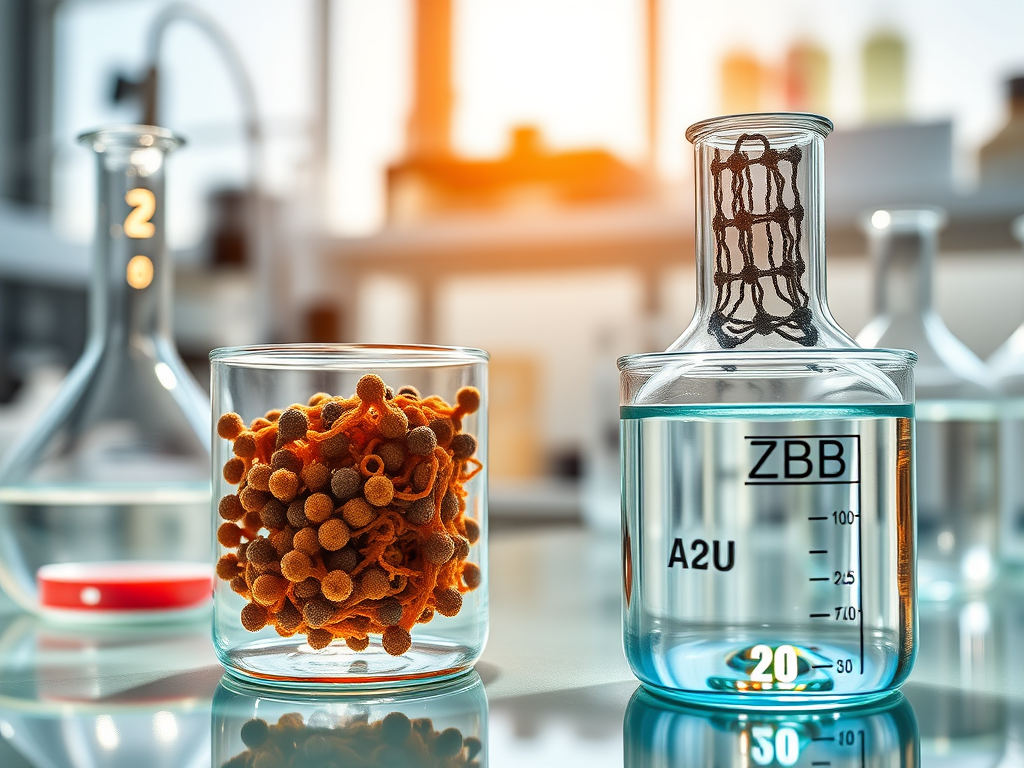
In a new study published in the journal BiomassBiomass is a complex biological organic or non-organic solid product derived from living or recently living organism and available naturally. Various types of wastes such as animal manure, waste paper, sludge and many industrial wastes are also treated as biomass because like natural biomass these More Conversion and Biorefinery, authors James Friday Amaku, Okoche Kelvin Amadi, Fanyana M. Mtunzi, and Jesse Greener present a promising solution for a growing environmental problem: pharmaceutical contamination in wastewater. The study, titled “Adsorption capacity of nanocomposite synthesized using biocharBiochar is a carbon-rich material created from biomass decomposition in low-oxygen conditions. It has important applications in environmental remediation, soil improvement, agriculture, carbon sequestration, energy storage, and sustainable materials, promoting efficiency and reducing waste in various contexts while addressing climate change challenges. More sourced from Telfairia occidentalis stem and titanium oxide for the removal of acetaminophen,” details the creation and testing of a new nanocomposite adsorbent. This material, derived from biochar and modified with titanium and zinc oxides, has demonstrated superior efficiency in removing acetaminophen from aqueous solutions, offering a low-cost, effective method for wastewater treatment.
Emerging contaminants (ECs) like acetaminophen, a common pain reliever, are increasingly found in water bodies worldwide. With a global production of about one million tons per year, acetaminophen concentrations can reach as high as 10 mg dm⁻³ in wastewater treatment plant effluents. These contaminants are a major concern due to their potential harmful effects on human health and the environment. Current research is focused on developing simple, economical, and effective methods to remove them, and adsorption is a leading technique.
The researchers synthesized a nanocomposite, TZB, from biochar (TBC) derived from Telfairia occidentalis stems. The TBC was modified with titanium dioxide (TiO2) and zinc oxide (ZnO) nanoparticles. The TZB and the pristine TBC were then tested for their ability to adsorb acetaminophen (APH) from a simulated wastewater solution. This modification was crucial. The TZB nanocomposite demonstrated a significantly greater adsorption capacity compared to the pristine biochar. The successful incorporation of the nanometals onto the biochar surface was confirmed by scanning electron microscopy (SEM) and X-ray diffraction (XRD) analysis, which showed enhanced surface-coated characteristics and a semi-crystalline structure for TZB.
The study found that the optimal conditions for acetaminophen removal occurred at a neutral pHpH is a measure of how acidic or alkaline a substance is. A pH of 7 is neutral, while lower pH values indicate acidity and higher values indicate alkalinity. Biochars are normally alkaline and can influence soil pH, often increasing it, which can be beneficial More of 7, an adsorbent dose of 30 mg, and a contact time of 100 minutes. Under these conditions, the TZB nanocomposite achieved an impressive uptake capacity of approximately 49 mg g⁻¹. The pristine TBC, in comparison, only reached 15 mg g⁻¹ after the same contact time. This rapid initial adsorption suggests that the TZB can remove acetaminophen from a solution almost immediately upon contact.
Further investigation into the adsorption mechanism revealed that the process is best described by a pseudo-second-order kinetic model for both TZB and TBC. This suggests that the rate-limiting step involves chemical interactions, such as the sharing or exchange of electrons between the adsorbent’s active sites and the acetaminophen molecules. The study also highlighted the role of π-π interactions, where electrons from the adsorbent’s aromatic rings interact with the aromatic ring of acetaminophen, as well as hydrogen bonding and pore entrapment.
The efficacy of TZB was not only limited to its high adsorption capacity but also extended to its performance under varying conditions and its reusability. Thermodynamic studies showed that the adsorption process was endothermic and spontaneous, meaning it was favored by higher solution temperatures. This is a crucial finding, indicating that TZB could be effective in treating polluted effluents regardless of their temperature. Furthermore, the nanocomposite demonstrated excellent reusability, maintaining a removal efficiency of about 79% after four cycles of regeneration using an ethanol-based eluting agent.
In addition to its adsorption capabilities, TZB exhibited superior bifunctional characteristics. The incorporation of ZnO nanoparticles gave the nanocomposite strong antioxidant and antibacterial properties. TZB showed greater inhibitory efficiency than TBC in a DPPH assay, and it produced a larger zone of inhibition against Escherichia coli compared to pristine biochar. These dual properties make TZB not only a tool for removing contaminants but also for potentially disinfecting wastewater. The study’s cost estimation also makes a compelling case, with a cost-performance ratio of approximately $0.204 L⁻¹, indicating that TZB could be a productive and affordable adsorbent for industrial wastewater treatment.
SOURCE: Amaku, J. F., Amadi, O. K., Mtunzi, F. M., & Greener, J. (2025). Adsorption capacity of nanocomposite synthesized using biochar sourced from Telfairia occidentalis stem and titanium oxide for the removal of acetaminophen. Biomass Conversion and Biorefinery, 15(9), 1–13.


Leave a Reply