
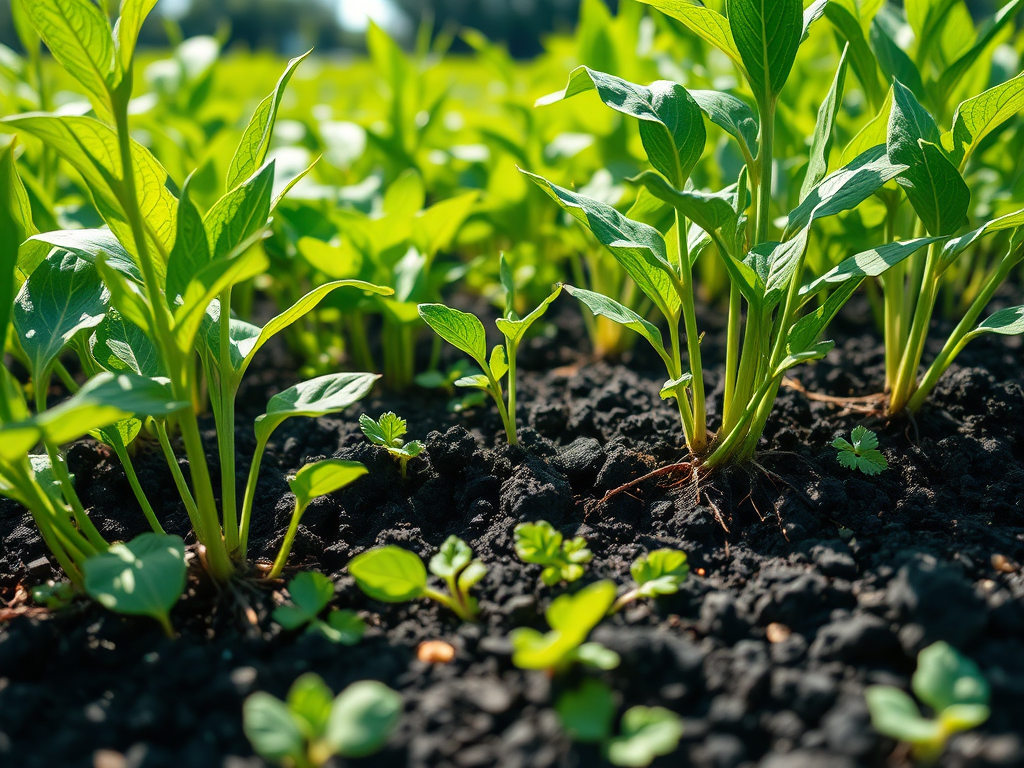
The concept of “biocharBiochar is a carbon-rich material created from biomass decomposition in low-oxygen conditions. It has important applications in environmental remediation, soil improvement, agriculture, carbon sequestration, energy storage, and sustainable materials, promoting efficiency and reducing waste in various contexts while addressing climate change challenges. More,” has moved from a historical curiosity to a central topic in modern agricultural science. A new review in the journal Preprints.org by Cheng Liu, Chao Wang, and their colleagues, explores the powerful, multifaceted role of biochar in agriculture, moving from soil improvement to boosting plant and food health. This comprehensive review, which includes the authors’ own extensive field research, synthesizes lessons on how biochar acts as a “black gold” for crop production. The findings present a strong case for biochar as a nature-based solution to achieve global sustainability goals.
One of biochar’s most fundamental benefits is its ability to improve soil health and fertility, creating a better environment for plants to thrive. Biochar’s porous structure significantly improves soil’s physical properties, leading to a 7.6% to 29% decrease in bulk density and a 7% to 59% increase in porosityPorosity of biochar is a key factor in its effectiveness as a soil amendment and its ability to retain water and nutrients. Biochar’s porosity is influenced by feedstock type and pyrolysis temperature, and it plays a crucial role in microbial activity and overall soil health. Biochar More across various studies. This translates to better water retention, with one meta-analysis showing a 15.1% increase in soil water holding capacityWater holding capacity is the amount of water that soil can retain. Biochar can significantly increase the water holding capacity of soil, improving its ability to withstand drought conditions and support plant growth. More. The material also acts like a nutrient sponge, retaining essential elements like phosphorus, potassium, and calcium. According to a meta-analysis, biochar amendment can increase soil available phosphorus content by an average of 45-65% and plant phosphorus uptake by 55%.
The improved soil conditions directly promote plant health and root growth. A global meta-analysis revealed that biochar application can boost root biomassBiomass is a complex biological organic or non-organic solid product derived from living or recently living organism and available naturally. Various types of wastes such as animal manure, waste paper, sludge and many industrial wastes are also treated as biomass because like natural biomass these More by 32%, root volume by 29%, and root surface area by 39%. This isn’t just about bigger roots; it’s about smarter roots. Biochar encourages the growth of fine roots, which are crucial for a plant’s ability to take up water and nutrients, enhancing its overall resilience. For some crops like peanuts, biochar can even increase the number of root nodules, which are essential for nitrogen fixationNitrogen is a crucial nutrient for plant growth, but plants can’t directly absorb it from the air. Nitrogen fixation is a process where certain bacteria convert atmospheric nitrogen into a form that plants can use. Biochar can provide a home for these nitrogen-fixing bacteria, enhancing More, leading to a roughly 10% increase in yield.
These soil and root improvements directly translate to higher crop productivity. A meta-analysis of over 200 experiments found that biochar application can increase crop productivity by an average of 15%. The yield response varies by crop type and soil conditions. For instance, maize shows a higher grain yield response (14.3%) compared to wheat (8.0%) and rice (3.4%). Tuber and root vegetables tend to have the highest yield response overall. Biochar is particularly effective in acidic or coarse-textured soils and in tropical climates, where it helps mitigate poor soil conditions.
Beyond boosting yields, biochar also strengthens a plant’s natural defenses against disease. A global meta-analysis found that biochar amendment reduced disease severity by a remarkable 47.5% on average. This occurs through several mechanisms. Biochar’s alkaline nature can change soil pHpH is a measure of how acidic or alkaline a substance is. A pH of 7 is neutral, while lower pH values indicate acidity and higher values indicate alkalinity. Biochars are normally alkaline and can influence soil pH, often increasing it, which can be beneficial More, creating an unfavorable environment for certain pathogens. It can also deactivate toxic compounds released by roots that would otherwise harm the plant. Finally, biochar reshapes the soil’s microbial community, promoting beneficial microorganisms and increasing the overall complexity of the microbial network, which helps a plant resist disease.
Perhaps most compellingly, biochar’s benefits extend to the food itself. The review highlights that biochar can enhance the nutritional value of crops. In various fruits and vegetables, biochar has been shown to increase vitamin C content and reduce nitrate content. One study on peanuts found that biochar amendment, particularly from maize straw, increased the crucial oleic acid-to-linoleic acid ratio by up to 30%, meeting the standard for high-oleic oilseed. Biochar also helped reduce residual pesticides in ginseng roots, with a 33% reduction in procymidone content when using maize straw biochar. These findings suggest that biochar can contribute to both plant development and human nutrition, demonstrating its potential to produce healthier food in an era of degraded soils.
Source: Liu, C., Wang, C., Shang, S., Ma, J., Shan, S., Yue, Q., Li, L., & Pan, G. (2025). Biochar-Assisted Agriculture: From Healthy Soil to Healthy Plants. Preprints.org.




Leave a Reply