

The Major Key Takeaways
- Massive Reduction in Air Pollution: Adding 10% of biocharBiochar is a carbon-rich material created from biomass decomposition in low-oxygen conditions. It has important applications in environmental remediation, soil improvement, agriculture, carbon sequestration, energy storage, and sustainable materials, promoting efficiency and reducing waste in various contexts while addressing climate change challenges. More, created at a high heat (600∘C), during composting slashed climate-warming methane (CH4) emissions by 88% and nitrous oxide (N2O) by 50%, significantly reducing the compost’s environmental footprint.
- Faster, Hotter Composting: The same 10% high-heat biochar treatment helped the compost pile reach the highest temperature, 63.5∘C, indicating faster and more efficient decomposition of the organic waste.
- Better Compost Quality: The biochar treatments improved the compost’s overall quality, notably by reducing the Carbon-to-Nitrogen (C:N) ratio from 27:1 to 21:1 in one treatment, a key metric indicating the compost is mature and ready for use in soil.
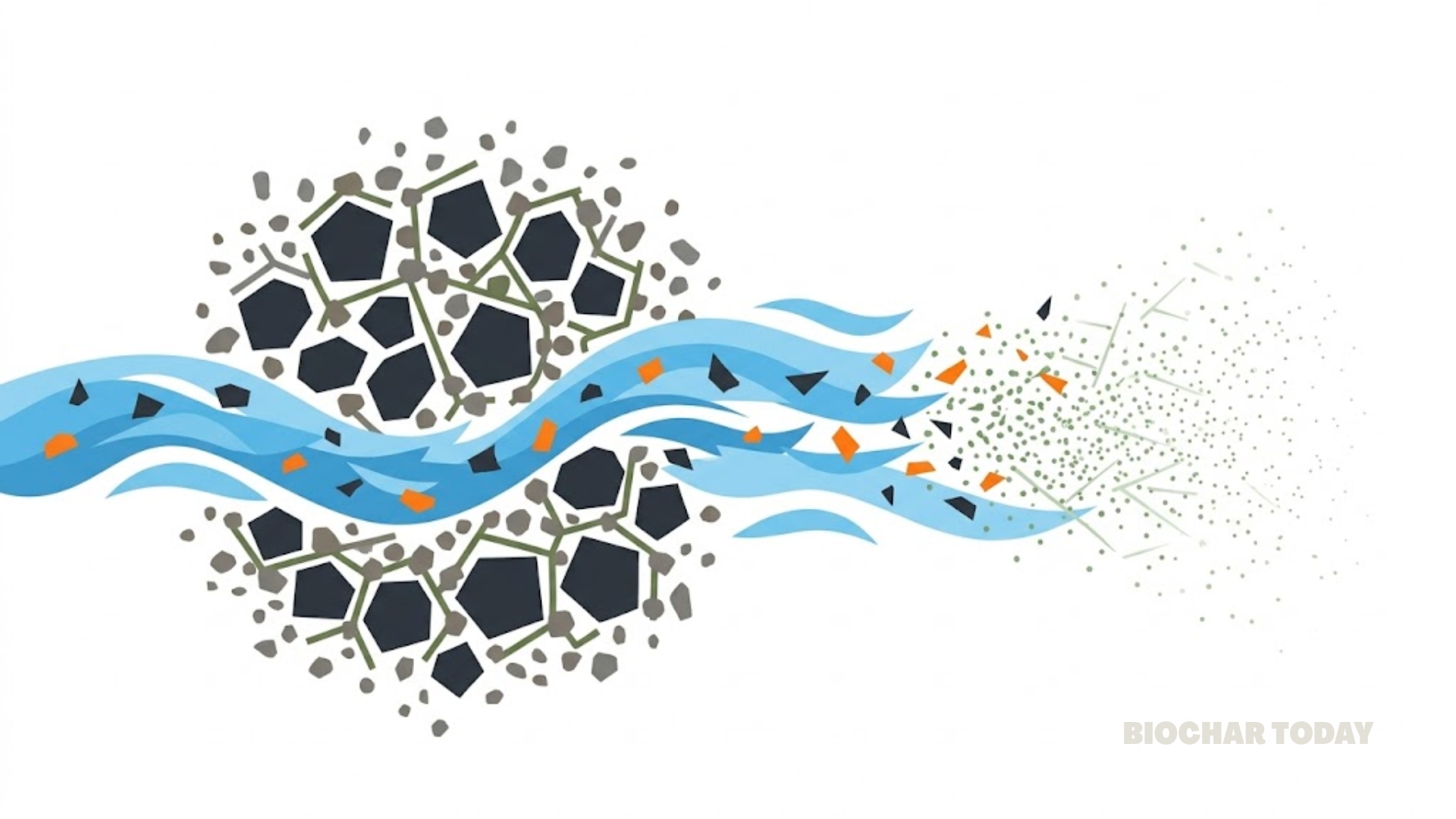
- Biochar’s Secret Power is Surface Area: The reason the 600∘C biochar was so effective is because the higher heat drastically increased its internal surface area, turning it into a porous material that’s highly effective at trapping and stabilizing nutrients like ammonia and improving aeration.
- Sustainable Waste Solution: This method turns local date palm agricultural waste into a valuable soil amendmentA soil amendment is any material added to the soil to enhance its physical or chemical properties, improving its suitability for plant growth. Biochar is considered a soil amendment as it can improve soil structure, water retention, nutrient availability, and microbial activity. More while simultaneously addressing the environmental problems of waste disposal and greenhouse gas emissions, a win-win for sustainability in agriculture.
In “Effects of Biochar Addition on Gaseous Emissions During the Thermophilic Composting Phase and Subsequent Changes in Compost Characteristics,” published in the journal Processes, researchers Ibrahim A. Abdelfadeel, Khaled D. Alotaibi, Fahad N. Alkoiak, Saud S. Aloud, and Ronnel B. Fulleros investigated how modifying biochar (BC) properties and application rates could enhance composting efficiency and mitigate harmful gaseous emissions. The study focused on composting date palm residues with chicken manure and testing biochar produced at two different pyrolysisPyrolysis is a thermochemical process that converts waste biomass into bio-char, bio-oil, and pyro-gas. It offers significant advantages in waste valorization, turning low-value materials into economically valuable resources. Its versatility allows for tailored products based on operational conditions, presenting itself as a cost-effective and efficient More temperatures (300∘C and 600∘C) and two application rates (5% and 10%) against a control group with no BC. The findings demonstrate that high-temperature biochar, specifically at a 10% rate (T2R2), is a highly effective tool for optimizing the composting process.
The most impactful result was the significant reduction in gaseous emissions from the best-performing treatment, T2R2 (BC pyrolyzed at 600∘C at a 10% rate), relative to the control. The treatment resulted in substantial cuts across all measured gases: methane (CH4) emissions were reduced by 88±4.2%, nitrous oxide (N2O) by 50±2.7%, ammonia (NH3) by 55±2.7%, and carbon dioxide (CO2) by 23±2.3%. The impressive mitigation potential is largely attributed to the high-temperature biochar’s superior properties, such as a vastly increased BET surface area, which jumped from 3.72 m2g−1 to 162.94 m2g−1 when the pyrolysis temperature was raised from 300∘C to 600∘C. This improved surface area and porosityPorosity of biochar is a key factor in its effectiveness as a soil amendment and its ability to retain water and nutrients. Biochar’s porosity is influenced by feedstock type and pyrolysis temperature, and it plays a crucial role in microbial activity and overall soil health. Biochar More enhance the biochar’s ability to adsorb volatile compounds like ammonia, preventing its subsequent transformation into harmful greenhouse gases, and promoting improved aeration to suppress anaerobic conditions that favor CH4 production.
In addition to reducing emissions, the T2R2 treatment resulted in the highest thermophilic temperature, peaking at 63.5±0.5∘C on day 7. This elevated temperature is a critical indicator of accelerated microbial activity and decomposition, falling well within the optimal range of 45∘C to 65∘C for effective thermophilic composting. Furthermore, the addition of biochar, regardless of the rate, significantly influenced the physicochemical properties of the final compost, indicating an improvement in quality. The C:N ratio, a key indicator of compost maturity, decreased from 27:1 in the control to 21:1 in the T1R2 treatment (BC pyrolyzed at 300∘C at 10% rate), demonstrating an accelerated composting process. The total nitrogen content also peaked in the T1R2 treatment at 0.8±0.001%. Other beneficial changes included a decrease in bulk density to 410±0.08 kg/m3 in the T1R1 treatment (BC at 300∘C at 5% rate) compared to the control (496.0±1.7 kg/m3) and an increase in electrical conductivity (EC) to 9.5±0.006 ms/cm in the T2R1 treatment (BC at 600∘C at 5% rate) from 6.8±0.01 ms/cm in the control. Overall, the study strongly advocates for using high-temperature biochar, specifically at a 10% application rate, as an effective additive to mitigate emissions and enhance the quality of date palm waste compost. Future research should investigate the long-term effects of this BC-amended compost on soil health and crop productivity to fully quantify its agronomic and environmental benefits.
Source:Abdelfadeel, I. A., Alotaibi, K. D., Alkoiak, F. N., Aloud, S. S., & Fulleros, R. B. (2025). Effects of Biochar Addition on Gaseous Emissions During the Thermophilic Composting Phase and Subsequent Changes in Compost Characteristics. Processes, 13(10), 3210



Leave a Reply