
The global push for renewable energy sources has intensified research into efficient energy storage systems. Technologies like wind and solar, while promising, face challenges in consistent energy delivery during off-peak periods or when the source is unavailable. Supercapacitors, capable of rapid energy storage and delivery, offer a compelling solution to this variability. The development of cost-effective and sustainable electrode materials for these devices is a key focus, especially those derived from abundant biowaste. In this context, a study by Tasiu Zangina and Muhammad Auwal Sa’ad, published in the Nigerian Journal of Physics, explored the potential of sugarcane bagasse-based biocharBiochar is a carbon-rich material created from biomass decomposition in low-oxygen conditions. It has important applications in environmental remediation, soil improvement, agriculture, carbon sequestration, energy storage, and sustainable materials, promoting efficiency and reducing waste in various contexts while addressing climate change challenges. More for supercapacitor electrodes, revealing crucial insights into optimal production parameters.
BiomassBiomass is a complex biological organic or non-organic solid product derived from living or recently living organism and available naturally. Various types of wastes such as animal manure, waste paper, sludge and many industrial wastes are also treated as biomass because like natural biomass these More is an abundant and widely distributed natural resource, with countries like Nigeria possessing substantial potential, estimated at about 144 million tonnes per year. Converting this agricultural waste into valuable products like biochar serves a dual purpose: it addresses waste disposal challenges and offers an economic argument for sustainable energy technologies. Biomass-derived chars are recognized for their high carbon content, porosityPorosity of biochar is a key factor in its effectiveness as a soil amendment and its ability to retain water and nutrients. Biochar’s porosity is influenced by feedstock type and pyrolysis temperature, and it plays a crucial role in microbial activity and overall soil health. Biochar More, and large surface area, making them attractive for energy storage applications. Previous research has already successfully converted various biomasses, including banana fibers, neem leaves, rice husk, and sugarcane bagasse, into biochar electrodes with impressive surface areas ranging from 1097 to 1788 m²g⁻¹.
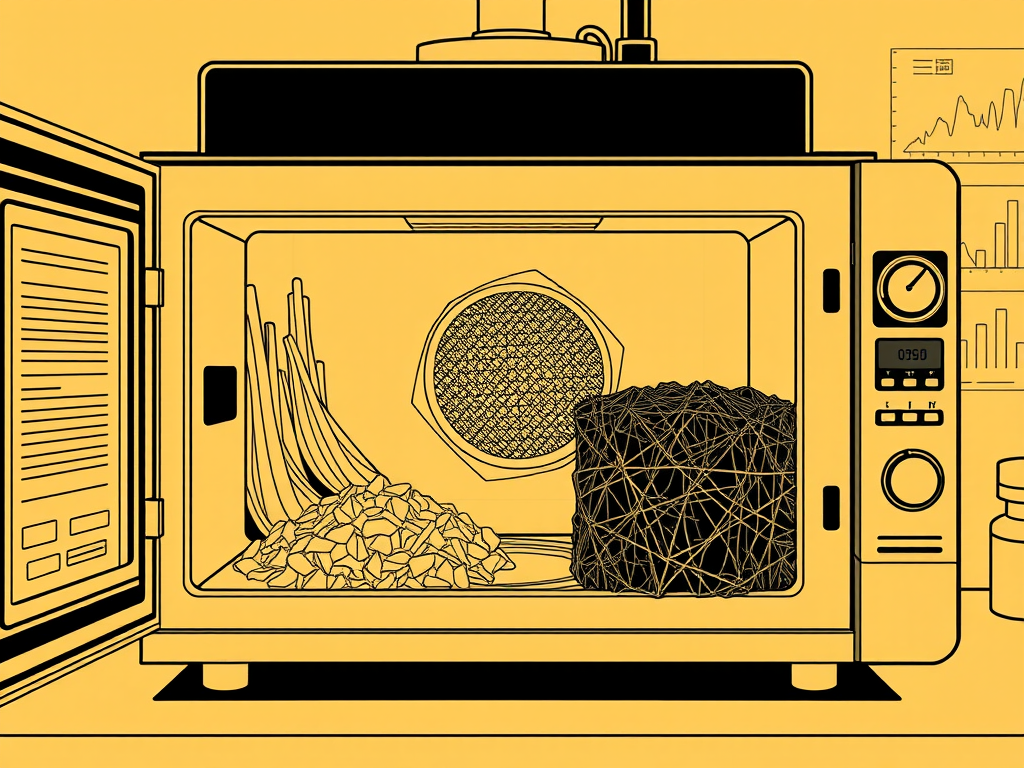
To investigate this potential, Zangina and Sa’ad produced biochar from sugarcane bagasse, obtained locally in Kano State, Nigeria. Their method involved pyrolyzing 30.0 grams of sugarcane bagasse in a modified microwave oven at a temperature of 200°C, under an inert nitrogen atmosphere. This process aimed to decompose the organic material in the absence of oxygen, yielding a solid char product. The study observed a significant mass loss during pyrolysisPyrolysis is a thermochemical process that converts waste biomass into bio-char, bio-oil, and pyro-gas. It offers significant advantages in waste valorization, turning low-value materials into economically valuable resources. Its versatility allows for tailored products based on operational conditions, presenting itself as a cost-effective and efficient More due to the release of volatile compounds like water, acetic acid, and carbon dioxide.
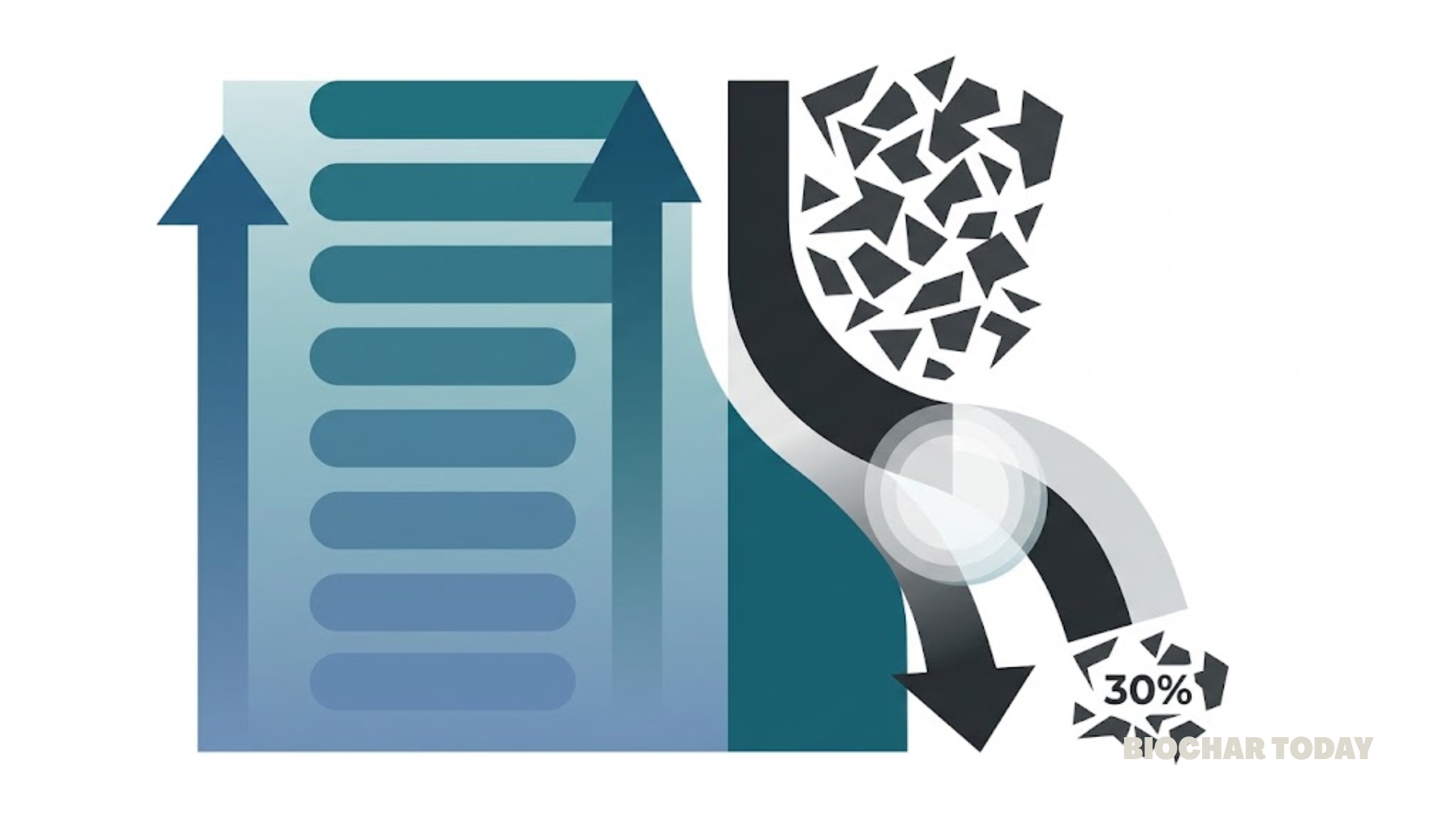
Upon completion of the pyrolysis, 5.0 grams of biochar were obtained from the initial 30.0 grams of biomass. This translates to a biochar yield of approximately 16.67% of the original biomass weight. Chemical analysis using Scanning Electron Microscopy (SEM) and Energy Dispersive X-ray (EDX) revealed that the produced biochar primarily consisted of carbon (78.59%) and nitrogen (13.84%), alongside trace amounts of silicon, aluminum, potassium, calcium, sodium, sulfur, and magnesium. Morphological analysis showed cracks on both the raw biomass and the biochar, indicating brittleness, though differences in crack density suggested variations in material properties due to processing conditions.
Crucially, Brunauer-Emmett-Teller (BET) analysis provided insights into the biochar’s surface area and pore characteristics. The biochar produced at 200°C (SB200) had a surface area of 5.42 m²g⁻¹, a pore volume of 3.33 cc g⁻¹, and a pore radius of 2.07 nm. Comparing these figures to the raw sugarcane bagasse (SB000), which had a higher surface area of 8.92 m²g⁻¹ and a pore volume of 5.51 cc g⁻¹ , it was observed that the pyrolysis process at this relatively low temperature led to a reduction in porosity and surface area. While the pore radius remained largely similar, suggesting the overall pore structure was retained, the diminished surface area directly impacts its suitability for supercapacitor applications.
The primary finding for supercapacitor application was clear: the biochar produced at 200°C is not suitable for supercapacitor electrodes. Effective biochar electrodes require a significantly larger surface area, typically at least 1000 m²g⁻¹, and specific pore volumes (micropores >2 nm, mesopores 2-50 nm). The observed 5.42 m²g⁻¹ surface area falls far below this industry benchmark. The researchers noted that the microwave oven used experienced thermal shutdowns at 200°C, preventing them from reaching higher desired pyrolysis temperatures. This limitation suggests that higher temperatures are generally required to promote the formation of more stable carbon structures, enhance pore volume, and develop the extensive porosity necessary for high-performance supercapacitor electrodes.
Despite its limitations for supercapacitor electrodes at this specific pyrolysis temperature, the biochar produced still possesses valuable qualities. Its elemental composition and structure at 200°C suggest potential applications in other areas, including soil fertility improvement, enhanced soil structure, carbon sequestration, pHpH is a measure of how acidic or alkaline a substance is. A pH of 7 is neutral, while lower pH values indicate acidity and higher values indicate alkalinity. Biochars are normally alkaline and can influence soil pH, often increasing it, which can be beneficial More regulation, pollution mitigation, and microbial activity enhancement. These findings underscore the versatility of biochar as a material, even when not optimized for a specific high-tech application. The study ultimately recommends that future research should focus on utilizing microwave ovens with better features to achieve pyrolysis temperatures greater than 200°C, which is essential for producing biochar effective in supercapacitor applications. This will allow for the development of biochar with the necessary high surface area and pore characteristics for next-generation energy storage.
Source: Zangina, T., & Sa’ad, M. A. (2025). Investigating Sugarcane Bagasse Based Biochar for Supercapacitor Electrodes. Nigerian Journal of Physics, 34(2).


Leave a Reply