
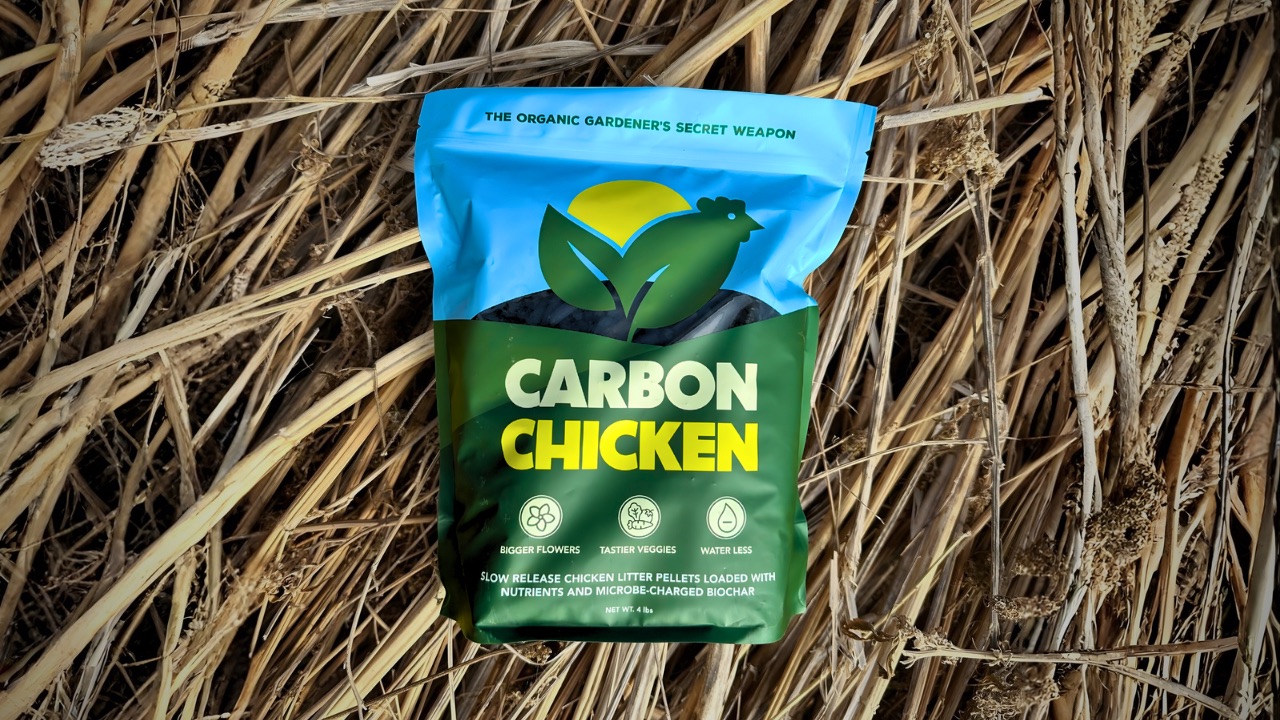
It began with a serendipitous reunion at a pitch competition in Fayetteville, Arkansas. On stage was Jody Hardin, a fifth-generation farmer and former journalist, pitching a concept to clean up the Illinois River watershed. In the audience sat Richard Ims, a local “legend” in waste management known for diverting tons of food waste from landfills.
Though they had met a decade prior—when Hardin bought pastured meat birds from Ims for his All Arkansas Basket-A-Month Community Supported Agriculture (CSA) program—they didn’t recognize each other immediately. But the mission did. Hardin’s pitch for “Carbon Chicken” wasn’t just about fertilizer; it was a blueprint for a negative-emissions technology that could solve a massive regional crisis.
“I just heard your pitch. I love it,” Ims told Hardin after the event. They have worked together nearly every day since, driven by a shared vision to turn a liability into a legacy.
The Pollution Paradox
Northwest Arkansas is the heart of the American broiler industry, producing millions of tons of poultry litter annually. For decades, this nutrient-rich waste has been a double-edged sword: a potent fertilizer that, when over-applied, leaches phosphorus into the watershed, fueling lawsuits and environmental degradation.
Simultaneously, the farmers growing these birds often find themselves trapped in a cycle of debt. They invest millions in infrastructure only to face mandatory, costly retrofits that wipe out their margins. “Sometimes, the only margin the farmer gets is… when they sell the chicken litter,” Ims explains, noting that some net as little as $30,000 a year despite massive capital risks.
Hardin and Ims saw a way to address both the ecological and social fractures of this system.
The Recipe: 80:20 and a “Secret Sauce”
The core of Carbon Chicken is deceptively simple: a pelletized blend of 80% composted chicken litter and 20% inoculated biocharBiochar is a carbon-rich material created from biomass decomposition in low-oxygen conditions. It has important applications in environmental remediation, soil improvement, agriculture, carbon sequestration, energy storage, and sustainable materials, promoting efficiency and reducing waste in various contexts while addressing climate change challenges. More: Carbon Chicken 80:20 fertilizer/soil conditioner.
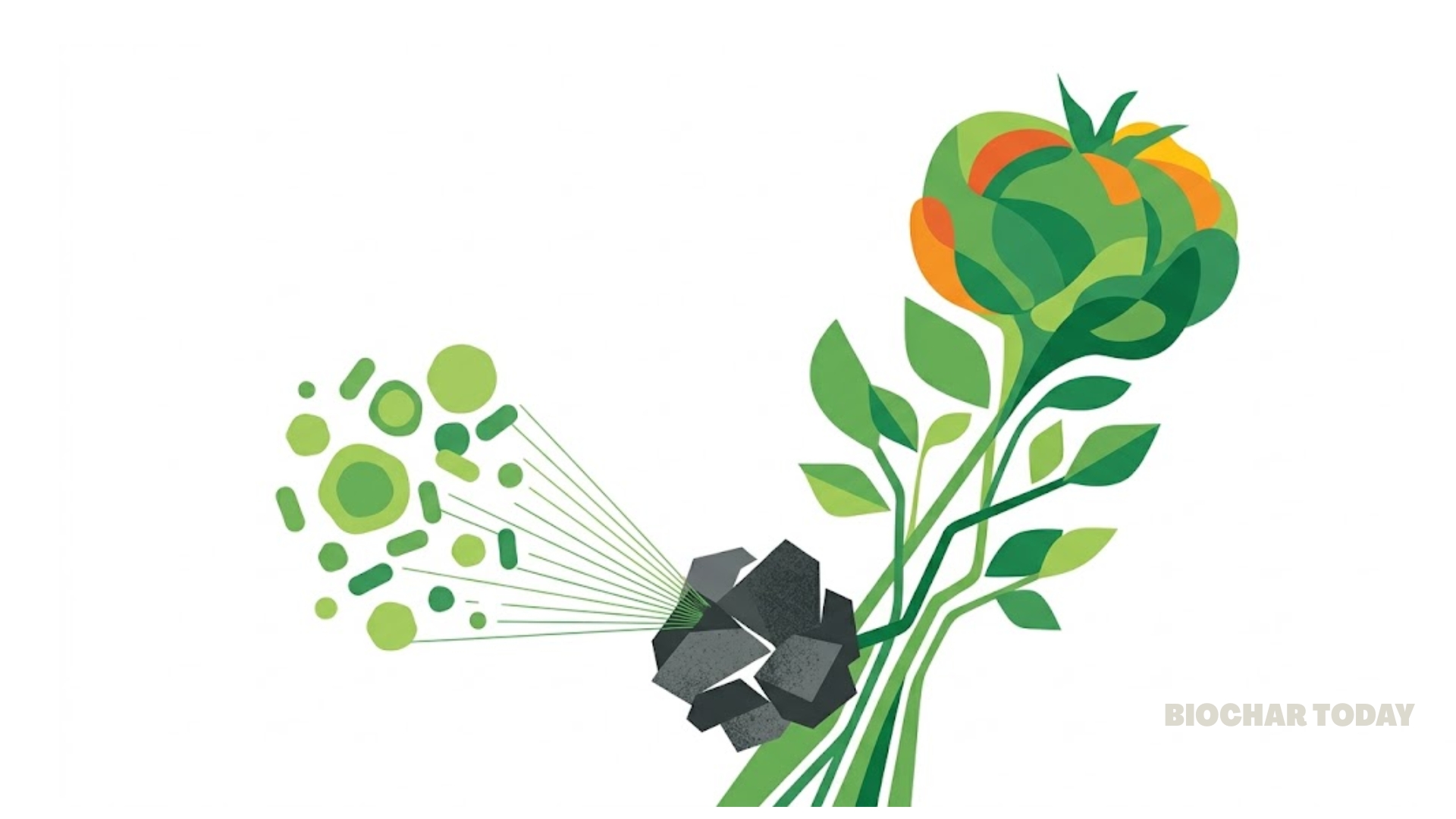
While raw litter is often full of noxious weed seeds and ammonia, Carbon Chicken’s process transforms it. They co-compost the litter with biochar, heating the windrows to 140 degrees five times to sterilize weed seeds. The biochar acts as a sponge, absorbing the volatile ammonia and stabilizing the nutrients.
But the real magic lies in their proprietary inoculant—a biodynamic “compost tea” containing over 200 strains of bacteria and fungi. This biological kickstarter neutralizes odors and supercharges the final product.
“Farmers already know chicken litter is the best fertilizer in nature,” Hardin says. “But they don’t like the raw litter because of the weed seeds.” By stabilizing the product and pelletizing it, Carbon Chicken created a user-friendly, odorless amendment that fits existing farm equipment and appeals to backyard gardeners alike.
Beyond Sustainability: The Flavor Factor
While the environmental narrative is compelling, Carbon Chicken sells on results. Hardin, who spent years selling to James Beard Award-nominated chefs, knows that “sustainability” doesn’t sell food—flavor does.
“It really boils down to taste,” Hardin says. “Healthy soil creates a healthy farmer, a healthy customer, a healthy community.”
Field trials back this up. In a sweet potato trial using 30-gallon air pots, plants treated with the Carbon Chicken 80/20 mix yielded 25 to 30 pounds of produce, compared to just eight pounds for the untreated control group.
Scaling the Solution
For years, Carbon Chicken operated as an artisanal “innovation farm,” producing about 50 tons a year. It was a proof of concept, not a commercial engine.
That changed recently with two major breakthroughs. First, the company secured a partnership with a large pellet mill operator who had just invested $4 million in a state-of-the-art facility. This partner, who also runs a poultry house clean-out service, can now source, compost, and pelletize Carbon Chicken’s formula at a rate of 50 tons per day—handling everything from manufacturing to shipping.
“It’s a miracle for us,” says Ims. “Now we can go with confidence to big box stores, because if you screw up the fulfillment, you pretty much have one chance.”
Simultaneously, Tractor Supply agreed to a 100-store test market, a massive validation that will put Carbon Chicken on shelves across the region.
A Vision for Remediation
Hardin and Ims aren’t stopping at fertilizer. Their long-term roadmap includes integrating industrial hemp to phytoremediate phosphorus “hot spots” in the watershed. The hemp would pull toxins from the soil, the high-omega seeds would feed laying hens, and the stalks would be pyrolyzed into biochar—creating a closed-loop system that cleans the water and heals the land.
“We are dreamers in a way,” admits Ims. But with production scaling and retailers signing on, the dream is rapidly becoming a reality.
Lessons Learned and Takeaways for the Biochar Industry
Based on the Carbon Chicken journey, here are key takeaways for biochar entrepreneurs and advocates:
- Solve a Specific, Local Problem. Carbon Chicken Project didn’t just pitch “carbon sequestration.” They pitched a solution to a specific regional crisis (watershed pollution) and a specific user pain point (weed seeds and odor in poultry litter).
- Speak the Farmer’s Language. Instead of leading with climate jargon, Hardin and Ims focus on “nutrient density,” “yield,” and “taste.” They frame biochar as a tool for profitability and crop quality, which resonates more deeply with growers.
- Don’t Sell Raw Biochar Alone. Raw biochar can be dangerous if misused (robbing soil of nitrogen). By pre-inoculating it with nutrient-rich compost and biodynamic microbes, Carbon Chicken ensures the product works immediately, protecting the customer from user error.
- Leverage Existing Infrastructure. Rather than building their own factory from scratch, Carbon Chicken Project first developed a go-to-market product (Carbon Chicken 80:20) and then, found a partner with excess capacity and aligned interests (the pellet mill operator). This “asset-light” approach allowed them to scale production from 50 tons/year to 50 tons/day overnight.
- Focus on “Value-Added” Waste. They treat waste not as trash but as a resource. By turning a liability (raw litter with potential legal risks) into a premium asset (Omri-listed fertilizer), they created a circular economic model that pays for itself.




Leave a Reply