

The global biocharBiochar is a carbon-rich material created from biomass decomposition in low-oxygen conditions. It has important applications in environmental remediation, soil improvement, agriculture, carbon sequestration, energy storage, and sustainable materials, promoting efficiency and reducing waste in various contexts while addressing climate change challenges. More market is at a critical inflection point, transitioning from a nascent industry to a core component of corporate climate strategy. Driven by an urgent need to meet ambitious 2030 net-zero targets, companies worldwide are facing a rapidly diminishing supply of high-quality carbon removal solutions. Biochar has emerged as a preferred method, accounting for 86% of all carbon dioxide removal (CDR) deliveries in 2024. The market is now defined by a profound imbalance: explosive demand is far outstripping the current supply, leading to intense competition and escalating prices. In this environment, long-term procurement agreements, known as offtakes, have become more than a mere transaction; they are a strategic imperative.
A new report from Supercritical reveals that 62% of high-quality biochar capacity for 2025 is already locked into such agreements, with nearly 30% secured through 2026. Companies that have secured multi-year offtakes are gaining crucial supply security and cost stability, protecting their net-zero goals. Conversely, those relying on the spot market face shrinking availability, significant price volatility, and the risk of being priced out or forced to purchase lower-quality credits. Hence, it is imperative to analyse the biochar offtake phenomenon, outlining its strategic advantages, the scope for new projects, and the transformative potential of precision, data-driven solutions in this evolving market.
Biochar and its Offtakes As The Foundation of Modern Climate Strategy
The fundamental shift in the biochar market is characterized by a move away from short-term transactions toward long-term, structured procurement. This strategic evolution is centered on the offtake agreement, a mechanism that underpins the scalability and financial viability of the entire industry.
Defining the Biochar Offtake Agreement
An offtake agreement is a long-term purchase contract that allows a company to secure future carbon removal credits before they are issued. Unlike a spot purchase, a one-time transaction for immediate delivery, an offtake is a multi-year commitment that provides predictability and certainty for both the buyer and the supplier. These agreements are structured to meet specific procurement goals, with terms defined by factors such as volume commitment, timeframe, and payment structure. For example, many companies commit to securing 80-90% of their expected carbon removal needs through offtakes, leaving a small portion for spot purchases to maintain flexibility or experiment with new technologies. The structure of a well-designed offtake can include clauses such as a Most Favored Nation (MFN) clause (Best Price Guarantee), which protects buyers by ensuring they receive pricing adjustments if the market shifts downward, and various payment models, such as on-delivery or upfront payment.
Strategic Advantages for Corporate Buyers
For corporate buyers, the primary benefit of an offtake agreement is the ability to manage risk in a volatile market. The biochar market is currently defined by price volatility and scarcity, with prices having increased at a 29.2% compound annual growth rate (CAGR) over the past four years. By entering into an offtake agreement, a company locks in future supply at predictable prices, effectively hedging against this volatility. The financial benefits are substantial; companies with multi-year offtakes can achieve cost savings of up to 31% compared to those purchasing credits on the spot market.
Furthermore, offtakes guarantee access to high-quality supply. As the market splits between early movers and latecomers, the best supply is quickly secured, leaving those who rely on one-time purchases to compete for what remains, often at a premium or in the form of lower-quality projects. The strategic allocation of a carbon removal portfolio, where most of a company’s needs are met through long-term offtakes, is now considered a best practice for managing cost and risk.
Enabling Scalability for Producers
The value of an offtake is not limited to the buyer; it is the single most critical mechanism for scaling new biochar projects. The biochar industry is fragmented, with each production site typically constrained to a capacity of around 100,000 tonnes per year. This distributed and capital-intensive nature makes it difficult for new ventures to secure the significant upfront capital needed to build their infrastructure.
This is where the offtake agreement transcends its role as a simple sales contract. By pre-selling the carbon credits that will be produced, offtakes demonstrate a guaranteed, long-term revenue stream to investors, thereby unlocking the project financing that would otherwise be unavailable. Without this financial certainty, new projects would stall. The offtake, therefore, acts as a de facto project finance mechanism, allowing a nascent industry to aggregate demand and secure the capital necessary to scale its infrastructure, which is a prerequisite for meeting future global carbon removal needs.
The Global Biochar Market As A Landscape of Scarcity and Opportunity
The current market environment is characterized by a powerful interplay of rapidly increasing demand and significant supply-side constraints. This dynamic creates both immense opportunity and pressing urgency for new entrants. The global biochar market is expanding rapidly, driven by a surge in demand for durable carbon removal. The market was valued at over $763 million in 2024 and is projected to surpass $2 billion by 2032, with a CAGR of 13.6%. This growth is fueled by corporate net-zero commitments, with a potential 25x increase needed to meet existing demand.
Despite this explosive growth, the market faces significant supply constraints. The supply of high-quality biochar is limited and fragmented, with individual production sites being relatively small. This has led to a locked-in market where over 60% of high-quality biochar supply for 2025 is already secured by long-term offtake agreements. This supply-demand imbalance has resulted in high prices for biochar carbon credits. At an average of $150 per metric ton in 2023, and reaching up to $270 in 2025, biochar credits are significantly more expensive than traditional carbon offsets (e.g., reforestation at $24/ton). However, biochar is a strategic sweet spot on the cost-permanence curve. It offers verifiable, long-term carbon sequestration (hundreds to thousands of years) at a much lower cost than other high-permanence technologies like Direct Air Capture (over $500/ton) and Bioenergy with Carbon Capture and Storage (BECCS) (around $389/ton). This dynamic creates a critical window of opportunity for companies to enter the market and secure a supply of this increasingly valuable commodity.
Pricing Comparison of Key Carbon Credit Types (2025 Averages)
| Credit Type | Average Price per tCO2$e | Permanence |
| Direct Air Capture (DAC) | >$500 | High (1000+ years) |
| Bioenergy with Carbon Capture and Storage (BECCS) | $389 | High (1000+ years) |
| Enhanced Rock Weathering (ERW) | >$200 | High (1000+ years) |
| Biochar | $177 | Medium (100-1000 years) |
| Afforestation, Reforestation, and Revegetation (ARR) | $24 | Low to Medium |
| Improved Forest Management (IFM) | $16 | Low to Medium |
Case Studies of Landmark Offtake Deals
The biochar offtake movement is being led by major corporations that are setting the standard for the industry. These landmark agreements demonstrate the strategic rationale behind securing supply early.
- Google: The technology giant has signed two of the largest biochar-based carbon removal deals to date, with agreements for a total of 200,000 tonnes by 2030.10 The first deal is with India-based Varaha for 100,000 tonnes, which strategically leverages an invasive woody species as a feedstockFeedstock refers to the raw organic material used to produce biochar. This can include a wide range of materials, such as wood chips, agricultural residues, and animal manure. More.10 The second is a 100,000-tonne multi-year contract with Charm Industrial, which utilizes a “polygeneration” approach to produce both bio-oil and biochar.10
- Microsoft: Microsoft has been a significant driver of the market, increasing its biochar investment by nearly 30% in Q1 2024 alone.11 A notable agreement is its offtake with Bolivia-based Exomad Green, secured through the Carbonfuture marketplace, for over 32,000 metric tons of credits.12 This deal showcases the importance of third-party platforms and adherence to standards like the Puro Standard to ensure transparency and quality.12
Select Landmark Biochar Offtake Deals (2023-2025)
| Buyer | Supplier | Location | Volume (tonnes) | Duration | Notable Features |
| Varaha | India | 100,000 | By 2030 | Uses invasive species as feedstock; smallholder farmer involvement | |
| Charm Industrial | USA | 100,000 | Multi-year | Polygeneration approach (bio-oil & biochar) | |
| Microsoft | Exomad Green | Bolivia | >32,000 | By June 2024 | Brokered via Carbonfuture; Puro Standard certification |
Building New Biochar Projects As A Blueprint for Success
The current market dynamic—with demand far exceeding supply and early capacity being rapidly secured—creates a compelling business case for new entrants. However, launching a successful biochar venture requires meticulous planning and a strategic approach to overcoming several critical barriers.
The Business Case for Entry
The primary driver for new biochar projects is the immense, unfulfilled demand for durable carbon removal. The current financing supply is nowhere near what is needed to meet the projected demand of 40-200 MtCO₂ by 2030. This supply-demand imbalance, combined with biochar being the most scalable and cost-effective engineered CDR method, presents a clear and undeniable market opportunity for entrepreneurs and investors who can successfully navigate the industry’s challenges.
Navigating the Three Core Barriers to Launch
Despite the promising outlook, new ventures face several significant hurdles that must be addressed in a comprehensive business plan.
- Feedstock and Logistics: The consistent and sustainable biomassBiomass is a complex biological organic or non-organic solid product derived from living or recently living organism and available naturally. Various types of wastes such as animal manure, waste paper, sludge and many industrial wastes are also treated as biomass because like natural biomass these More availability is a foundational requirement for large-scale production. A major challenge is the logistical complexity of transporting bulky feedstock, with transportation costs alone accounting for up to 50% of the total cost of biochar.
- Financial and Regulatory Hurdles: New projects require significant upfront capital, and securing financing in a nascent market can be difficult without an offtake agreement in place. Regulatory hurdles also exist, as biochar produced from specific waste streams may still be classified as waste, limiting its application to land despite meeting high-quality standards.
- Market and Quality Perception: The industry must overcome the perception of biochar as a niche or experimental product and establish clear, standardized quality guidelines. Inconsistent quality, which is highly dependent on feedstock and production conditions, can hinder the effectiveness of the product in carbon capture.
Key Challenges and Strategic Solutions for New Biochar Projects
| Challenge | Strategic Solution |
| Feedstock and Logistics | Focus on securing a reliable, local feedstock supply (e.g., agricultural or forestry residues) and optimize the supply chain to minimize transportation costs. |
| Financial and Regulatory Hurdles | Secure long-term offtake agreements to unlock project financing and de-risk the venture. Actively engage with regulatory bodies to advocate for standardized quality metrics and a clear “end-of-waste” classification. |
| Market and Quality Perception | Prioritize certifications from recognized international standards (e.g., Puro Standard) to build trust and credibility with buyers. Develop a product with consistent quality and proven effectiveness. |
A robust approach to overcoming the intertwined challenges of logistics, feedstock supply, and capital is through strategic partnerships. Rather than building a fully independent operation, a new venture can co-locate its pyrolyzers at existing biomass power plants. This model leverages the partner’s existing feedstock collection and emissions management infrastructure, effectively offloading the most complex and costly operational burdens. A symbiotic relationship with an offtake partner, which can also handle logistics from “site to soil” and manage carbon credit registration, provides a complete, de-risked pathway to market entry and scalability.
The Future is Here: Precision and Geo-Specific Biochar Solutions
The next wave of innovation in the biochar industry is focused on moving beyond a one-size-fits-all commodity approach to creating a high-value, precision-engineered product. This evolution is driven by advances in biochar science and the integration of cutting-edge technology.
The Science of “Fit-for-Purpose” Biochar
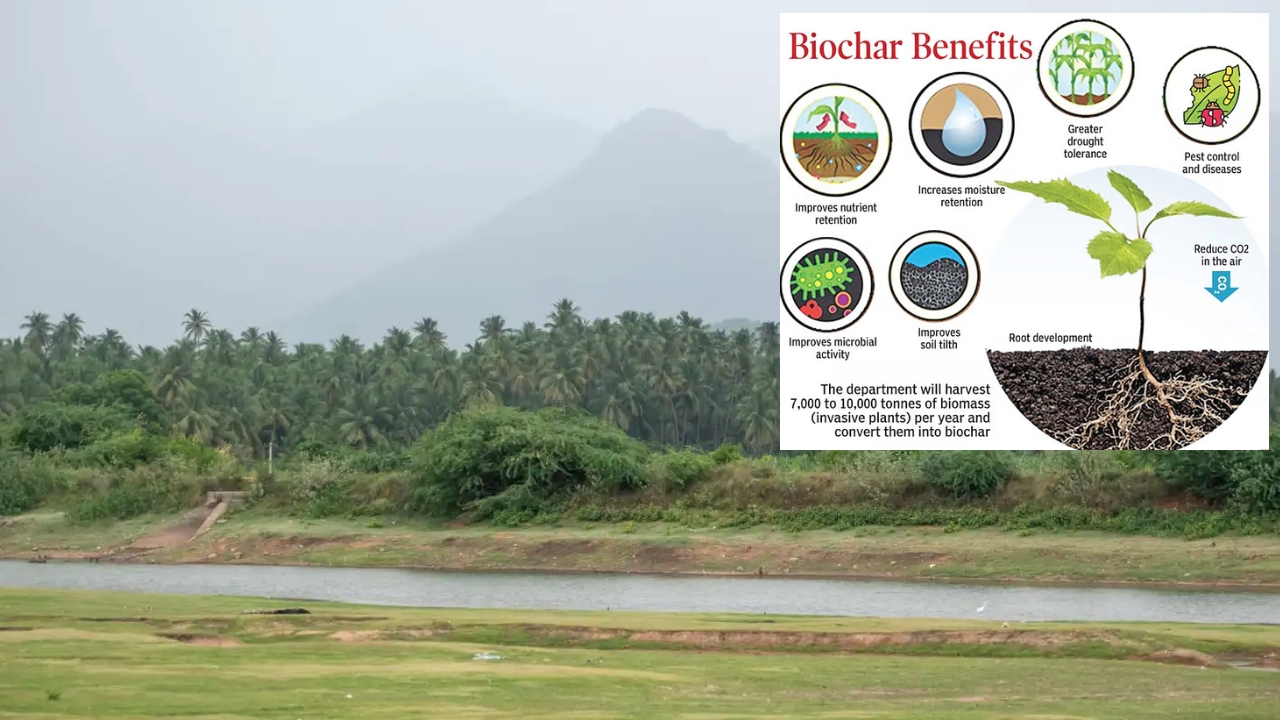
Biochar is not a monolithic product; it is “tunable,” with its chemical composition and properties heavily influenced by the raw materials (feedstock) used and the temperature of the pyrolysisPyrolysis is a thermochemical process that converts waste biomass into bio-char, bio-oil, and pyro-gas. It offers significant advantages in waste valorization, turning low-value materials into economically valuable resources. Its versatility allows for tailored products based on operational conditions, presenting itself as a cost-effective and efficient More process. This tunability allows for the creation of “fit-for-purpose” biochars, which are customized for specific soil types and applications. For example, biochar produced from herbaceous materials has been shown to be more beneficial for increasing soil conductivity due to a higher ashAsh is the non-combustible inorganic residue that remains after organic matter, like wood or biomass, is completely burned. It consists mainly of minerals and is different from biochar, which is produced through incomplete combustion. Ash Ash is the residue that remains after the complete More content, while other biochars are tailored to improve soil water retention in arid regions or remediate heavy metal toxicity in degraded lands, such as abandoned mining sites.
By tailoring the product to specific agricultural and environmental needs, biochar producers can unlock a dual value proposition: generating high-quality carbon credits while also serving as a premium soil amendmentA soil amendment is any material added to the soil to enhance its physical or chemical properties, improving its suitability for plant growth. Biochar is considered a soil amendment as it can improve soil structure, water retention, nutrient availability, and microbial activity. More that demonstrably improves crop yields, reduces the need for fertilizers, and enhances agricultural resilience. This evolution from a single-purpose commodity to a multi-benefit, high-value input transforms the business model, creating more resilient and profitable ventures.
Technology Integration and Data-Driven Applications
The ability to deliver precision biochar solutions at scale is dependent on the integration of modern climate technology. Digital platforms powered by satellite and artificial intelligence (AI) provide a new level of data-driven insight for producers and farmers. These systems offer real-time monitoring of soil health, organic carbon content, and spatial variability across farms, enabling the precise application of biochar to maximize its benefits and document its impact. It can help check the carbon sink/source capacity, vulnerability, and other parameters.
Furthermore, implementing blockchain technology is addressing a critical pain point for the industry: the need for verifiable, trustworthy carbon credits. Blockchain-based traceability solutions can securely track each batch of biochar from production to its final application in the soil, ensuring transparency and eliminating the risk of greenwashing. This technological assurance is crucial for large corporate buyers who demand high-integrity credits to communicate their sustainability achievements to stakeholders confidently.
Strategic Recommendations and Forward-Looking Insights
The analysis of the biochar market reveals clear imperatives for all stakeholders. Today’s strategic action will determine a company’s success and influence the future trajectory of the carbon removal industry.
- For Corporate Carbon Credit Buyers: Given the market’s urgency and supply scarcity, moving from reactive spot purchasing to proactive, long-term offtake agreements is imperative. The evidence overwhelmingly supports a balanced CDR portfolio, with a significant allocation to offtakes, to secure future supply and hedge against price volatility. Buyers should also prioritize projects that are certified by recognized international standards, ensuring the quality and durability of the credits.
- For New Biochar Entrepreneurs: The most viable path to market entry is by strategically addressing the core barriers of logistics and financing. This can be achieved by securing reliable, local feedstock sources and leveraging strategic partnerships with existing infrastructure, such as biomass power plants or waste management facilities. From the outset, new ventures should embrace technology and pursue a geo-specific”fit-for-purpose” model to create a differentiated, high-value product that generates not only carbon credits but also tangible agricultural co-benefits, thereby attracting premium buyers and creating a more resilient business model. From a sustainable system management perspective, incorporating such high-end precision, biochar technologies can bring maximum environmental benefits in tangible terms based on environmental indicators.
- For Investors and Policymakers: A lack of upfront financing and clear regulatory standards hinders the market’s scalability. Policymakers should focus on creating incentives and standards that support the production and adoption of high-integrity biochar. Investors should recognize that offtake agreements are the key to unlocking project finance in this fragmented industry and should seek out ventures that have secured such agreements or have a clear path to doing so.
The Dawn of a New Carbon Economy
The biochar market is at a pivotal moment, with offtake agreements serving as the central driver of its rapid maturation. This mechanism provides the financial certainty necessary for suppliers to scale production and offers corporate buyers the essential supply security and price predictability needed to meet their climate commitments. The data is unequivocal: the window for securing high-quality biochar supply at a reasonable price is rapidly closing. As the market evolves, its future is inextricably linked to the development of precision, geo-specific solutions enabled by digital technologies.
The transition of biochar from a commodity to a high-value, multi-purpose product that can be tailored for specific soil conditions will create new revenue streams and strengthen the industry’s economic resilience. By embracing structured procurement and technological innovation, the companies and entrepreneurs who recognize and act on this opportunity will secure their own climate futures and play a fundamental role in shaping a scalable and credible carbon removal industry based on tangible and quantifiable environmental sustainability—those who hesitate risk being left behind in the race to net zero.
Reference
- Microsoft and Google are buying in: Over 60% of biochar contracts locked by corporates, , https://reccessary.com/en/news/why-biochar-Is-booming
- The Biochar Gold Rush: Why Companies Are Scrambling to Lock in Carbon Credits https://carboncredits.com/the-biochar-gold-rush-why-companies-are-scrambling-to-lock-in-carbon-credits
- Biochar offtakes in 2025, https://25023219.fs1.hubspotusercontent-eu1.net/hubfs/25023219/Supercritical%20Biochar%20Offtakes%20Report.pdf
- No path to net zero: Companies face 2030 failure as carbon removal supply gets locked up in offtakes – GlobeNewswire, https://www.globenewswire.com/news-release/2025/03/05/3037159/0/en/No-path-to-net-zero-Companies-face-2030-failure-as-carbon-removal-supply-gets-locked-up-in-offtakes.html
- carboncredits.com, https://carboncredits.com/the-biochar-gold-rush-why-companies-are-scrambling-to-lock-in-carbon-credits/
- How to buy carbon removal: spot purchases, forward purchases, and offtake agreements, https://gosupercritical.com/blog?p=how-to-buy-carbon-removal
- How to structure a good biochar offtake, https://25023219.fs1.hubspotusercontent-eu1.net/hubfs/25023219/Marketing/Supercritical%20Report:
- U.S. Biochar Market Size & Share Analysis Report, 2030, https://www.grandviewresearch.com/industry-analysis/us-biochar-market
- Biochar Market Size, Share & Analysis | Growth Report [2032] – Fortune Business Insights, https://www.fortunebusinessinsights.com/industry-reports/biochar-market-100750
- Carbon Offset Pricing Trends: What Buyers Should Budget for in 2025, https://www.sylvera.com/blog/carbon-offset-price
- Google Signs Largest-Ever Biochar Carbon Removal Purchase 2025, https://www.esgtoday.com/google-signs-largest-ever-biochar-carbon-removal-purchase-deals/
- The Ultimate Business Guide to Biochar: Everything You Need to Know | Cloverly, https://cloverly.com/blog/the-ultimate-business-guide-to-biochar-everything-you-need-to-know
- Carbonfuture And Microsoft Sign Offtake Agreement For Biochar …, accessed August 25, 2025, https://carbonherald.com/carbonfuture-microsoft-sign-offtake-agreement-biochar-carbon-removal/
- CDR Credit Sales Hit Record High, Powering Market Growth in 2025 …, accessed August 25, 2025, https://carboncredits.com/record-growth-in-cdr-credit-sales-drives-market-momentum/
- How to Create a Business Plan for Biochar Production – FinModelsLab, accessed August 25, 2025, https://finmodelslab.com/blogs/write-business-plan/biochar-production-company


Leave a Reply