
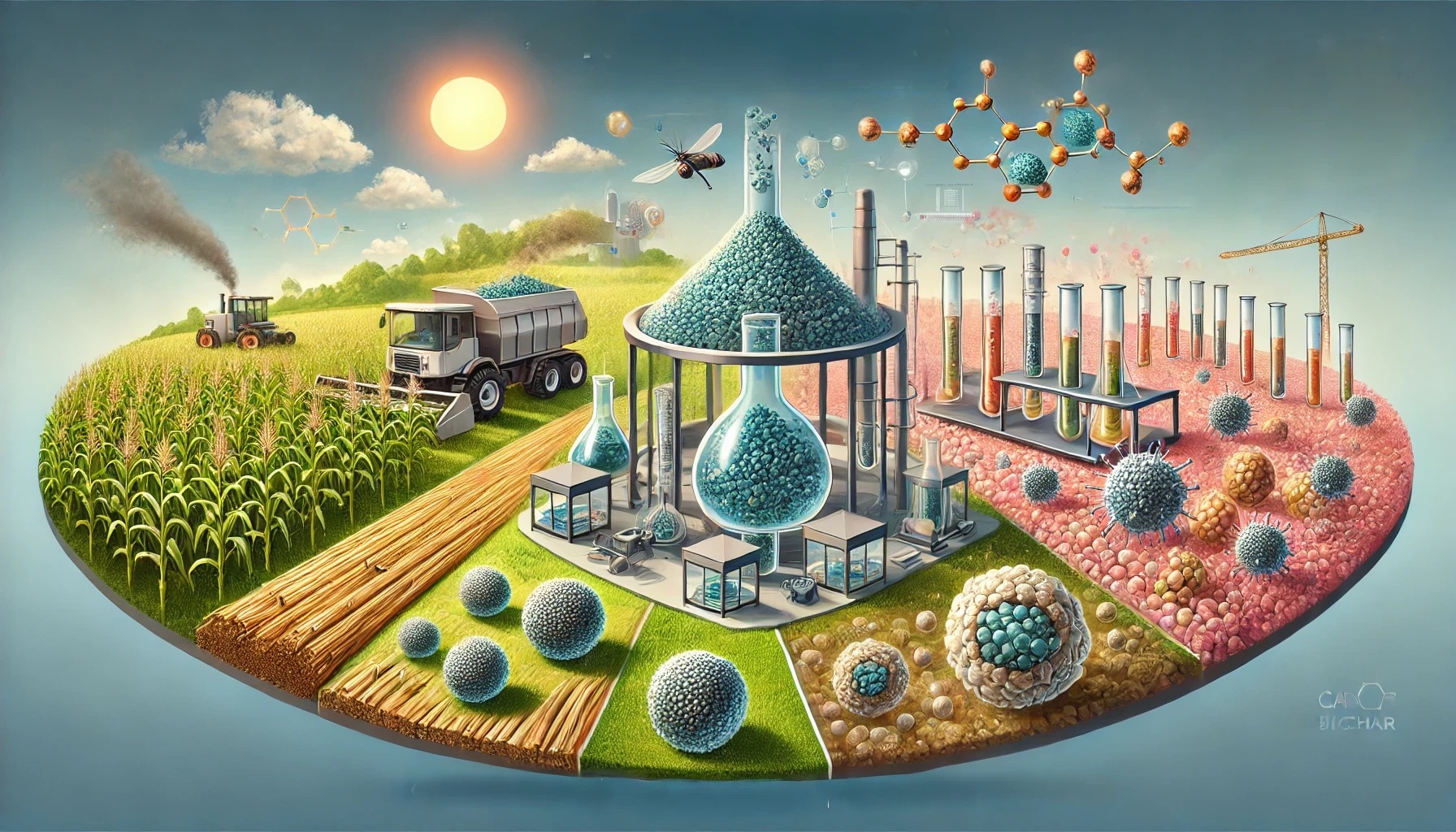
The fight against cancer remains one of the most formidable challenges in modern medicine, driving the search for innovative solutions that can enhance therapeutic efficacy. Among the emerging strategies, drug delivery systems (DDS) that utilize biocharBiochar is a carbon-rich material created from biomass decomposition in low-oxygen conditions. It has important applications in environmental remediation, soil improvement, agriculture, carbon sequestration, energy storage, and sustainable materials, promoting efficiency and reducing waste in various contexts while addressing climate change challenges. More, specifically nano biochar derived from plant biomassBiomass is a complex biological organic or non-organic solid product derived from living or recently living organism and available naturally. Various types of wastes such as animal manure, waste paper, sludge and many industrial wastes are also treated as biomass because like natural biomass these More, have gained considerable attention. This approach harnesses the remarkable properties of biochar to improve the specificity, efficiency, and biocompatibility of anticancer treatments. Research in this area is ongoing under Miss Giya Merline Kuriakose along with Ms. Soya Parveen and Dr. Shanthi Prabha V in the Advanced Center of Environmental Studies and Sustainable Development – an interUniversity Center of Mahatma Gandhi University, Kerala, Kottayam.
Understanding Biochar and Its Nano Forms
When refined into nano biochar, the material boasts an increased surface area and enhanced reactivity, making it an exceptional candidate for drug delivery applications. The versatility of biochar lies in its ability to encapsulate a wide range of therapeutic agents—such as chemotherapeutics, RNA-based drugs, and small molecules—boosting their stability and bioavailability.


Mechanism of Action in Cancer Therapy
One of the significant advantages of using nano biochar in drug delivery systems is its potential for targeted drug delivery. Cancer cells often overexpress specific receptors, such as folate receptors or epidermal growth factor receptors (EGFR). By modifying the surface of nano biochar with ligands or antibodies that specifically bind to these receptors, it is possible to create a delivery system that selectively targets cancer cells, minimizing side effects on healthy tissues.
This targeted approach ensures that higher concentrations of the drug are delivered directly to the tumor site, improving therapeutic efficacy while reducing systemic toxicity. Moreover, the porous nature of nano biochar allows for controlled release of the encapsulated drugs, providing sustained therapeutic effects and enhancing patient compliance.
Scope of Converting Plant Parts for Nano Biochar Production
The potential for using various plant parts to produce nano biochar is vast, opening avenues for sustainable and cost-effective drug delivery solutions. Agricultural waste, such as corn stover, rice husks, and sugarcane bagasse, can serve as valuable feedstocks for biochar production. Utilizing these biomass sources not only addresses waste management issues but also contributes to a circular economy by converting unwanted materials into high-value products.
- Agricultural Residues: The abundance of agricultural residues offers an excellent opportunity for large-scale production of nano biochar. By selecting specific plant parts rich in carbon and nutrients, it is possible to tailor the biochar’s properties for optimized drug delivery applications.
- Medicinal Plants: Plant parts from medicinal species can be particularly beneficial, as they may already contain natural compounds with anticancer properties. The combination of these bioactive compounds with nano biochar could lead to synergistic effects, enhancing the therapeutic outcomes in cancer treatments.
- Enhanced Functionalization: The conversion of various plant materials into nano biochar allows for the introduction of functional groups that can improve drug loading capacity and promote interactions with specific cancer cell receptors. This functionalization is critical in designing more effective DDS.
Challenges and Future Directions
While the prospects of nano biochar in cancer-targeted drug delivery systems are promising, several challenges remain. The scalability of nano biochar production, regulatory hurdles, and the need for extensive clinical trials to ensure safety and efficacy are crucial areas for future research. Additionally, optimizing the functionalization processes to achieve precise targeting and controlled release mechanisms will be vital in enhancing the clinical applicability of these systems.
Nano biochar represents a significant advancement in developing targeted drug delivery systems for cancer therapy. By leveraging the unique properties of carbon nanostructures derived from plant biomass, researchers can create innovative solutions that enhance the specificity and efficacy of anticancer treatments. As the field progresses, the potential for sustainable and efficient cancer therapies based on nano biochar will continue to unfold, providing hope for improved patient outcomes in the battle against cancer.




Leave a Reply