
Today was the first day of the International BiocharBiochar is a carbon-rich material created from biomass decomposition in low-oxygen conditions. It has important applications in environmental remediation, soil improvement, agriculture, carbon sequestration, energy storage, and sustainable materials, promoting efficiency and reducing waste in various contexts while addressing climate change challenges. More Initiative’s Wales study tour (although we do spend a suspicious amount of time in England…). The group had two incredible site visits today the first to Black Bull Biochar (BBB) and the second to Severn Wye Biochar.
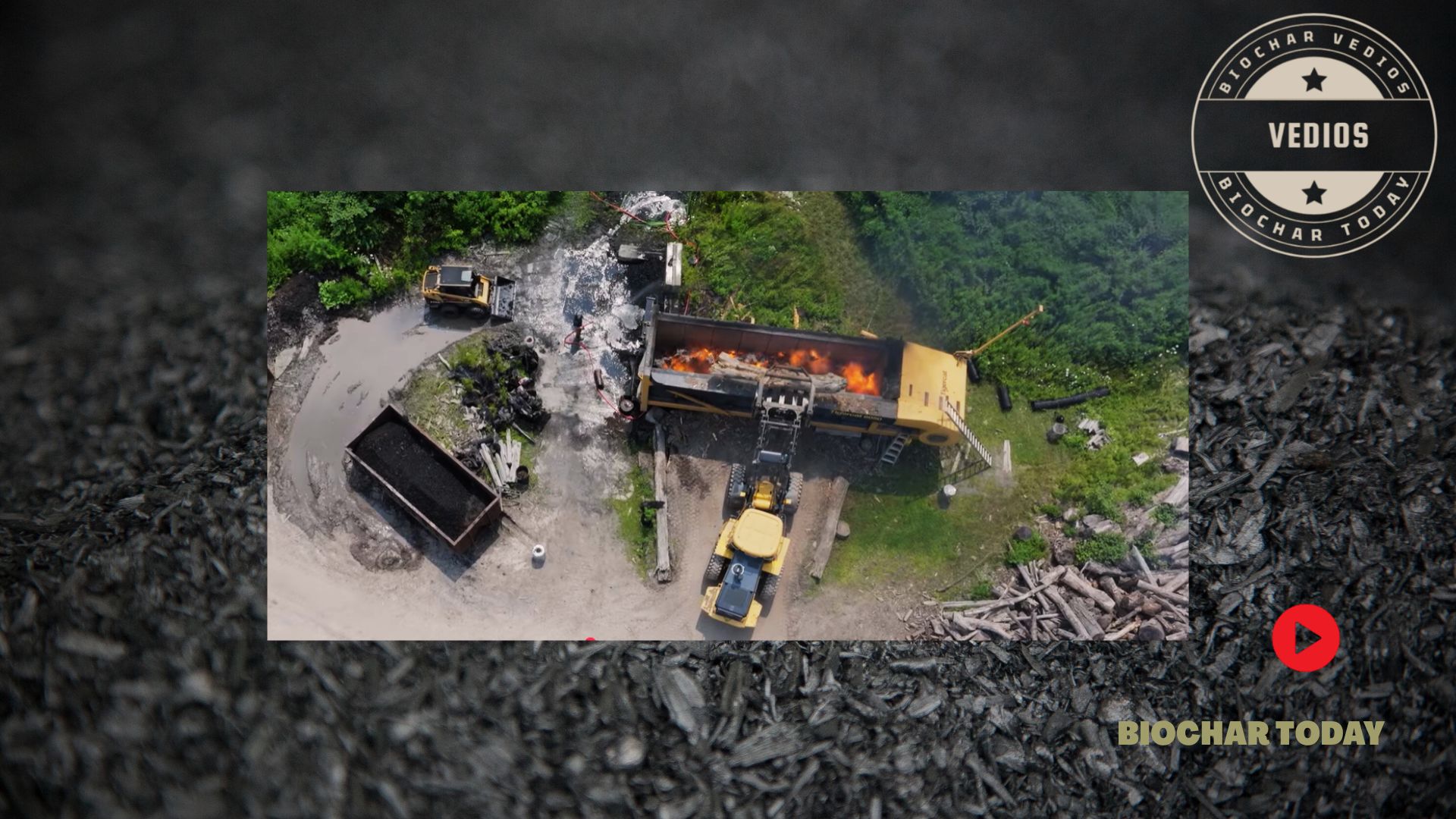
The tour around BBB’s Manchester facility was fascinating, witnessing a real ‘best-in-class’ unit at work, producing some excellent quality char. The site’s function for them centres around innovation, testing different feedstocks, production metrics, and logistical approaches. They are currently using a lot of wheat straw pellets (which you can see loading into the unit, in the video below), at around 650°C; generating 90kg/hour of biochar and 150-200 kWh of energy. Per year, they estimate that they produce around 150 tonnes of char, with their larger unit in Cumbria producing at a larger scale – around 500t/a. Expansion is very much on the cards for the team but details of such growth is still confidential.
At their Manchester site they do face some challenges that they felt they had learnt a lot from, as they look to bolster their offering. This isn’t to say there hasn’t been benefits to the site – they are able to provide energy to a neighbouring fibre composites company, enabling efficient waste energy utilisation. However, due to the sites composition, they are not able to utilise certain waste products, which limits their feedstockFeedstock refers to the raw organic material used to produce biochar. This can include a wide range of materials, such as wood chips, agricultural residues, and animal manure. More options. However, Hamish Creber, their CEO, did note that some of this can be bypassed with the right permits, enabling the use of waste-coded materials. This struggle with feedstock also has significant cost ramifications, as they have to purchase that feedstock, even if it is a by-product of another process.

Being such an early mover, BBB has certainly faced its fair share of mechanical challenges. They noted there is a struggle with output projections, as pyrolysisPyrolysis is a thermochemical process that converts waste biomass into bio-char, bio-oil, and pyro-gas. It offers significant advantages in waste valorization, turning low-value materials into economically valuable resources. Its versatility allows for tailored products based on operational conditions, presenting itself as a cost-effective and efficient More units are marketed with flattering data on yield and function time, meaning projections based on manufacturer statistics should be taken with a pinch of salt. Their are also challenges with feedstock moisture (as ever). They operate with feedstocks of around 17%, which is rather dry and requires specified drying. At their Cumbria facility, they do this drying with the residual heat of the machine (it takes about a third of the heat output, with the rest going to regional heating).

There are certainly still challenges they are facing, but now being fully commercial – after 3 years of DESNEZ funding – they are ready to scale up and focus more on the economic feasibility of biochar production within the UK. There was a resounding commitment to biochar being made affordable to farmers and landowners that is extremely refreshing within a UK biochar scene that has struggled with the economics of scale.




Leave a Reply