

In our relentless pursuit of a sustainable future, where climate change looms large and resource depletion casts a long shadow, innovative solutions are no longer a luxury—they are a necessity. Among the constellation of promising technologies, biocharBiochar is a carbon-rich material created from biomass decomposition in low-oxygen conditions. It has important applications in environmental remediation, soil improvement, agriculture, carbon sequestration, energy storage, and sustainable materials, promoting efficiency and reducing waste in various contexts while addressing climate change challenges. More shines brightly, offering a tangible pathway toward a circular economy (Hu et al., 2021; Kurniawan et al., 2023). But like any powerful tool, its potential can only be fully realized with robust standards and guidelines(Anokye, 2024). I this article, we’ll probe into the crucial role of biochar standards in ensuring its sustainable production, application, and ultimately, its potential impact on our planet.
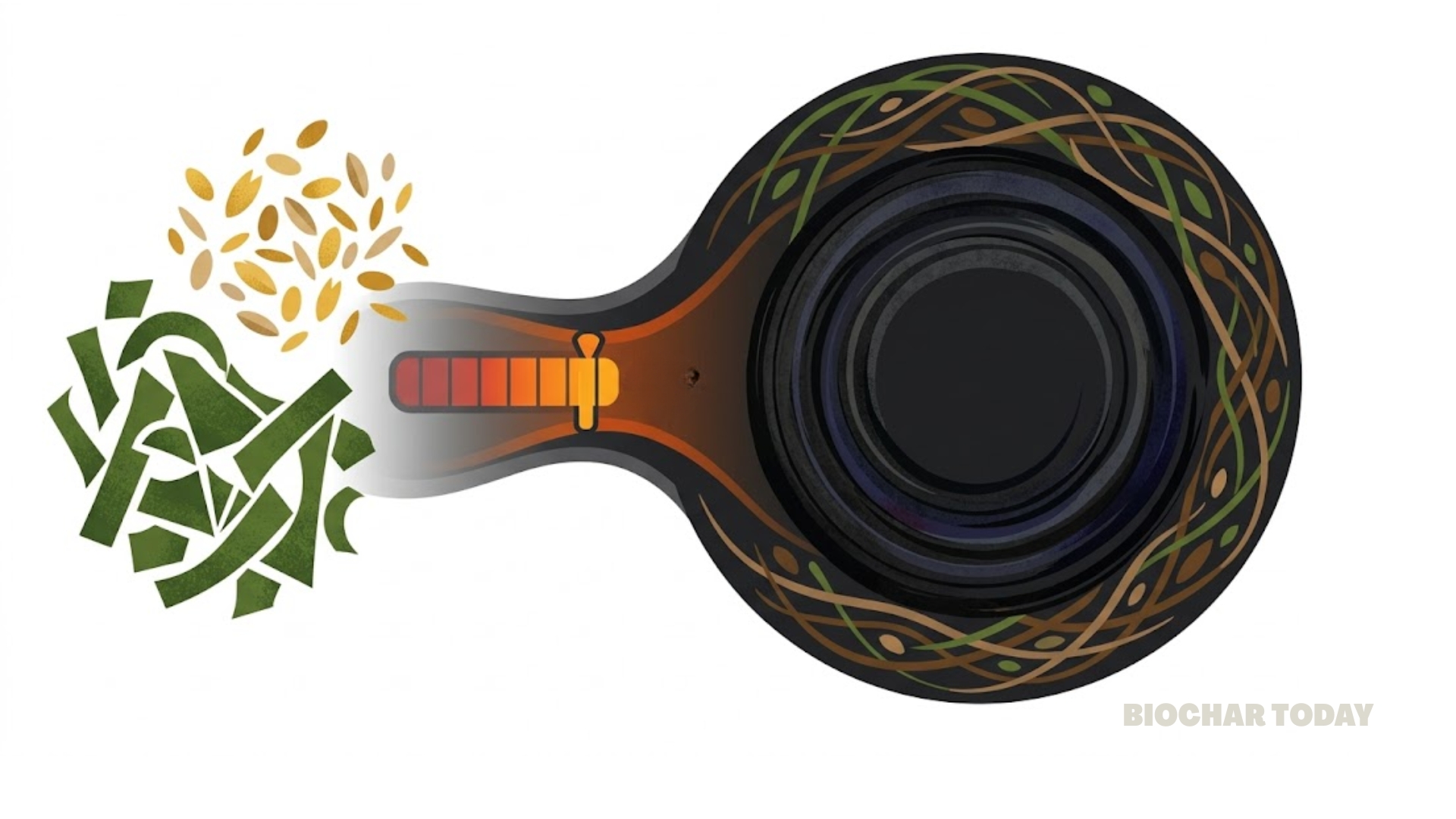
Before we explore the intricacies of standards, let’s revisit the essence of biochar. At its core, biochar is a porous, carbon-rich material produced by thermally decomposing biomassBiomass is a complex biological organic or non-organic solid product derived from living or recently living organism and available naturally. Various types of wastes such as animal manure, waste paper, sludge and many industrial wastes are also treated as biomass because like natural biomass these More in oxygen-limited conditions, and has garnered significant attention due to its diverse applications. This seemingly simple process transforms a diverse array of organic waste—agricultural residues, forestry byproducts, even municipal waste—into a stable, porous, and highly versatile form of carbon. Its physicochemical properties, influenced by feedstockFeedstock refers to the raw organic material used to produce biochar. This can include a wide range of materials, such as wood chips, agricultural residues, and animal manure. More and production processes, make it valuable for soil improvement, waste treatment, and even energy generation. Biochar production, primarily through pyrolysisPyrolysis is a thermochemical process that converts waste biomass into bio-char, bio-oil, and pyro-gas. It offers significant advantages in waste valorization, turning low-value materials into economically valuable resources. Its versatility allows for tailored products based on operational conditions, presenting itself as a cost-effective and efficient More, gasificationGasification is a high-temperature, thermochemical process that converts carbon-based materials into a gaseous fuel called syngas and solid by-products. It takes place in an oxygen-deficient environment at temperatures typically above 750°C. Unlike combustion, which fully burns material to produce heat and carbon dioxide (CO2), gasification More, torrefaction, or hydrothermal carbonization, is affected by factors like feedstock type, temperature, and reaction conditions. Utilizing locally available biomass reduces transportation costs and carbon emissions. This versatile material offers a sustainable solution for various environmental and industrial challenges (Amalina et al., 2022; Tomczyk et al., 2020; Yaashikaa et al., 2020).
Biochar as a cornerstone in Circular Economy
The circular economy, a paradigm shift from our traditional linear “take-make-dispose” model, champions the principles of reducing, reusing, and recycling. Biochar fits seamlessly into this framework, acting as a catalyst for sustainable resource management in ways as follows:
- Waste Transformation: Biochar production offers a practical solution for managing organic waste streams. By diverting biomass from landfills, we not only reduce methane emissions but also create a valuable product (Amalina et al., 2022) (Nadarajah et al., 2024).
- Soil Health and Fertility: Biochar’s porous structure enhances soil aeration, water retention, and nutrient availability, fostering healthier ecosystems and reducing the need for synthetic fertilizers. This is particularly crucial in regions facing soil degradation and water scarcity (Ighalo et al., 2025; Khan et al., 2024; Rathinapriya et al., 2024)
- Carbon Sequestration: Biochar’s ability to store carbon for centuries in soil makes it a potent tool for mitigating climate change. By locking away atmospheric carbon, we can actively contribute to reversing the effects of greenhouse gas emissions.
- Versatile Applications: Beyond agriculture, biochar finds applications in water filtration, construction materials, and even animal feed, demonstrating its adaptability and potential for widespread adoption across industries (Osman et al., 2022).

Biochar production through pyrolysis offers a promising avenue for enhancing circular economy principles by transforming organic waste into valuable resources. The process, which yields gases, oils, and solid char, is highly adaptable, allowing for optimization based on specific needs and feedstocks. Rural biochar production can stimulate local economies, provide waste management solutions, and foster inter-industry synergies, creating closed-loop systems where waste from one sector becomes a resource for another.
Optimizing production parameters is critical for balancing energy efficiency and minimizing emissions, while life cycle assessments reveal the importance of feedstock selection and process design in achieving environmental sustainability. Despite its potential, further research is needed to address knowledge gaps related to biochar activation, pollutant removal, soil interactions, and electrochemical applications. Standardized characterization procedures are also essential for ensuring consistent quality and promoting wider adoption, ultimately solidifying biochar’s role in a sustainable, circular economy (Yaashikaa et al., 2020).
The Indispensable Role of Biochar Standards
Biochar standards are crucial for building market confidence and ensuring the efficacy of biochar as a carbon sequestration tool. Standardized guidelines provide a framework for sustainable production practices, quality assessment, and product labeling.This consistency in production and evaluation is essential for guaranteeing the safety, environmental benefits, and agronomic effectiveness of biochar (Adhikari et al., 2024). Clear standards help address potential market barriers by establishing credibility and trust among producers, consumers, and policymakers, ultimately promoting the widespread adoption of biochar in carbon sequestration initiatives (Li & Tasnady, 2023).
However, the promise of biochar can only be fulfilled if its production and application are grounded in sound scientific principles and rigorous standards. This is where biochar standards step in, acting as a compass guiding us toward sustainable practices. The importance and need of Biochar standards are as follows:
- Quality Assurance: Standards define the characteristics of high-quality biochar, ensuring that it meets specific criteria for carbon content, pHpH is a measure of how acidic or alkaline a substance is. A pH of 7 is neutral, while lower pH values indicate acidity and higher values indicate alkalinity. Biochars are normally alkaline and can influence soil pH, often increasing it, which can be beneficial More levels, heavy metal content, and other critical parameters.
- Safety and Environmental Protection: Standards safeguard against the use of contaminated feedstocks or improper production methods that could lead to environmental harm or human health risks.
- Market Confidence: By providing a common language and framework, standards build trust among producers, consumers, and regulators, facilitating the growth of a robust biochar market.
- Best Practice Promotion: Standards encourage the adoption of sustainable production practices, ensuring that biochar is produced in an environmentally responsible manner.
- Scientific Advancement: Standards provide a foundation for research and development, enabling scientists to compare results and evaluate the effectiveness of different biochar applications.
Navigating the Landscape of Biochar Standards
Biochar standards have evolved globally to ensure quality and safety across diverse applications. The European Biochar Certificate (EBC) initiated the process, followed by the International Biochar Initiative (IBI) focusing on soil applications. Regional adaptations, like Australia and New Zealand’s ANZBI Code of Practice, and national standards, such as China’s agricultural guidelines, reflect specific needs and contexts. Singapore’s recent standard expands biochar use beyond agriculture. These standards, differentiating biochar grades based on contaminant levels and intended applications, aim to provide clear guidelines for producers and users, promoting sustainable biochar production and utilization(Lin et al., 2025).
Several organizations have taken the lead in developing biochar standards, each with its unique focus and scope. The various major players in confirming the Biochar standards are as follows:
- European Biochar Certificate (EBC): A leading standard in Europe, the EBC sets stringent guidelines for sustainable biochar production, focusing on feedstock sourcing, production parameters, and quality control.
- World Biochar Certificate (WBC): Expanding beyond Europe, the WBC offers a global certification scheme, ensuring that biochar produced worldwide meets high standards of quality and sustainability.
- Global Artisan C-Sink: This standard champions the role of smallholder farmers in biochar production, particularly in developing countries, emphasizing carbon sequestration and community empowerment.
- International Biochar Initiative (IBI): IBI has worked to standardize the definition and characteristics of biochar to create a common understanding across the industry.
- Carbon Standards International (CSIA): CSIA focuses on the climate aspects of biochar, creating systems for certification of carbon removal and the creation of carbon sinks.
- Gold Standard and Verra: While not biochar specific, these are widely used carbon credit certification organizations, that can be used to certify biochar projects.

The carbon removal marketplace, while essential for validating biochar’s role in climate mitigation, faces significant challenges in ensuring the integrity of biochar carbon standards. A primary concern revolves around the verification of biochar stability, a crucial factor for long-term carbon sequestration. Existing carbon offset standards and certification programs, such as Verra’s VCS and Golden Standard, are intended to guarantee project adherence to permanence criteria, but they are often criticized for inconsistent application across diverse regions. This raises questions about the reliability of biochar carbon credits generated under these programs (Michaelowa et al., 2019).
Furthermore, the verification process relies heavily on independent third-party verifiers, whose objectivity and resource limitations can introduce uncertainties. Carbon registry platforms, vital for tracking and proving emissions reductions from biochar projects, are also susceptible to issues related to data accuracy and transparency(Jonathan Lonsdale, 2023). Scientific collaboration, essential for advancing biochar research, must navigate concerns about conflicting results and industry influence.
To address these gaps and foster trust in biochar as a carbon credit mechanism, longitudinal monitoring, interdisciplinary research, and transparent reporting are indispensable (Salma et al., 2024)
Key Aspects of Biochar Carbon Standards
To fully leverage biochar’s potential as a carbon offset, it’s essential to develop accessible and financially viable carbon credit standards. These standards will pave the way for biochar’s inclusion in established carbon trading markets, which in turn will drive investment in the biochar sector. This approach fosters a global shift towards sustainable carbon dioxide removal practices (Salma et al., 2024).
To ensure the integrity and effectiveness of biochar as a carbon removal solution, robust standards are essential. These standards provide a framework for verifying the carbon storage potential of biochar, guiding its production, and establishing clear parameters for its use within carbon markets. The key aspects that define biochar carbon standards:
- Carbon Sequestration Focus: Measuring and validating the long-term carbon storage potential of biochar.
- Production Standards: Defining acceptable feedstocks and pyrolysis methods.
- Material Properties: Specifying critical parameters like carbon content, pH, and heavy metal levels.
- Tracking and Certification: Ensuring transparency and accountability throughout the biochar lifecycle.
- Carbon Credit Issuance: Enabling the generation and trading of carbon credits from biochar projects.
Challenges and the Path Forward
While significant strides have been made in developing biochar standards, several challenges persist that require ongoing attention. Achieving harmonization across diverse existing standards, ensuring global consistency in application, and adapting to the rapid pace of technological advancements are critical for the field’s continued progress (Deng et al., 2024; Kurniawan et al., 2023). Looking ahead, the evolution of biochar standards will likely be driven by several key factors. Firstly, there will be an increased emphasis on accurately quantifying and certifying carbon sequestration, aligning with the growing importance of carbon dioxide removal (CDR) strategies. Secondly, biochar standards will become more deeply integrated into broader circular economy and sustainability frameworks, recognizing the interconnectedness of environmental solutions. Thirdly, advancements in biochar production and analytical technologies will lead to the refinement and increased precision of existing standards. Finally, there will be a growing focus on empowering smallholder farmers and increasing accessibility to biochar production in low-income communities, ensuring equitable participation in and benefits from the biochar industry.
A Call to Action
Biochar standards are not just technical documents; they are the bedrock of a sustainable biochar industry. By accepting these standards, we can unlock the full potential of biochar, converting waste into a valuable resource, enhancing soil health, and mitigating climate change. Accepting the truth that there is an immediate need to develop a comprehensive biochar carbon standard guideline is the need of the hour to make the biochar industry flourish in all these aspects for better and sustainable environmental management, let us work together to promote the adoption of robust biochar standards, paving the way for a circular economy that benefits both people and the planet.
REFERENCES
Adhikari, S., Moon, E., Paz-Ferreiro, J., & Timms, W. (2024). Comparative analysis of biochar carbon stability methods and implications for carbon credits. Science of the Total Environment, 914(October 2023), 169607. https://doi.org/10.1016/j.scitotenv.2023.169607
Amalina, F., Razak, A. S. A., Krishnan, S., Sulaiman, H., Zularisam, A. W., & Nasrullah, M. (2022). Biochar production techniques utilizing biomass waste-derived materials and environmental applications – A review. Journal of Hazardous Materials Advances, 7(June), 100134. https://doi.org/10.1016/j.hazadv.2022.100134
Anokye, K. (2024). From waste to wealth: Exploring biochar’s potential in energy generation and waste mitigation. Cleaner and Circular Bioeconomy, 9(July), 100101. https://doi.org/10.1016/j.clcb.2024.100101
Deng, X., Teng, F., Chen, M., Du, Z., Wang, B., Li, R., & Wang, P. (2024). Exploring negative emission potential of biochar to achieve carbon neutrality goal in China. Nature Communications, 15(1). https://doi.org/10.1038/s41467-024-45314-y
Divyangkumar, N., & Panwar, N. L. (2024). Standardization, certification, and development of biochar based fertilizer for sustainable agriculture_ An overview. Environmental Pollution and Management, 1(August), 186–202. https://doi.org/10.1016/j.epm.2024.10.001
Hu, Q., Jung, J., Chen, D., Leong, K., Song, S., Li, F., Mohan, B. C., Yao, Z., Prabhakar, A. K., Lin, X. H., Lim, E. Y., Zhang, L., Souradeep, G., Ok, Y. S., Kua, H. W., Li, S. F. Y., Tan, H. T. W., Dai, Y., Tong, Y. W., … Wang, C. H. (2021). Biochar industry to circular economy. Science of the Total Environment, 757, 143820. https://doi.org/10.1016/j.scitotenv.2020.143820
Ighalo, J. O., Ohoro, C. R., Ojukwu, V. E., Oniye, M., Shaikh, W. A., Biswas, J. K., Seth, C. S., Mohan, G. B. M., Chandran, S. A., & Rangabhashiyam, S. (2025). Biochar for ameliorating soil fertility and microbial diversity: From production to action of the black gold. IScience, 28(1), 111524. https://doi.org/10.1016/j.isci.2024.111524
Jonathan Lonsdale. (2023). Support to the development of methodologies for the certification of industrial carbon removals with permanent storage: Review of certification methodologies and relevant EU legislation (Issue May). https://climate.ec.europa.eu/document/download/28698b02-7624-4709-9aec-379b26273bc0_en?filename=policy_carbon_expert_carbon_removals_with_permanent_storage_en.pdf
Khan, S., Irshad, S., Mehmood, K., Hasnain, Z., Nawaz, M., Rais, A., Gul, S., Wahid, M. A., Hashem, A., Fathi, E., & Ibrar, D. (2024). Health , Crop Production , and Yield Enhancement : A Review. Plants, 13(166), 1–18.
Kurniawan, T. A., Othman, M. H. D., Liang, X., Goh, H. H., Gikas, P., Chong, K. K., & Chew, K. W. (2023). Challenges and opportunities for biochar to promote circular economy and carbon neutrality. Journal of Environmental Management, 332. https://doi.org/10.1016/j.jenvman.2023.117429
Li, S., & Tasnady, D. (2023). Biochar for Soil Carbon Sequestration: Current Knowledge, Mechanisms, and Future Perspectives. C-Journal of Carbon Research, 9(3). https://doi.org/10.3390/c9030067
Lin, G., Wang, Y., Wu, X., Meng, J., Ok, Y. S., & Wang, C. H. (2025). Enhancing agricultural productivity with biochar: Evaluating feedstock and quality standards. Bioresource Technology Reports, 29(January), 102059. https://doi.org/10.1016/j.biteb.2025.102059
Michaelowa, A., Shishlov, I., Hoch, S., Bofill, P., & Espelage, A. (2019). Overview and comparison of existing carbon crediting schemes (Issue February). http://www.perspectives.cc
Nadarajah, K., Asharp, T., & Jeganathan, Y. (2024). Biochar from waste biomass, its fundamentals, engineering aspects, and potential applications: an overview. Water Science and Technology, 89(5), 1211–1239. https://doi.org/10.2166/wst.2024.051
Osman, A. I., Fawzy, S., Farghali, M., El-Azazy, M., Elgarahy, A. M., Fahim, R. A., Maksoud, M. I. A. A., Ajlan, A. A., Yousry, M., Saleem, Y., & Rooney, D. W. (2022). Biochar for agronomy, animal farming, anaerobic digestion, composting, water treatment, soil remediation, construction, energy storage, and carbon sequestration: a review. In Environmental Chemistry Letters (Vol. 20, Issue 4). Springer International Publishing. https://doi.org/10.1007/s10311-022-01424-x
Rathinapriya, P., Maharajan, T., Jothi, R., Prabakaran, M., Lee, I. B., Yi, P. H., & Jeong, S. T. (2024). Unlocking biochar impacts on abiotic stress dynamics: a systematic review of soil quality and crop improvement. Frontiers in Plant Science, 15(January). https://doi.org/10.3389/fpls.2024.1479925
Salma, A., Fryda, L., & Djelal, H. (2024). Biochar: A Key Player in Carbon Credits and Climate Mitigation. Resources, 13(2). https://doi.org/10.3390/resources13020031
Tomczyk, A., Sokołowska, Z., & Boguta, P. (2020). Biochar physicochemical properties: pyrolysis temperature and feedstock kind effects. Reviews in Environmental Science and Biotechnology, 19(1), 191–215. https://doi.org/10.1007/s11157-020-09523-3
Yaashikaa, P. R., Kumar, P. S., Varjani, S., & Saravanan, A. (2020). A critical review on the biochar production techniques, characterization, stability and applications for circular bioeconomy. Biotechnology Reports, 28, e00570. https://doi.org/10.1016/j.btre.2020.e00570



Leave a Reply