
Key Takeaways
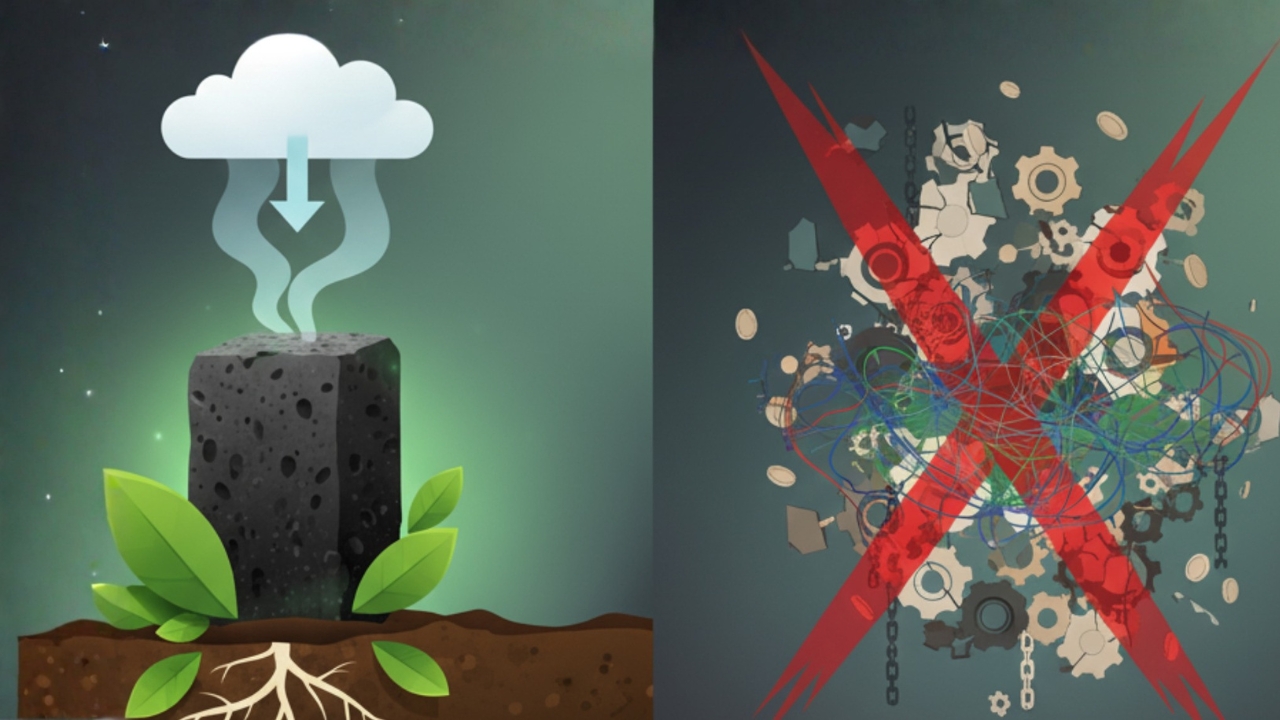
- The BiocharBiochar is a carbon-rich material created from biomass decomposition in low-oxygen conditions. It has important applications in environmental remediation, soil improvement, agriculture, carbon sequestration, energy storage, and sustainable materials, promoting efficiency and reducing waste in various contexts while addressing climate change challenges. More Paradox: Biochar is a technically proven solution for carbon removal, soil health, and waste management, but it remains commercially stagnant.
- Carbon Market Failure: A crisis of investor confidence cripples the carbon market for biochar, driven by a protocol lottery (a lack of standard rules) and scientific debates over its permanence, making the asset un-priceable.
- The Revenue Stacking Imperative: High capital costs (CAPEX) mean the only viable business model is revenue stacking—combining income from carbon credits, physical sales, co-product energy, and waste fees.
- The Policy Silo Barrier: This business model is crippled by institutional fragmentation or policy silos. Because biochar’s benefits cross multiple sectors (agriculture, energy, climate), it is an orphan technology excluded from mainstream policies.
- The Solution is Integration: The path forward is not new technology but structural change: using aggregator business models and a whole-of-government policy to systematically integrate biochar into existing frameworks.
This is the biochar paradox: a technically feasible solution with immense potential for carbon sequestration, soil health, and waste management remains commercially stagnant. The primary constraints are not technological but are a profound and interconnected failure of market structures, economic models, and policy coordination.
The Carbon Market Credibility Gap
A crisis of investor confidence plagues the carbon market for biochar, stemming from rational, structural problems. The market is fragmented by a protocol lottery, where competing carbon registries maintain divergent and complex standards for feedstocks and verification, preventing the creation of a single, fungible asset . This is compounded by a crisis of permanence, an ongoing scientific debate over how to model biochar’s carbon decay. The gap between conservative models (like Woolf) and optimistic ones (like Inertinite) creates actuarial uncertainty of 50-70% in an asset’s value, making it difficult to price. Furthermore, the high cost and complexity of Monitoring, Reporting, and Verification (MRV) create a centralization trap,excluding the low-cost, decentralized projects that offer significant socio-economic co-benefits.
The Economic Viability Challenge
Even if these market failures were solved, significant economic hurdles remain. The biggest barrier”for producers is the high upfront capital expenditure (CAPEX) for pyrolysisPyrolysis is a thermochemical process that converts waste biomass into bio-char, bio-oil, and pyro-gas. It offers significant advantages in waste valorization, turning low-value materials into economically valuable resources. Its versatility allows for tailored products based on operational conditions, presenting itself as a cost-effective and efficient More technology, which can range from $150,000 for small-scale operations to over $5 million for industrial plants . This high cost, combined with uncertain demand, makes a single-stream revenue model unviable. The only emerging business model that demonstrates viability is revenue stacking, which combines income from carbon credits, physical product sales, co-product energy sales (bio-oil and syngasSyngas, or synthesis gas, is a fuel gas mixture consisting primarily of hydrogen and carbon monoxide. It is produced during gasification and can be used as a fuel source or as a feedstock for producing other chemicals and fuels. More), and waste management tipping fees . This leads to a co-product trap: only high-CAPEX plants are typically designed to capture energy co-products, meaning entrepreneurs who opt for cheaper kilns to de-risk their investment inadvertently eliminate essential revenue streams, making their venture more financially risky .
The Policy Silo: Biochar as an Orphan Technology
This economic reality is the direct inverse of a systemic “policy silo” problem. A business cannot stack revenues from four different sectors (Waste, Climate, Energy, Agriculture) if the government’s policies for those sectors are fragmented and uncoordinated. Biochar’s multi-sectoral nature has made it an orphan technology. Because it falls into the gaps between major ministries—each seeing it as an unproven or low-priority item—no single agency has the mandate to champion it . This institutional fragmentation is the fundamental barrier, as it makes the only viable business model impossible to execute.
A Path to Scalable Adoption
Unlocking biochar’s potential requires parallel interventions. First, new business models centered on aggregators must be embraced. These can be tech-driven platforms that manage MRV for small producers or public-private partnerships where the public sector de-risks investment by guaranteeing feedstockFeedstock refers to the raw organic material used to produce biochar. This can include a wide range of materials, such as wood chips, agricultural residues, and animal manure. More . Second, a whole-of-government policy must be executed to break the silos by systematically integrating biochar into existing agriculture, water, waste, and climate frameworks. Finally, R&D must bridge the “chasm” between high-cost, high-tech systems and low-cost farm kilns by developing low-cost, MRV-compliant technology and predictive models for ROI. The additional benefits of biochar are not co-benefits; they are essential revenue streams. Solving the policy failure to integrate these benefits is the only way to unlock the market.



Leave a Reply