
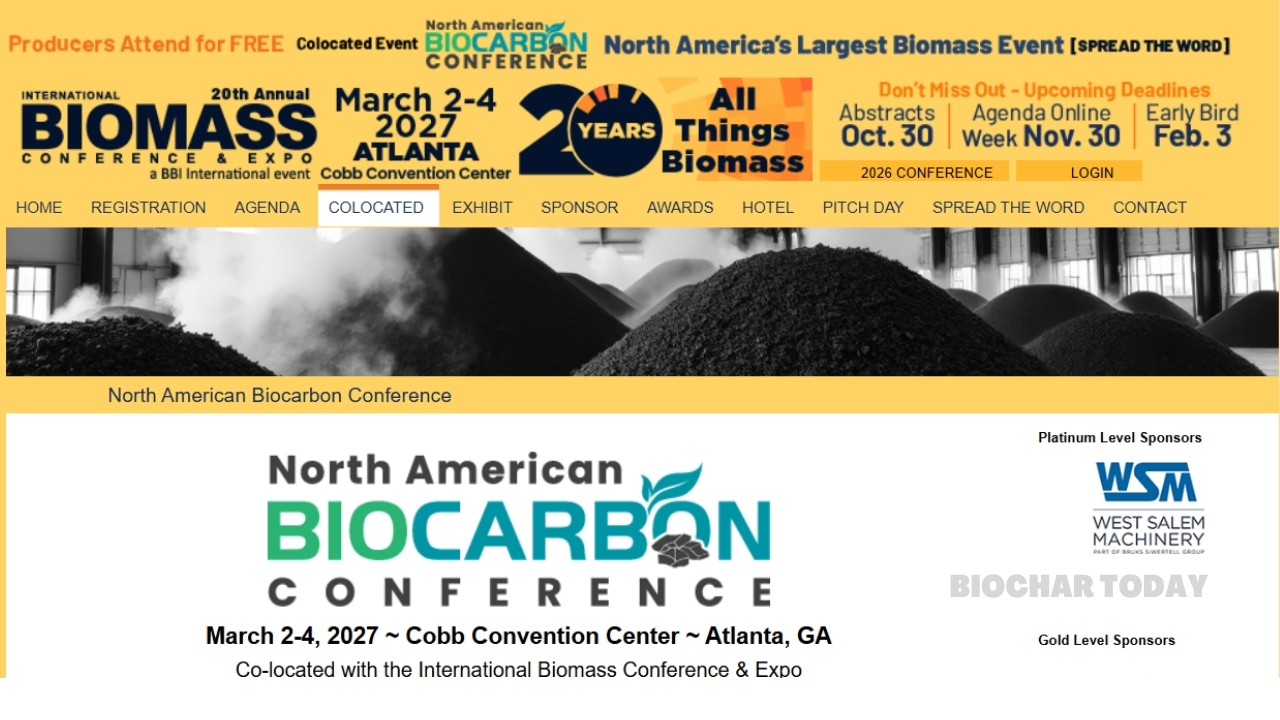
BBI International and BiomassBiomass is a complex biological organic or non-organic solid product derived from living or recently living organism and available naturally. Various types of wastes such as animal manure, waste paper, sludge and many industrial wastes are also treated as biomass because like natural biomass these More Magazine have announced the debut of the North American Biocarbon Conference, co-located with the International Biomass Conference & Expo in Nashville, Tennessee. This new event expands the existing exposition framework to encompass the complete value chain of carbon-negative and pyrogenic biomass technologies across the United States. The platform unites biocarbon producers, carbon-removal buyers, project developers, technology providers, and finance experts alongside the broader bioenergy industry.
The primary challenge addressed by this strategic integration is the historical isolation of the biocarbon sector from the broader, mature bioenergy industry. Despite shared feedstocks and operational overlaps, the biocarbon market has frequently operated in a silo, detached from established biomass heat, power, and liquid fuel networks. This fragmentation increases transaction friction and hampers project developers, technology providers, and carbon offset buyers from fully leveraging existing biomass logistics and infrastructure to scale production.
To resolve these market silos, BBI International implemented a co-located conference structure featuring dual-track educational programming, a unified exposition hall, and dedicated networking opportunities. The integrated agenda emphasizes project bankability, measurement, reporting, and verification (MRV) frameworks, risk management, and technological innovation. Furthermore, the organizers established a single registration fee covering access to all co-located tracks while providing complimentary registration for biomass producers to lower entry barriers.
This co-located format is projected to accelerate the commercial deployment of biocarbon and durable carbon-removal solutions throughout North America. By providing direct access to a broader ecosystem of commercial partners, equipment providers, and institutional investors, the initiative establishes key pathways for industrial decarbonization. Additionally, integrating feedstockFeedstock refers to the raw organic material used to produce biochar. This can include a wide range of materials, such as wood chips, agricultural residues, and animal manure. More suppliers directly with pyrogenic technology vendors aims to lower total operational costs and improve long-term project bankability across the biocarbon sector.


Leave a Reply