
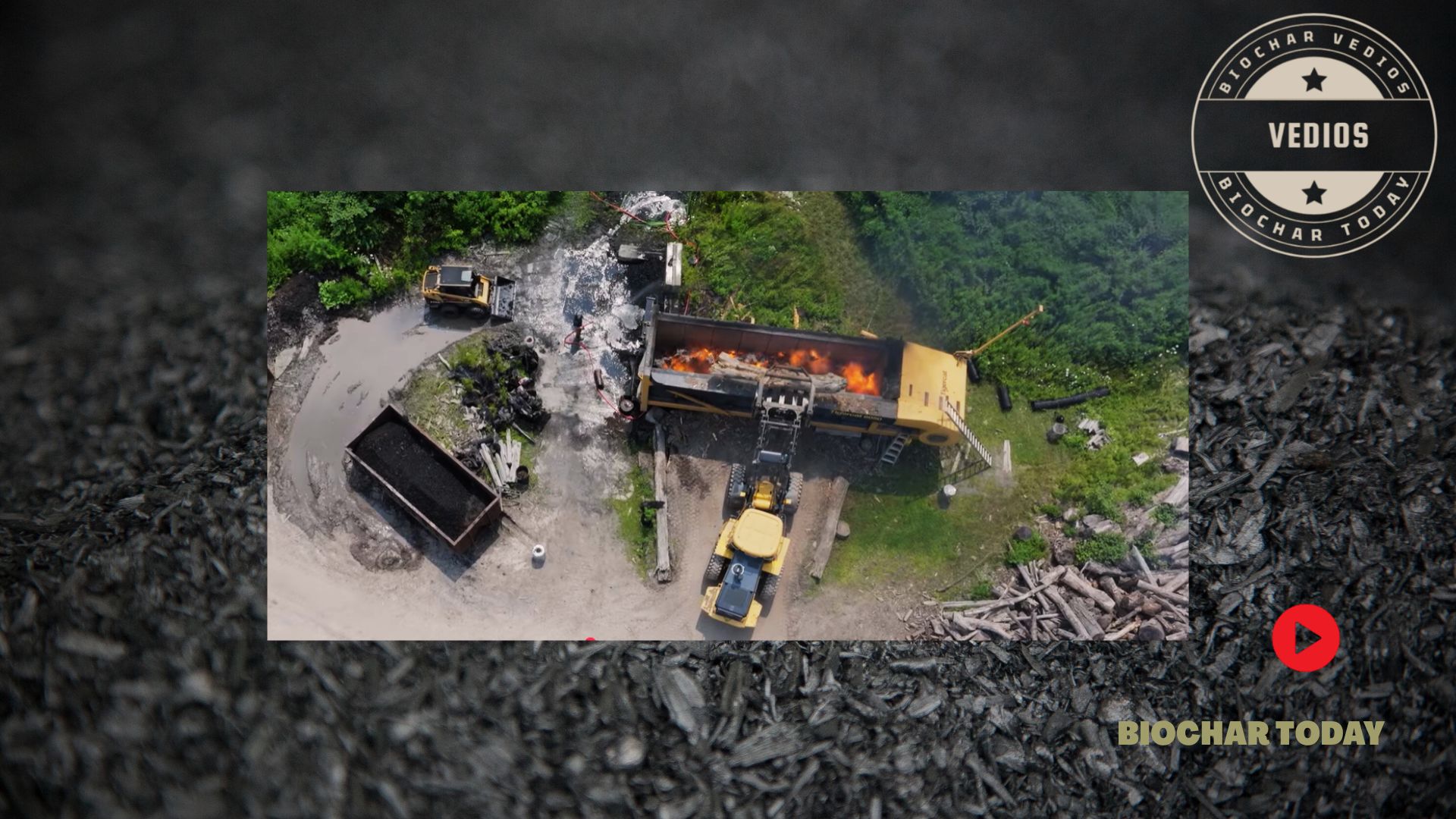
In this instructional presentation, trainers from the sustainable agriculture education organization Living Web Farms demonstrate how biocharBiochar is a carbon-rich material created from biomass decomposition in low-oxygen conditions. It has important applications in environmental remediation, soil improvement, agriculture, carbon sequestration, energy storage, and sustainable materials, promoting efficiency and reducing waste in various contexts while addressing climate change challenges. More can be inoculated before field application to improve its effectiveness in soil systems. The project focuses on preparing biochar with biologically active inputs such as compost, vermicompost, manure, and compost teas. The demonstration takes place within a farm training environment where the goal is to solve a common problem: fresh biochar can initially absorb nutrients from soil rather than supply them, reducing short-term crop benefits if not properly conditioned.
For readers of Biochar Today, this video highlights an important operational step that connects laboratory research with practical field management. It shows how relatively simple biological charging processes can transform raw biochar into a functional soil amendmentA soil amendment is any material added to the soil to enhance its physical or chemical properties, improving its suitability for plant growth. Biochar is considered a soil amendment as it can improve soil structure, water retention, nutrient availability, and microbial activity. More that supports microbial communities and nutrient cycling. The approach aligns with circular economy principles by combining agricultural residues, compost systems, and soil restoration strategies while improving the long-term carbon stability that makes biochar valuable for climate mitigation.


Leave a Reply