
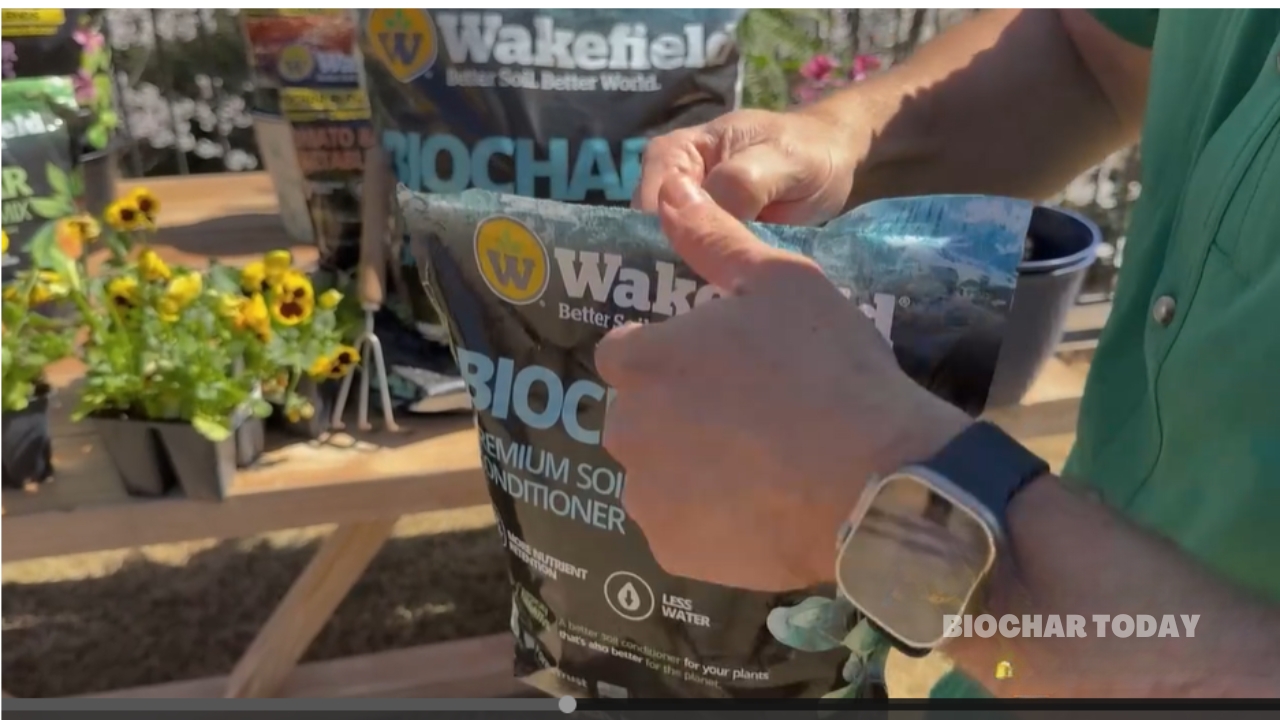
Wakefield BioChar collaborated with television host and outdoor design expert Chip Wade on WCNC’s “Charlotte Today” to highlight the integration of biocharBiochar is a carbon-rich material created from biomass decomposition in low-oxygen conditions. It has important applications in environmental remediation, soil improvement, agriculture, carbon sequestration, energy storage, and sustainable materials, promoting efficiency and reducing waste in various contexts while addressing climate change challenges. More into residential and professional landscaping. Based in the United States, the initiative focuses on the commercial adoption of organic soil amendments that provide both immediate agronomic benefits and long-term environmental advantages. The partnership emphasizes the “Carbon Boost Technology” utilized by Wakefield to pre-charge biochar with essential nutrients and beneficial microbes. By leveraging public media platforms, the organization aims to transition biochar from a niche agricultural input to a standard component of sustainable urban and suburban land management.
The primary challenge addressed in this report is the degradation of soil health and the inefficiency of traditional gardening practices in the face of changing climate conditions. Conventional landscaping often relies heavily on chemical fertilizers and frequent irrigation, which can lead to nutrient leachingLeaching is the process where nutrients are dissolved and carried away from the soil by water. This can lead to nutrient depletion and environmental pollution. Biochar can help reduce leaching by improving nutrient retention in the soil. More, soil compaction, and high water consumption. Furthermore, many gardeners struggle with the “starvation” period typically associated with raw biochar, which can initially strip nutrients from the soil if not properly inoculated. Addressing these systemic inefficiencies is critical for maintaining healthy landscapes while simultaneously mitigating the carbon footprint associated with residential land use.
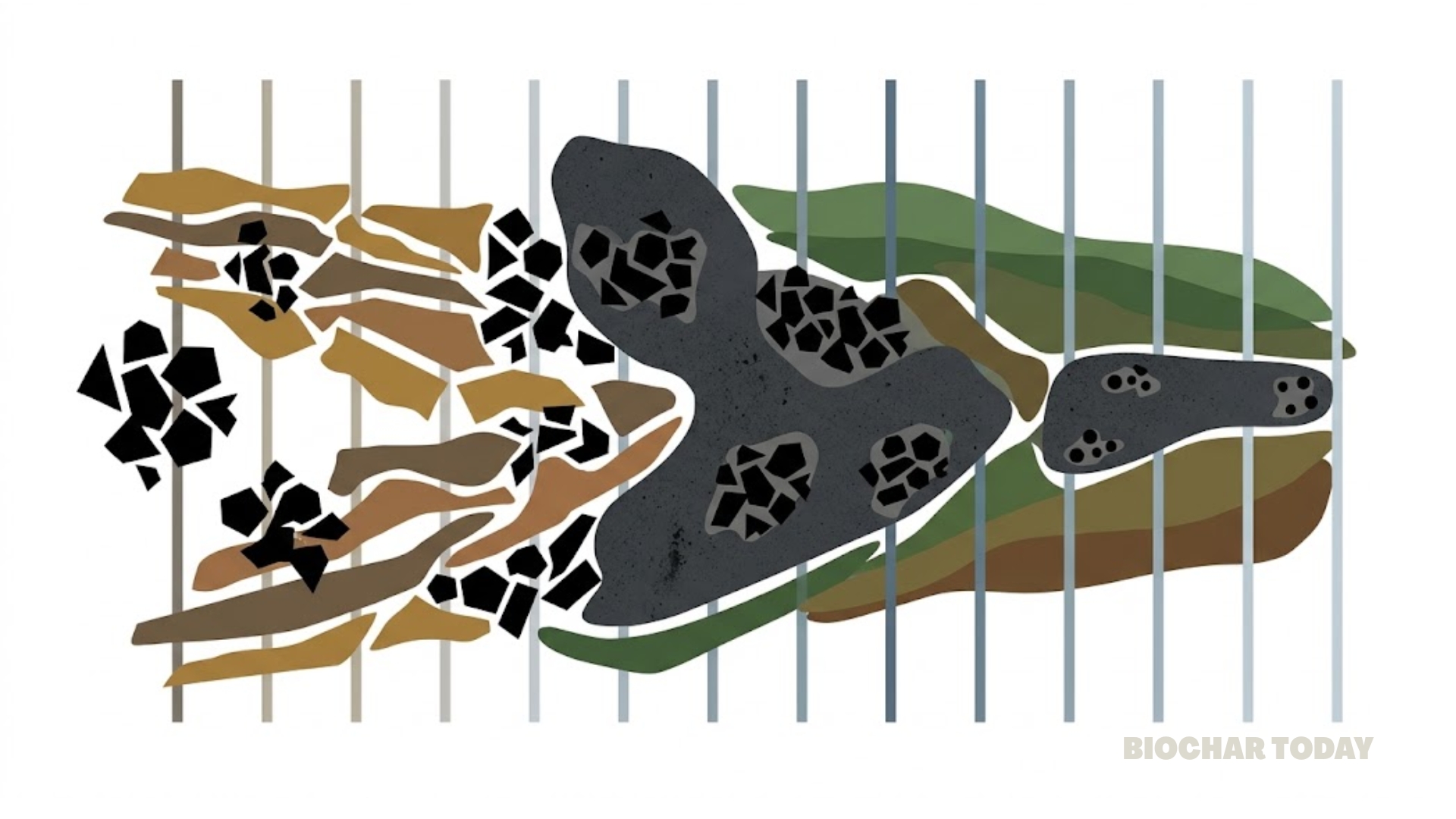
Wakefield BioChar’s solution centers on a “plug-and-play” soil amendmentA soil amendment is any material added to the soil to enhance its physical or chemical properties, improving its suitability for plant growth. Biochar is considered a soil amendment as it can improve soil structure, water retention, nutrient availability, and microbial activity. More designed for high efficacy and ease of use. Their process involves heating organic biomassBiomass is a complex biological organic or non-organic solid product derived from living or recently living organism and available naturally. Various types of wastes such as animal manure, waste paper, sludge and many industrial wastes are also treated as biomass because like natural biomass these More in a low-oxygen environment (pyrolysisPyrolysis is a thermochemical process that converts waste biomass into bio-char, bio-oil, and pyro-gas. It offers significant advantages in waste valorization, turning low-value materials into economically valuable resources. Its versatility allows for tailored products based on operational conditions, presenting itself as a cost-effective and efficient More) to capture carbon that would otherwise be released into the atmosphere. To solve the issue of nutrient competition, Wakefield employs its proprietary Carbon Boost Technology to “pre-load” the porous structure of the biochar with microbes and nutrients before it reaches the consumer. This ensures that the product begins improving soil fertility immediately upon application. The recommended application rate—mixing approximately 10% biochar into existing soil—provides a scalable method for users to enhance soil structure without complex professional intervention.
The outcomes of this initiative include a measurable increase in plant resilience and a significant reduction in the required inputs for landscape maintenance. By using the pre-charged biochar, gardeners report stronger root systems, enhanced moisture retention, and a decreased dependency on synthetic fertilizers. From an environmental perspective, the application results in long-term carbon sequestration, as the stable carbon remains stored in the soil for decades. The collaboration with mainstream media figures like Chip Wade has successfully simplified the technical aspects of soil science, fostering broader market acceptance of carbon-negative solutions within the American retail sector.


Leave a Reply