
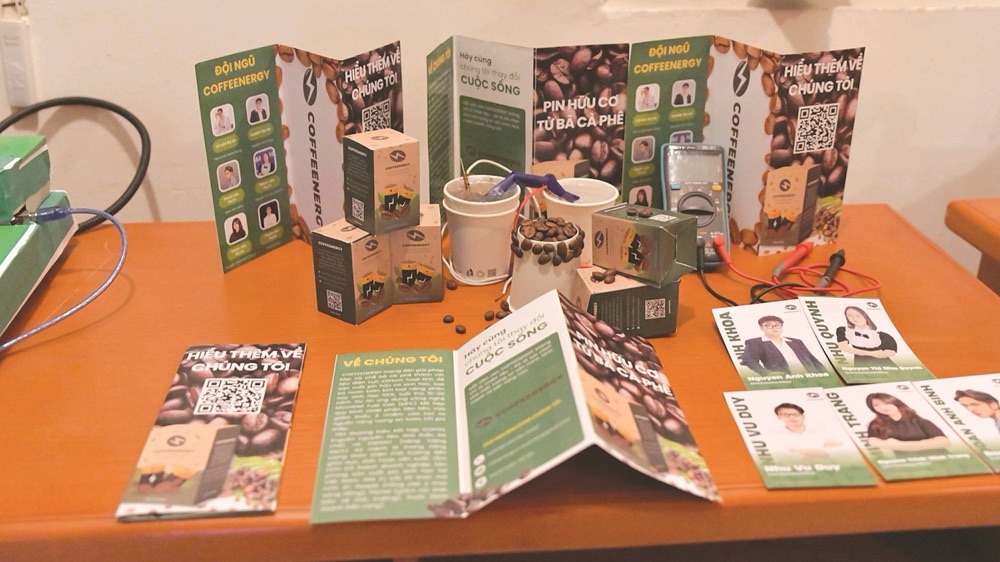
A team of students from VNU International School in Vietnam has won first prize at the Innovative Idea – Startup Istartup 2025 competition for developing a bio-battery made entirely from coffee grounds. This achievement is notable as most team members are pursuing degrees in economics, finance, or business administration, not engineering.
The students recognized the energy potential in coffee waste due to its high content of carbon-rich organic compounds. Their five-phase process involves collecting and processing the grounds, then using pyrolysisPyrolysis is a thermochemical process that converts waste biomass into bio-char, bio-oil, and pyro-gas. It offers significant advantages in waste valorization, turning low-value materials into economically valuable resources. Its versatility allows for tailored products based on operational conditions, presenting itself as a cost-effective and efficient More to create biocharBiochar is a carbon-rich material created from biomass decomposition in low-oxygen conditions. It has important applications in environmental remediation, soil improvement, agriculture, carbon sequestration, energy storage, and sustainable materials, promoting efficiency and reducing waste in various contexts while addressing climate change challenges. More. This material is optimized for conductivity and converted into highly conductive activated carbonActivated carbon is a form of carbon that has been processed to create a vast network of tiny pores, increasing its surface area significantly. This extensive surface area makes activated carbon exceptionally effective at trapping and holding impurities, like a molecular sponge. It is commonly More for use as an electrode material. The battery is based on the principle of a microbial fuel cell (MFC), where microorganisms decompose organic compounds to generate a stable electric current. Under lab conditions, the prototype generates nearly 3 volts, sufficient to power small devices like digital clocks and sensors.
While the non-technical students initially faced challenges with specialized concepts, they overcame them by consulting experts, collaborating closely with mentors, and learning the basics of chemistry and electrochemistry. They noted their economics background provided an advantage in analyzing the project’s feasibility and commercialization strategies.
The team aims to promote a circularity philosophy, viewing coffee grounds not as waste but as a potential energy source for electric vehicles or household appliances. Currently at the laboratory stage, the students plan to pursue further validation with VNU laboratories and move toward meeting international commercial standards, demonstrating a promising new direction for green technology in Vietnam.


Leave a Reply