
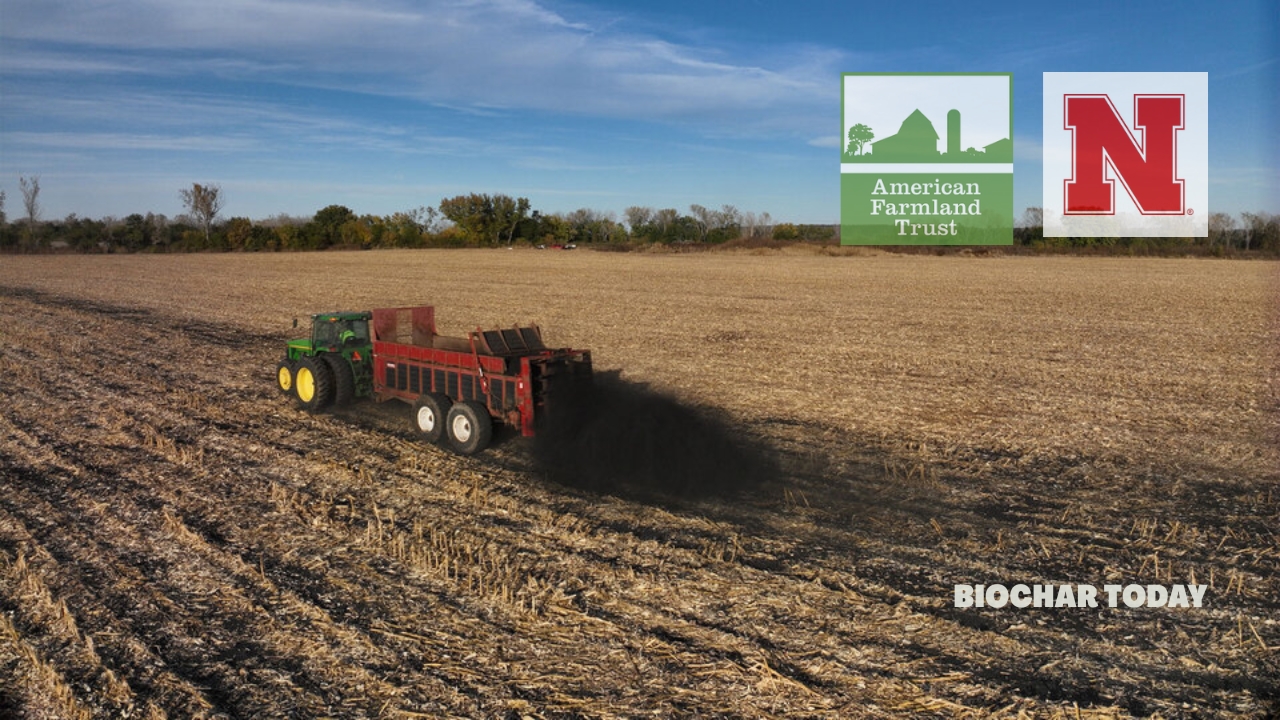
In January 2026, researchers from the University of Nebraska–Lincoln (UNL) partnered with the American Farmland Trust (AFT) and local producers to launch an on-farm biochar research network, currently among the largest of its kind in the United States. This collaborative effort spans four specific sites across Nebraska—Silver Creek, Plattsmouth, Aurora, and Central City—each covering five acres dedicated to large-scale biocharBiochar is a carbon-rich material created from biomass decomposition in low-oxygen conditions. It has important applications in environmental remediation, soil improvement, agriculture, carbon sequestration, energy storage, and sustainable materials, promoting efficiency and reducing waste in various contexts while addressing climate change challenges. More trials. The project aims to bridge the gap between controlled laboratory studies and practical, scalable field applications for row-crop systems.
The primary challenge addressed by this network is the lack of site-specific, scalable field data regarding biochar’s impact on temperate soils. While biochar has demonstrated success in improving soil health and yields in tropical regions, data from temperate regions like the U.S. Midwest have remained limited or inconsistent. Furthermore, farmers currently lack precise guidance on how biochar interacts with varied nitrogen management strategies and different soil types, which is essential for determining the economic viability of the amendment.
To solve these data deficiencies, UNL scientists Guillermo Balboa and Michael Kaiser implemented a replicated design where biochar is applied at an average rate of 8 tons per acre within corn-soybean rotations. The network is testing three distinct nitrogen management strategies at each site, focusing on how biochar application might improve nitrogen-use efficiency and soil water storage. This research is a key component of the broader AFT-led grant, “Breaking Down Barriers to Biochar Adoption on Farms from Coast to Coast,” funded by the USDA Natural Resources Conservation Service.
The expected outcomes of the Nebraska research network include providing farmers with localized benchmarks for reducing nitrogen fertilizer inputs without compromising crop yields. By generating robust data on nutrient retention and soil carbon storage, the project will help develop a “blueprint” for sustainable, fit-for-purpose biochar adoption across the Great Plains. Additionally, the initiative offers practical experience in managing the logistics of large-scale biochar application, which is critical for the growth of a nascent biochar industry in the region.





Leave a Reply