
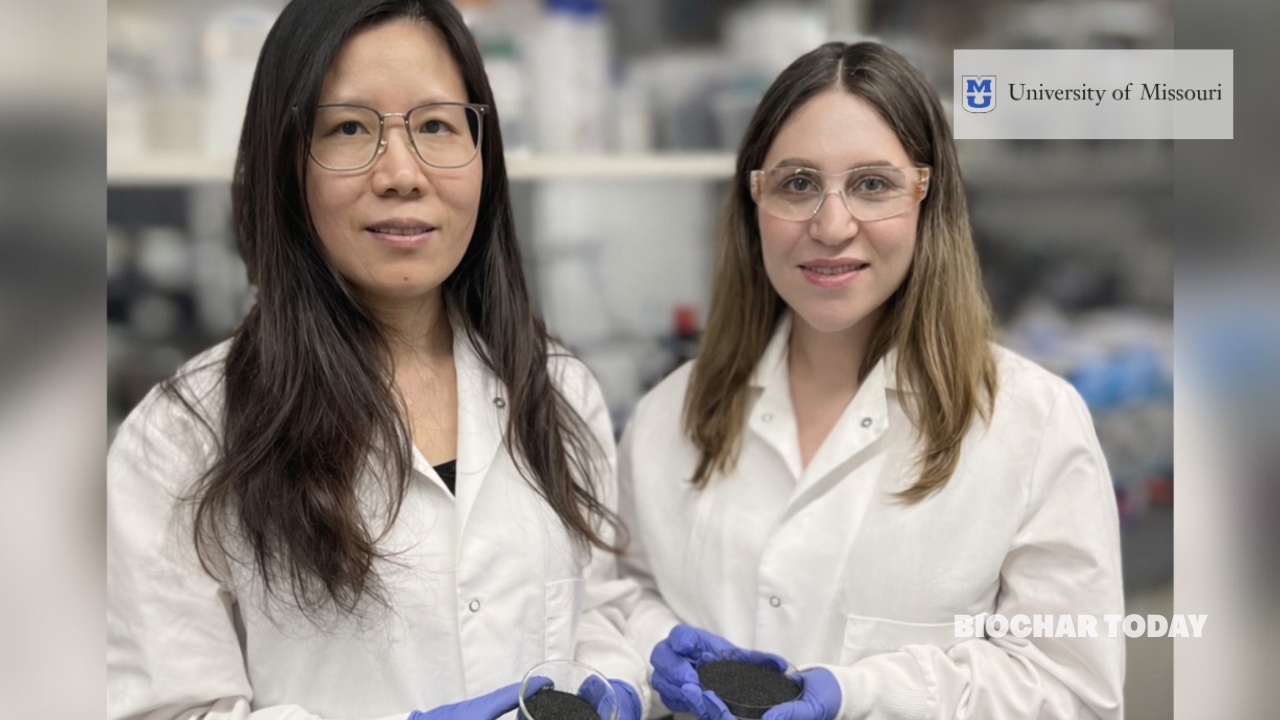
Researchers at the University of Missouri (Mizzou) are leading a new interdisciplinary initiative aimed at strengthening agricultural resilience and economic viability for farmers in the United States. Supported by a $960,000 grant from the U.S. Department of Agriculture’s National Institute of Food and Agriculture (USDA NIFA), the project focuses on developing biochar-based soil amendments to support the transition to organic farming systems. The research is led by Caixia “Ellen” Wan of Mizzou’s Department of Chemical and Biomedical Engineering and includes collaborators from the University of Missouri’s College of Food, Agriculture and Natural Resources, MU Extension, Lincoln University, and the USDA Forest Service Forest Products Laboratory. The project will initially focus on vegetable production systems in Missouri, with the potential to expand to other crops in future phases.
The research addresses several challenges currently facing farmers in the United States. Increasingly frequent extreme weather events—such as heat waves, floods, and prolonged drought—are contributing to soil degradation, nutrient leachingLeaching is the process where nutrients are dissolved and carried away from the soil by water. This can lead to nutrient depletion and environmental pollution. Biochar can help reduce leaching by improving nutrient retention in the soil. More, and declining soil fertility. At the same time, interest in organic production continues to grow, driven by consumer demand and market premiums. However, the transition to certified organic systems can be costly and complex. Farmers must meet strict production standards while often relying on soils that have been managed for conventional agriculture and may not yet support organic productivity. These barriers can make the transition financially risky, particularly for small- and medium-sized farms.
The Mizzou-led project proposes an integrated soil amendmentA soil amendment is any material added to the soil to enhance its physical or chemical properties, improving its suitability for plant growth. Biochar is considered a soil amendment as it can improve soil structure, water retention, nutrient availability, and microbial activity. More strategy centered on biocharBiochar is a carbon-rich material created from biomass decomposition in low-oxygen conditions. It has important applications in environmental remediation, soil improvement, agriculture, carbon sequestration, energy storage, and sustainable materials, promoting efficiency and reducing waste in various contexts while addressing climate change challenges. More combined with compost and beneficial microbial inputs. Researchers will evaluate biochar produced from multiple feedstocks—including tomato vines, wheat straw, sorghum residues, grass hay, and woody biomass—to identify materials that provide the greatest agronomic benefit. Initial greenhouse trials will examine how different biochar types affect soil properties and plant growth. The most promising combinations will then be tested in field trials at the Missouri Agricultural Experiment Station and other research sites. Farmers will participate directly in later stages of the project, helping evaluate performance under practical growing conditions and providing feedback on usability and adoption.
The anticipated outcome is the development of biochar-based soil amendment strategies that improve soil health while supporting profitable organic production. By increasing nutrient retention, improving soil structure, and stimulating microbial activity, the approach aims to enhance vegetable yields and reduce dependence on synthetic fertilizers. The research team also plans outreach activities through MU Extension, including field demonstrations and grower conferences, to disseminate results and support adoption. If successful, the project could provide a scalable pathway for farmers seeking to transition to organic systems while maintaining economic stability in the face of changing environmental conditions.


Leave a Reply