

Key Takeaways
- Scientists created a special type of charcoalCharcoal is a black, brittle, and porous material produced by heating wood or other organic substances in a low-oxygen environment. It is primarily used as a fuel source for cooking and heating. More enhanced with iron, manganese, and magnesium to clean up polluted farm soil.
- This treated charcoal acts like a sponge, locking arsenic away so that plants cannot absorb the poison into their edible parts.
- Rice grown with this new material had significantly less arsenic, making the grain much safer for people to eat.
- The treatment works effectively even when rice fields are flooded, which is when arsenic usually becomes most dangerous.
- Using this low-cost material helps protect food safety and human health in regions struggling with soil pollution.
A recent study published in the journal Toxics by Jingnan Zhang, Meina Liang, Mushi Qiao, Qing Zhang, Xuehong Zhang, and Dunqiu Wang explores a new method to combat arsenic contamination in agricultural systems. Arsenic is a naturally occurring but toxic element that frequently accumulates in rice, posing a severe health risk to millions of people who rely on it as a staple food. The researchers developed a specialized material called iron-manganese-magnesium co-modified biocharBiochar is a carbon-rich material created from biomass decomposition in low-oxygen conditions. It has important applications in environmental remediation, soil improvement, agriculture, carbon sequestration, energy storage, and sustainable materials, promoting efficiency and reducing waste in various contexts while addressing climate change challenges. More to stabilize arsenic in the soil and prevent it from entering the food chain. By testing this material in a rotation system of pakchoi and rice, the team sought a practical solution for farmers in regions where industrial or natural sources have contaminated the land.
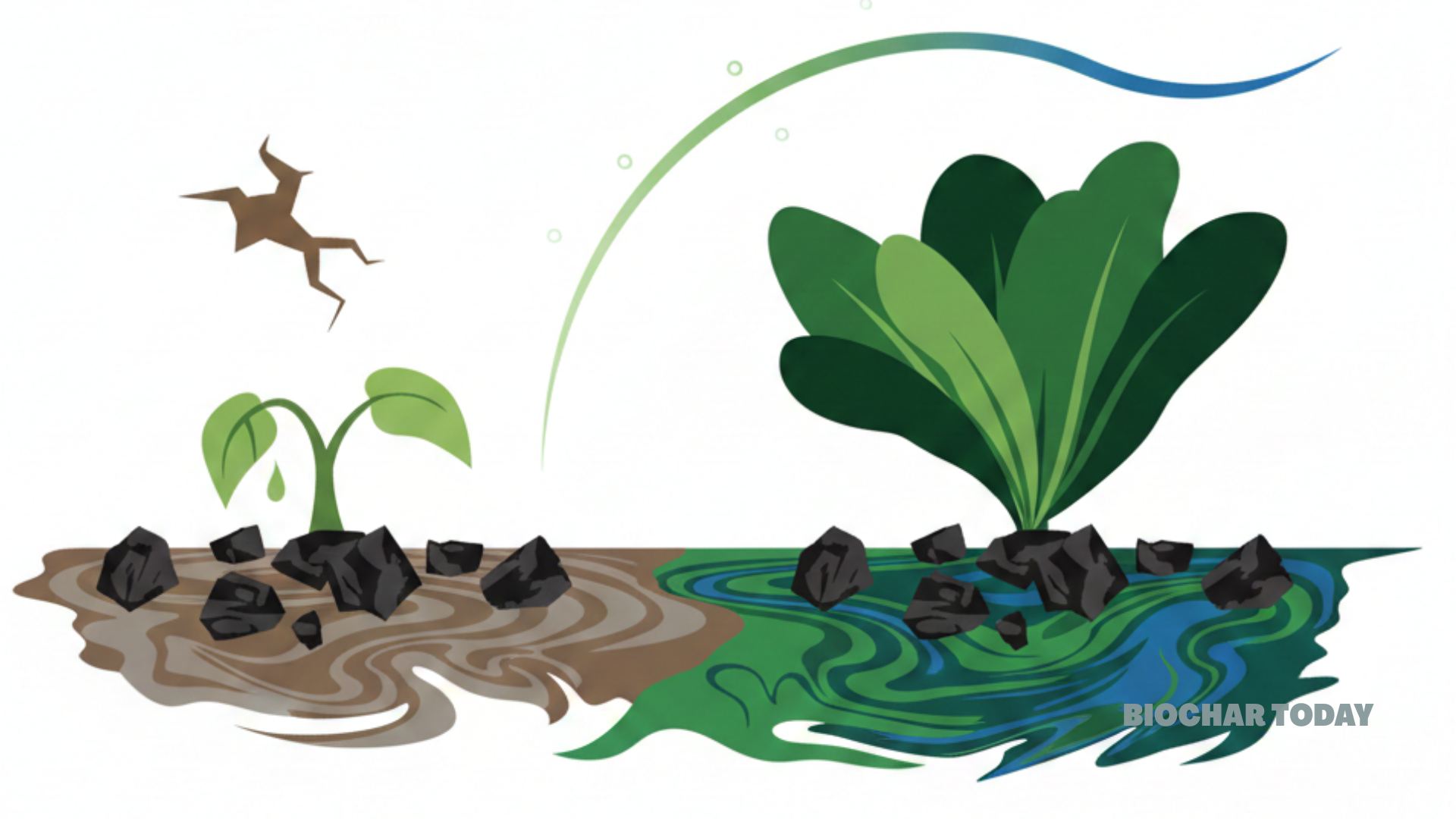
The findings reveal that the modified biochar significantly changes the chemical environment of the soil to make it less hazardous. Unlike standard charcoal, which can sometimes make arsenic more mobile and easier for plants to take up, this triple-metal version provides a variety of chemical anchors that bind the arsenic tightly. In the experiments, the application of this material reduced the amount of arsenic that could dissolve in water or be easily accessed by plant roots. By shifting the arsenic into more stable mineral forms, the researchers ensured that the toxic element remained trapped in the earth rather than moving upward into the crops.
In the first phase of the study involving pakchoi, a leafy green vegetable, the results were immediate and impressive. The arsenic levels in the stems and leaves of the plants dropped by more than half compared to the untreated soil. This suggests that the modified biochar is highly effective under the well-oxygenated conditions typical of vegetable farming. However, the most critical challenge was the rice cultivation phase. Rice is typically grown in flooded fields where the lack of oxygen usually causes arsenic to become more soluble and toxic. The study found that while arsenic levels did rise during flooding, the modified biochar acted as a powerful buffer, keeping the levels much lower than they would have been otherwise.
The quantitative results for the rice harvest are particularly striking for food safety standards. The concentration of arsenic in the brown rice grains fell to 0.27 milligrams per kilogram, representing a massive 81 percent reduction compared to the control group. Crucially, this level is well below the national food safety limit of 0.35 milligrams per kilogram, meaning the grain was transformed from a health hazard into a safe product. The material also limited the transport of arsenic within the plant itself. Even the arsenic that did enter the rice roots was largely prevented from moving up into the stems and finally into the grains.
Beyond just trapping toxins, the modified biochar improved the overall nutrient profile of the plants. It increased the movement of essential minerals like iron and magnesium into the rice, which may have helped the plants better resist the stress of arsenic exposure. The researchers attribute this success to several chemical processes, including the oxidation of the most toxic forms of arsenic into less harmful versions and the formation of stable complexes on the surface of the charcoal. Because the material is made from sugarcane waste and common metal salts, it represents a potentially low-cost and sustainable way to manage polluted farmland.
This research offers a hopeful path forward for restoring contaminated agricultural land and protecting global food supplies. By focusing on the soil-to-plant pathway, the scientists have shown that it is possible to grow safe, healthy food even in challenging environmental conditions. The ability of this modified biochar to function effectively through different crop cycles and changing water levels makes it a versatile tool for modern agriculture. As the world faces increasing pressure to ensure food security, such innovations provide essential layers of protection for public health.
Source: Zhang, J., Liang, M., Qiao, M., Zhang, Q., Zhang, X., & Wang, D. (2026). Iron-Manganese-Magnesium Co-Modified Biochar Reduces Arsenic Mobility and Accumulation in a Pakchoi-Rice Rotation System. Toxics, 14(112).


Leave a Reply