
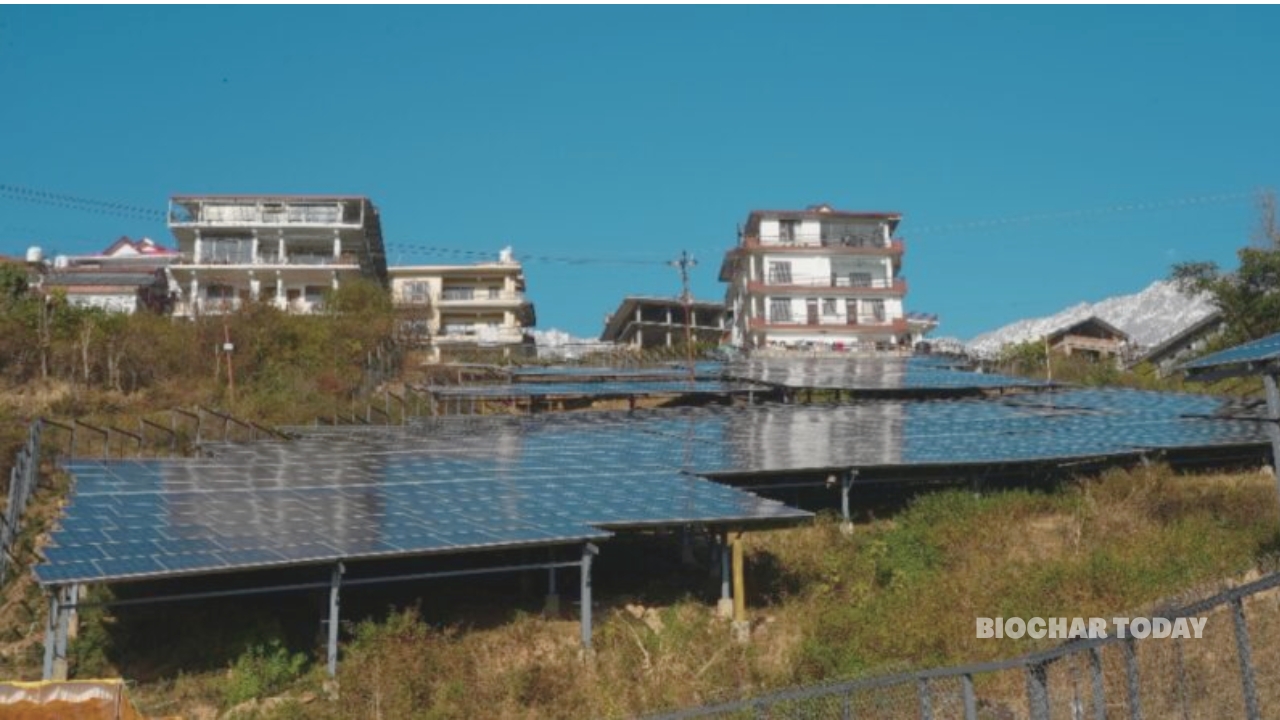
In a significant advancement for the Indian biocharBiochar is a carbon-rich material created from biomass decomposition in low-oxygen conditions. It has important applications in environmental remediation, soil improvement, agriculture, carbon sequestration, energy storage, and sustainable materials, promoting efficiency and reducing waste in various contexts while addressing climate change challenges. More sector, the government of Himachal Pradesh has launched the nation’s first state-supported biochar program. This initiative is formalized through a tripartite Memorandum of Agreement (MoA) between Dr Y S Parmar University of Horticulture and Forestry, the Himachal Pradesh Forest Department, and ProClime Services Private Limited. The program involves the establishment of a specialized production facility at Neri in the Hamirpur district, which is scheduled to be operational within six months. By integrating academic research, governmental oversight, and private capital, the project aims to establish a scalable model for sustainable biomassBiomass is a complex biological organic or non-organic solid product derived from living or recently living organism and available naturally. Various types of wastes such as animal manure, waste paper, sludge and many industrial wastes are also treated as biomass because like natural biomass these More management and carbon sequestration.
The primary challenge addressed by this collaboration is the systemic environmental and economic threat posed by forest fires and invasive botanical species. In Himachal Pradesh, the accumulation of highly flammable pine needles on the forest floor serves as a major catalyst for devastating seasonal fires. Furthermore, the spread of invasive species such as Lantana camara has compromised local biodiversity and reduced the availability of productive land. Historically, these materials have been viewed as hazardous waste with no viable economic utility, leading to high management costs and significant ecological degradation.
The solution implemented by the tripartite partners involves the conversion of these hazardous biomass residues into high-quality biochar using microwave-assisted pyrolysisPyrolysis is a thermochemical process that converts waste biomass into bio-char, bio-oil, and pyro-gas. It offers significant advantages in waste valorization, turning low-value materials into economically valuable resources. Its versatility allows for tailored products based on operational conditions, presenting itself as a cost-effective and efficient More technology. ProClime Services Private Limited has committed an investment of approximately $1 million to fund the phased implementation of the project. The Forest Department will coordinate the collection of pine needles and invasive biomass, while Dr Y S Parmar University will provide land for the facility and conduct research on agricultural applications. This technological approach allows for the rapid processing of high-heating-value refuse into a stable carbon product, effectively diverting flammable materials from the forest floor into a value-added industrial and agricultural resource.
The anticipated outcomes of this program include both ecological restoration and significant socioeconomic benefits for the region. The project is expected to generate approximately 50,000 person-days of annual income for local communities through biomass collection, with participants receiving a base rate of Rs 2.50 per kg. Environmentally, the initiative is projected to generate 28,800 carbon credits over a ten-year operational period, contributing to the state’s net-zero objectives. Additionally, the university will lead skill development programs to train local residents in safe collection practices and the application of biochar for soil health improvement, thereby fostering a decentralized green economy.


Leave a Reply