
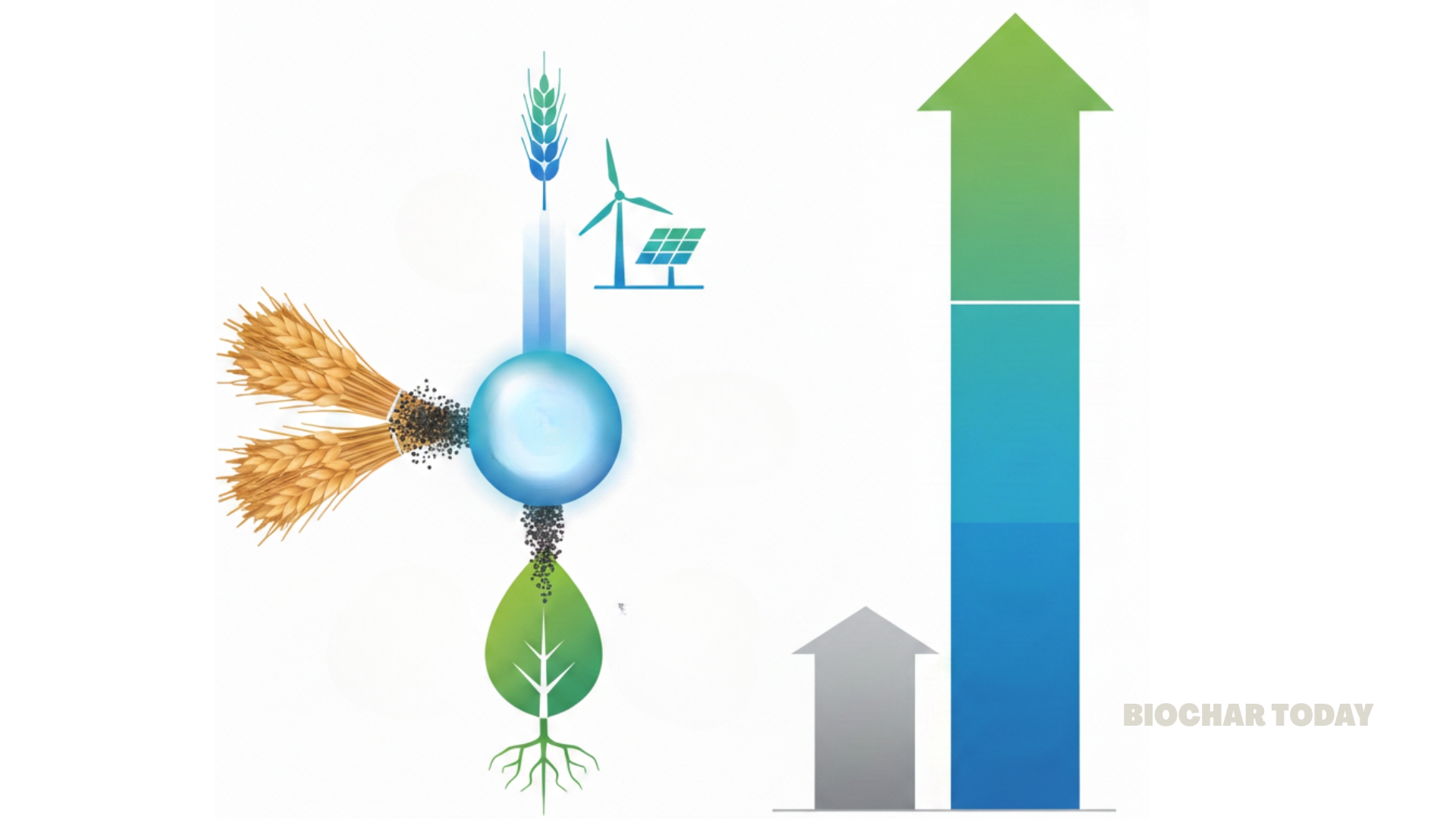
Key Takeaways
- Using leftover agricultural straw to produce biocharBiochar is a carbon-rich material created from biomass decomposition in low-oxygen conditions. It has important applications in environmental remediation, soil improvement, agriculture, carbon sequestration, energy storage, and sustainable materials, promoting efficiency and reducing waste in various contexts while addressing climate change challenges. More can remove up to 2.1 million tons of carbon dioxide from the atmosphere every year.
- A significant portion of this carbon removal can be achieved affordably at costs below the British government’s projected carbon values.
- Most of the potential for this technology is concentrated in the eastern and southern regions of Great Britain where grain farming is most common.
- Converting straw into biochar not only locks away carbon for centuries but also generates bio-oil that can replace fossil fuels in energy production.
- The success of this climate strategy depends heavily on stable straw prices and the efficiency of the technology used to process the material.
Research published in Environmental Science & Technology, authors Yuzhou Tang, Paul Wilson, and Tim T. Cockerill explain that achieving the net-zero goals of the United Kingdom requires more than just cutting current emissions. It demands the active removal of greenhouse gases already present in the atmosphere. One of the most promising tools for this task is biochar, a stable by heating organic matter like straw in a low-oxygen environment. This process, known as pyrolysisPyrolysis is a thermochemical process that converts waste biomass into bio-char, bio-oil, and pyro-gas. It offers significant advantages in waste valorization, turning low-value materials into economically valuable resources. Its versatility allows for tailored products based on operational conditions, presenting itself as a cost-effective and efficient More, effectively traps carbon that would otherwise be released back into the air as the straw rots or is burned for energy. Because Great Britain grows millions of tons of wheat, barley, and oats annually, the country sits on a massive, renewable reservoir of raw material that could be diverted into long-term climate cooling.
The researchers discovered that the geographical layout of Great Britain plays a starring role in how much carbon can be saved and at what price. By analyzing the country region by region, the study showed that the East of England, East Midlands, and South East are the prime locations for this industry. These areas have the highest density of straw, which allows for shorter travel distances between farms and processing sites. This efficiency is vital because transportation is a significant factor in the overall cost and carbon footprint of the system. In these high-density regions, the cost of producing biochar is significantly lower than in the west or north, where thinner feedstockFeedstock refers to the raw organic material used to produce biochar. This can include a wide range of materials, such as wood chips, agricultural residues, and animal manure. More supplies require longer hauls and smaller, less efficient processing plants.
When considering the economic feasibility, the study presents two main paths based on how much straw is available. In a conservative scenario where only straw currently sold for non-agricultural uses is used, the system could remove about 0.8 million tons of carbon dioxide equivalent per year. If the effort is expanded to include all straw sold off-farm, that removal potential jumps to over 2 million tons annually. Remarkably, about 80% of this carbon removal can be delivered at a price point that makes it competitive with other high-tech solutions like capturing carbon directly from the air. In fact, at approximately £75 per ton, biochar is one of the more affordable ways to achieve permanent carbon storage, sitting comfortably alongside nature-based solutions like restoring peatlands or forests.
Beyond the primary goal of sequestering carbon in the soil, the production of biochar offers a secondary environmental win through its byproducts. The pyrolysis process generates bio-oil, a liquid that can serve as a substitute for traditional fossil fuels. The study indicates that this bio-oil could meet up to 1.5% of the UK’s sustainable energy targets for power generation. This double benefit—removing carbon while simultaneously displacing oil and gas—strengthens the case for biochar as a cornerstone of the British green economy. However, the researchers also note that the market for straw is volatile. Because prices for agricultural residues can swing wildly based on the weather and demand for animal bedding, the long-term success of biochar will require careful policy support to manage these market risks.
Ultimately, the research makes it clear that straw-based biochar is a scalable and technologically ready solution for the climate crisis. While it cannot reach the net-zero target alone, its ability to contribute roughly 2% of the national goal provides a vital piece of the puzzle. By strategically placing processing plants in the grain-heavy regions of the east and south, the UK can turn a humble farming byproduct into a sophisticated tool for atmospheric repair. The findings suggest that with the right targeted subsidies and a stable carbon market, the transition from farm waste to climate wealth is not only possible but economically sensible.
Source: Tang, Y., Wilson, P., & Cockerill, T. T. (2026). Marginal Cost of Carbon Sequestration Using Straw-Based Biochar in Great Britain. Environmental Science & Technology, 60(5), 2420-2432.


Leave a Reply