
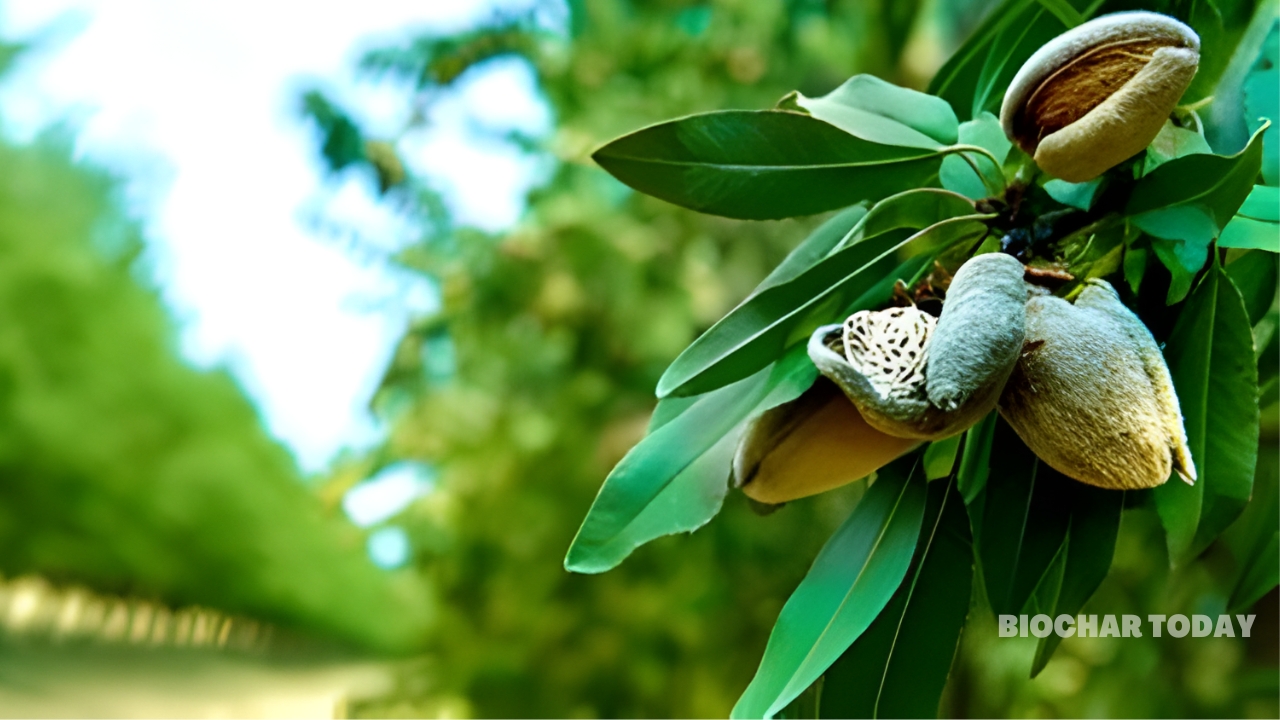
In the United States, specifically within California’s San Joaquin Valley, a significant shift in agricultural waste management is underway following the January 1, 2025, phase-out of open field burning. As orchard operators face the loss of traditional disposal methods for woody biomassBiomass is a complex biological organic or non-organic solid product derived from living or recently living organism and available naturally. Various types of wastes such as animal manure, waste paper, sludge and many industrial wastes are also treated as biomass because like natural biomass these More, new partnerships are emerging to convert agricultural co-products into high-value soil amendments. One prominent collaboration involves The Sitos Group and Treehouse California Almonds, who are developing a $9 million biocharBiochar is a carbon-rich material created from biomass decomposition in low-oxygen conditions. It has important applications in environmental remediation, soil improvement, agriculture, carbon sequestration, energy storage, and sustainable materials, promoting efficiency and reducing waste in various contexts while addressing climate change challenges. More production facility in Tulare County. This project focuses on utilizing almond shells—a historically undervalued material—as a primary feedstockFeedstock refers to the raw organic material used to produce biochar. This can include a wide range of materials, such as wood chips, agricultural residues, and animal manure. More for slow pyrolysisPyrolysis is a thermochemical process that converts waste biomass into bio-char, bio-oil, and pyro-gas. It offers significant advantages in waste valorization, turning low-value materials into economically valuable resources. Its versatility allows for tailored products based on operational conditions, presenting itself as a cost-effective and efficient More, effectively bridging the gap between waste disposal and sustainable carbon sequestration.
The major challenge addressed by this initiative is the critical shortage of disposal infrastructure for woody biomass following the implementation of stringent air quality regulations. Historically, growers relied on cogeneration facilities or open burning to manage the massive volumes of waste generated by orchard removals. However, with the closure of most regional biomass power plants and the finalization of the San Joaquin Valley’s burn ban, growers have been left with few viable alternatives. Chipping and soil incorporation, while used by many, present significant financial burdens, often costing upwards of $1,600 to $2,200 per acre. Furthermore, the persistent accumulation of material piles creates logistical bottlenecks and fire hazards for the region’s nut and grape industries.
To solve this infrastructure deficit, The Sitos Group is implementing a slow pyrolysis system featuring three integrated units designed to process approximately 24,000 tons of almond shells annually. Unlike combustion, this thermal process operates in a low-oxygen environment to prevent feedstock from touching open flames, thereby minimizing traditional emissions. The facility includes a drying system and Organic Rankine Cycle generators to capture waste heat, which is then converted into clean electricity for the local grid. By locating the processing facility directly at the source of the feedstock (the shelling operations), the project also minimizes transportation costs and emissions, creating a localized circular economy for almond co-products.
The outcomes of this project demonstrate a viable path toward market-driven biomass management that does not rely solely on public subsidies. The facility is projected to produce 8,000 tons of biochar annually, with the entire offtake already secured by partners like Monterey Pacific for use in vineyard soil management. Early agronomic data indicates that the application of this biochar improves water retention and crop yields, providing a return on investment for growers within a few years. Beyond soil health, the project serves as a scalable template for other agricultural sectors, proving that high-integrity carbon removal and energy production can coexist while resolving the environmental pressures of agricultural waste.




Leave a Reply