
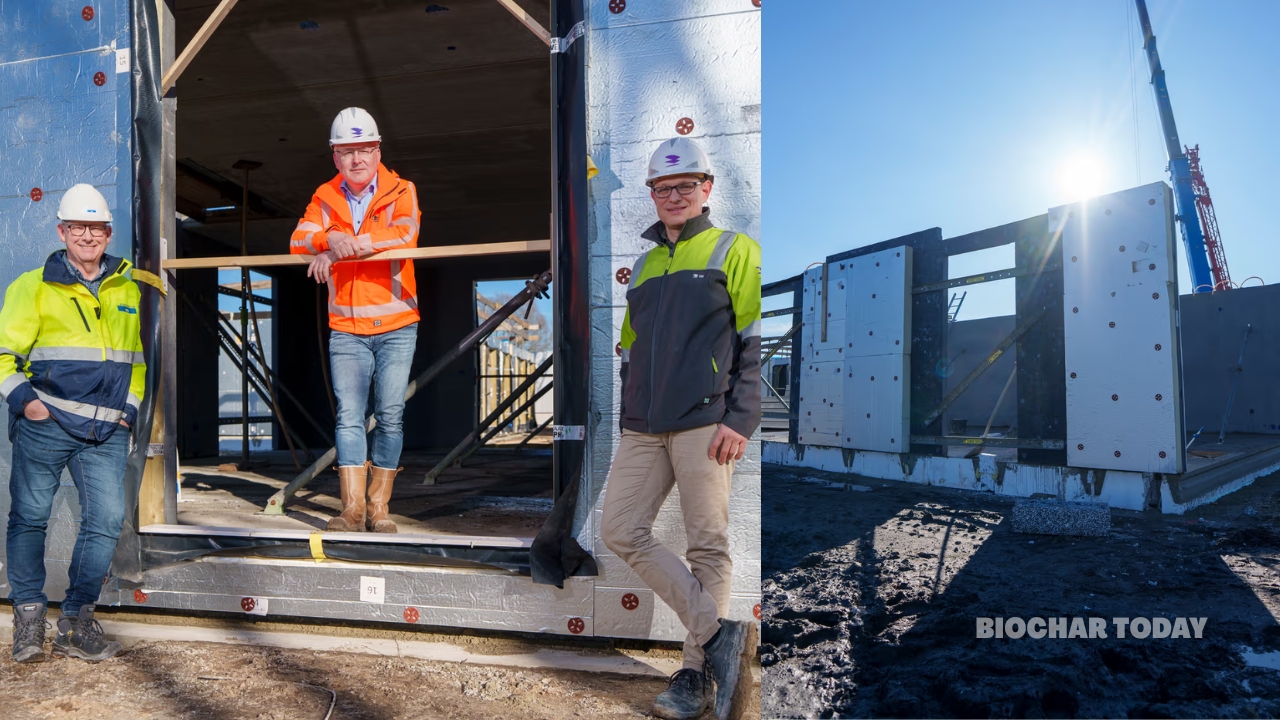
In Roosendaal, Netherlands, a consortium comprising TBI WOONlab, Voorbij Prefab, VBI, and Hazenberg has completed the first real-world application of the NEXT level structural system. This pilot project involves the construction of four homes using a new prefab concrete casco that integrates multiple sustainability innovations. By combining cement substitutes, nearly cement-free hollow-core slabs, and biocharBiochar is a carbon-rich material created from biomass decomposition in low-oxygen conditions. It has important applications in environmental remediation, soil improvement, agriculture, carbon sequestration, energy storage, and sustainable materials, promoting efficiency and reducing waste in various contexts while addressing climate change challenges. More, the partners have demonstrated a method to reduce the material-related carbon dioxide footprint of concrete structures by up to 75 percent. This initiative marks a transition from theoretical sustainability concepts to scalable, industrialized building solutions within the Dutch housing market.
The primary challenge addressed by the NEXT level system is the high embodied carbon inherent in traditional concrete construction, which typically accounts for a significant portion of a building’s environmental impact. Standard hollow-core slabs, for instance, carry a carbon footprint of approximately 37 kilograms per square meter. In the Netherlands, as in much of the international construction sector, the reliance on Ordinary Portland Cement (OPC) remains a dominant source of emissions. Furthermore, the industry faces regulatory hurdles and fragmented approval processes for new materials, which often slow the adoption of low-carbon alternatives at a municipal level.
To solve these issues, the consortium developed an integrated structural concept that utilizes biochar as a functional additive for carbon sequestration. The solution centers on the “impakt concrete” and a re-engineered floor system that significantly minimizes cement content. By incorporating biochar—a stable form of carbon storage—into the concrete mix, the system not only reduces the emissions generated during production but also acts as a permanent carbon sink. This multi-faceted approach allowed the team to lower the carbon footprint of the hollow-core slabs from 37 kilograms to approximately 19 kilograms per square meter without compromising structural integrity.
The outcomes of the Beekhof project in Roosendaal provide a technical and economic blueprint for the broader construction industry. The successful deployment of these four homes proves that significant decarbonization is achievable using existing prefab housing frameworks. Beyond the immediate 75 percent reduction in carbon emissions, the partners aim to standardize this “NEXT level” casco as a baseline for future housing developments. This project serves as a critical evidence base to encourage regulatory bodies to provide more “room for innovation,” potentially streamlining the certification of biochar-enhanced and low-cement building materials across the European Union.


Leave a Reply