
Key Takeaways
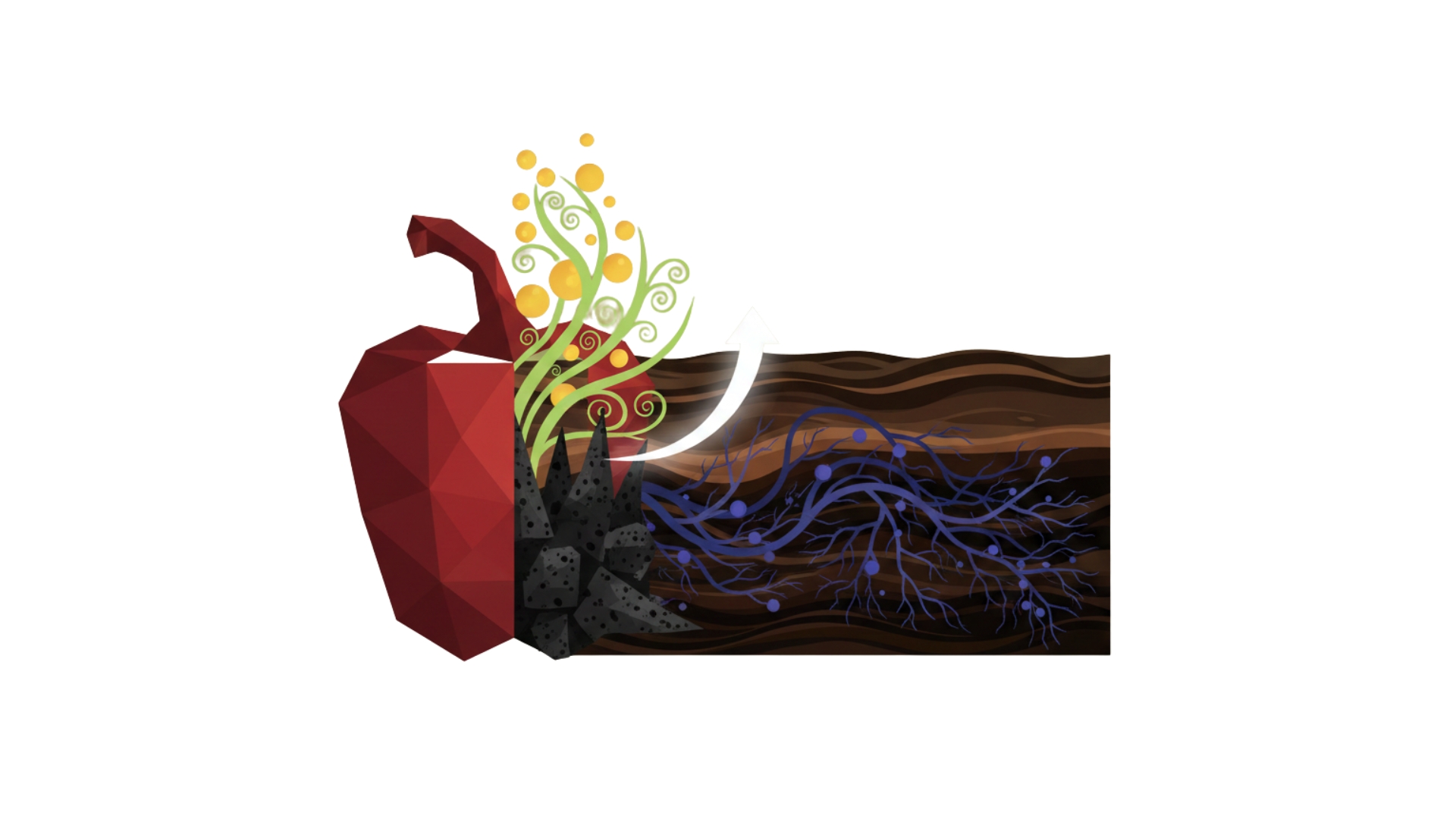
- Converting red pepper stalks into biocharBiochar is a carbon-rich material created from biomass decomposition in low-oxygen conditions. It has important applications in environmental remediation, soil improvement, agriculture, carbon sequestration, energy storage, and sustainable materials, promoting efficiency and reducing waste in various contexts while addressing climate change challenges. More creates a sustainable cycle that returns waste to the soil as a nutrient-rich amendment.
- Applying biochar significantly improves soil health by reducing acidity and lowering soil density, which helps roots grow.
- Crop productivity increases with biochar use, reaching its highest total yield when the largest amount of carbon is applied.
- Lower application rates are actually more efficient for farmers, providing the best “bang for your buck” in yield gained per unit of carbon.
- Biochar acts as a permanent carbon sink, keeping captured carbon in the ground for centuries to help fight climate change.
In a research article published in Agronomy, authors Yeouk Yun, Yungi Cho, Jeong su Lee, Sohye Choi, Seonjoong Kim, Jungil Ju, Jaehan Lee, and Kyosuk Lee investigate how biochar derived from red pepper by-products impacts crop growth and soil carbon sequestration. Red pepper is a vital crop in Korea, yet its stalks are often underutilized or burned in open fields, contributing to environmental pollution. By converting these residues into biochar via a gasificationGasification is a high-temperature, thermochemical process that converts carbon-based materials into a gaseous fuel called syngas and solid by-products. It takes place in an oxygen-deficient environment at temperatures typically above 750°C. Unlike combustion, which fully burns material to produce heat and carbon dioxide (CO2), gasification More system, the study demonstrates a circular resource strategy that addresses waste disposal while simultaneously improving soil quality and storing carbon to mitigate the climate crisis.
The study highlights that the physical transformation of biomassBiomass is a complex biological organic or non-organic solid product derived from living or recently living organism and available naturally. Various types of wastes such as animal manure, waste paper, sludge and many industrial wastes are also treated as biomass because like natural biomass these More into biochar creates a highly stable, carbon-rich material. The produced biochar possessed a high carbon content of 68.7% and a strongly alkaline pHpH is a measure of how acidic or alkaline a substance is. A pH of 7 is neutral, while lower pH values indicate acidity and higher values indicate alkalinity. Biochars are normally alkaline and can influence soil pH, often increasing it, which can be beneficial More of 10.3, making it an ideal tool for neutralizing acidic upland soils. Microscopic analysis showed a well-developed porous network on the biochar’s surface, which increases surface area and improves the soil’s ability to retain water and nutrients. These properties directly enhanced the structural growth of red pepper plants, leading to thicker stems and a higher number of branches, which provided the necessary support for increased fruit production.
Yield results over two years showed that biochar-amended plots consistently outperformed the control. While the highest total yields were found at the maximum application rate of 10.0 Mg C/ha, the study found that yield gains do not increase proportionally with extremely high carbon inputs. Instead, lower application rates proved more agronomically efficient. Furthermore, structural plant traits like stem diameter and fruit width were found to be the strongest predictors of total yield, indicating that biochar primarily boosts productivity by improving the plant’s physical structure and reproductive efficiency.
Environmental sustainability was a core finding, as the biochar acted as a stable and persistent carbon source. Although standard soil analysis methods were found to underestimate total carbon stock by excluding coarse biochar fragments larger than 2 mm, the presence of these intact particles after two years confirms the material’s high physical stability. Low to moderate application rates (2.5 to 5.0 Mg C/ha) showed the highest carbon retention efficiency, with up to 61.6% of the applied carbon remaining sequestered in the soil.
Ultimately, this research provides a scientific basis for precision agriculture by applying biochar based on its carbon content rather than simple gross weight. This approach allows farmers to better balance crop productivity with environmental goals. By recycling agricultural residues into value-added biochar, the study offers a promising path forward for sustainable farming systems that can adapt to changing climatic conditions while actively reducing atmospheric carbon levels.
Source: Yun, Y., Cho, Y., Lee, J. s., Choi, S., Kim, S., Ju, J., Lee, J., & Lee, K. (2026). Impact of carbon-based biochar application on red pepper yield and soil carbon sequestration. Agronomy, 16(1), 84.


Leave a Reply