
Key Takeaways
- BiocharBiochar is a carbon-rich material created from biomass decomposition in low-oxygen conditions. It has important applications in environmental remediation, soil improvement, agriculture, carbon sequestration, energy storage, and sustainable materials, promoting efficiency and reducing waste in various contexts while addressing climate change challenges. More additions to rain gardens significantly help urban areas manage heavy rainfall and reduce the risk of flooding.
- Amending soil with biochar improves the ability of green spaces to filter out harmful pollutants from stormwater runoff.
- Adding biochar to engineered soils helps trap and store carbon dioxide to assist in the fight against climate change.
- A moderate amount of biochar creates the best environment for healthy plant growth by keeping soil moist for longer periods.
- Using biochar in city infrastructure provides a cost effective way to build more resilient and sustainable urban environments.
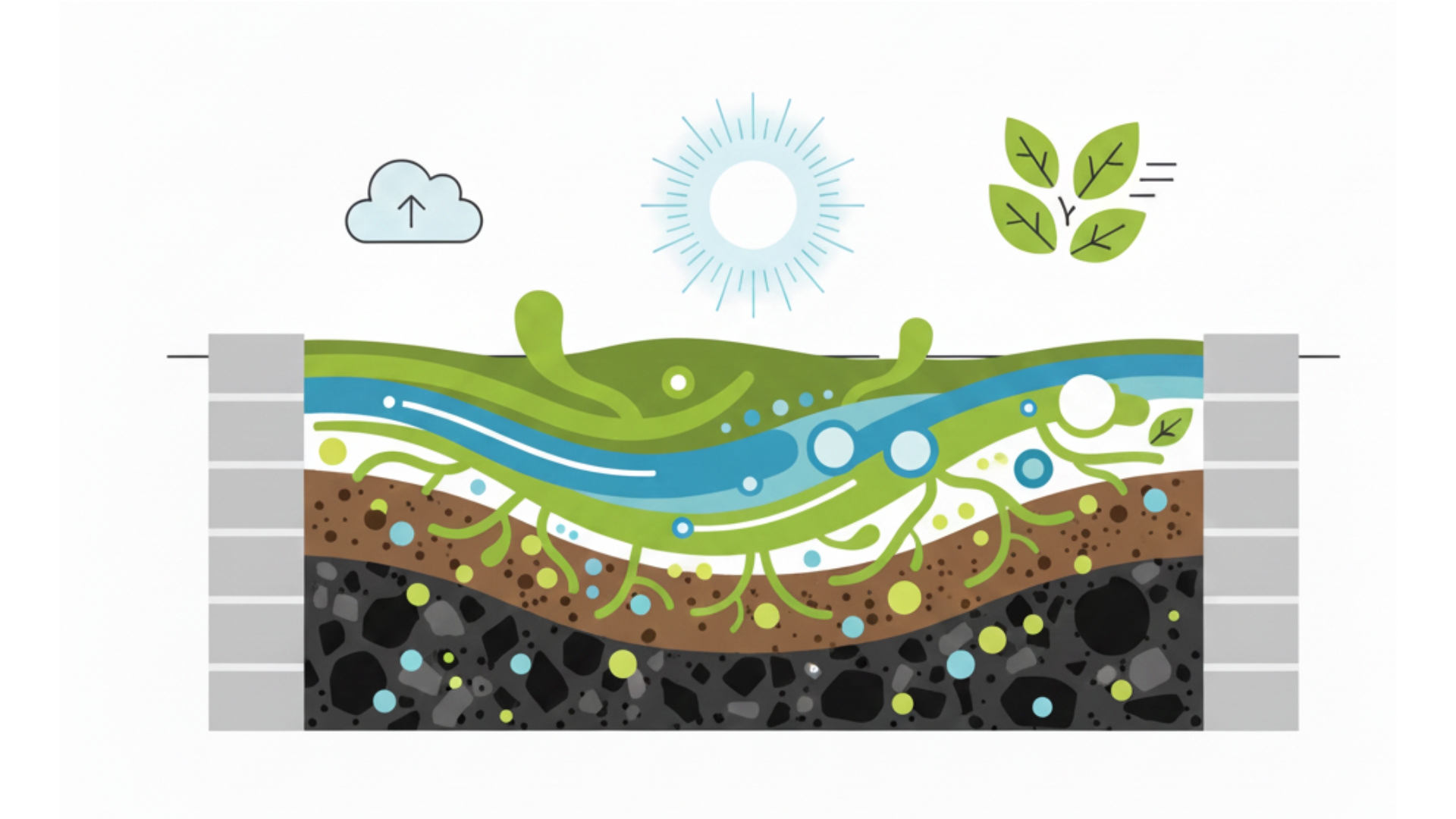
The study published in Science of the Total Environment by Chia-Chun Ho, Yu-Qian Su, and Pen-Chi Chiang explores how biochar-enriched soil can transform the performance of bioretention cells. These systems, often referred to as rain gardens, are essential components of low impact development strategies used to manage urban stormwater. By conducting a comprehensive evaluation across multiple performance indicators, the researchers identified how different concentrations of biochar affect the internal mechanics of these systems. Their work demonstrates that biochar is not just a simple soil additive but a multifunctional material that addresses the growing challenges of urban flooding, water pollution, and greenhouse gas emissions simultaneously.
Biochar produced through the pyrolysisPyrolysis is a thermochemical process that converts waste biomass into bio-char, bio-oil, and pyro-gas. It offers significant advantages in waste valorization, turning low-value materials into economically valuable resources. Its versatility allows for tailored products based on operational conditions, presenting itself as a cost-effective and efficient More of bamboo when integrated into the engineered media of bioretention cells, it significantly alters the physical and chemical properties of the soil. The researchers found that adding biochar increases soil permeability and water retention, which helps cities better manage the intense rainfall events associated with climate change. Specifically, the inclusion of biochar creates a more porous soil structure that allows water to move through the system more efficiently while also holding onto moisture during dry spells, which reduces the need for frequent irrigation and maintenance.
One of the most compelling findings of the study involves the pollutants that biochar helps remove from urban runoff. Nitrogen and phosphorus are common contaminants in city stormwater that can lead to environmental degradation in local waterways. The experimental results show that biochar-amended systems achieve high removal efficiencies for ammonium nitrogen and phosphate. Interestingly, the researchers noted that a moderate addition of biochar, specifically at a five percent volume, optimizes the removal of nitrate nitrogen. This is likely due to the porous microstructure of biochar providing a favorable habitat for beneficial bacteria that break down these pollutants. However, the study also warns that excessive biochar, reaching ten percent or more, can actually hinder the removal of certain pollutants like chemical oxygen demand due to the leachingLeaching is the process where nutrients are dissolved and carried away from the soil by water. This can lead to nutrient depletion and environmental pollution. Biochar can help reduce leaching by improving nutrient retention in the soil. More of organic carbon from the biochar itself.
Beyond water management, the study highlights the significant role biochar plays in carbon sequestration. Traditional urban soils often release carbon dioxide as organic matter decomposes, but biochar acts as a stabilizer. It reduces the rate of soil mineralization and captures atmospheric carbon dioxide through the enhanced growth of vegetation. The researchers measured the net ecosystem exchange and found that systems with five percent biochar exhibited the highest net carbon uptake. Over a one-year period, these systems stored substantially more carbon than traditional soil mixes. This makes biochar-amended bioretention a powerful tool for cities aiming to reach net-zero goals and mitigate the long-term impacts of global warming.
The comprehensive evaluation ultimately points to a five percent biochar amendment as the ideal balance for urban infrastructure. This specific concentration maximizes the benefits of flood mitigation and carbon storage without the negative trade-offs associated with higher application rates. While the research was conducted in a controlled laboratory environment, the findings provide clear practical guidance for engineers and urban planners. By carefully calibrating the amount of biochar used in green infrastructure, cities can create multifunctional landscapes that are not only effective at managing water but also resilient to climate variability and active in capturing carbon.
Source: Ho, C.-C., Su, Y.-Q., & Chiang, P.-C. (2026). Comprehensive evaluation of the hydrology, pollutant removal, and carbon sequestration performance of biochar-enriched bioretention soil. Science of the Total Environment, 1011, 181174.


Leave a Reply