
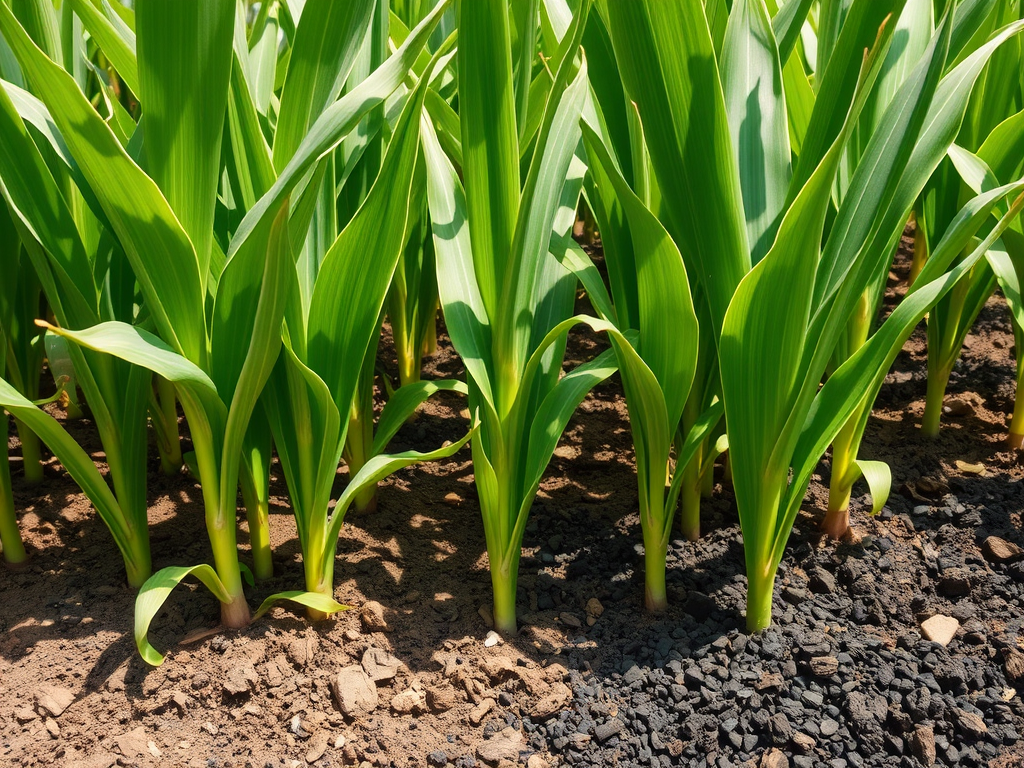
In a recent study published in the journal BiocharBiochar is a carbon-rich material created from biomass decomposition in low-oxygen conditions. It has important applications in environmental remediation, soil improvement, agriculture, carbon sequestration, energy storage, and sustainable materials, promoting efficiency and reducing waste in various contexts while addressing climate change challenges. More, a team of researchers including Qiang Wang, Chenyang Xu, and Zengchao Geng investigated the dual benefits of phosphorus-modified biochar for heavy metal immobilization and soil health. The study, titled “P-modified biochar alters the microbial community in heavy metal-contaminated soils by regulating nutrient supply balance,” explores how this specialized biochar alters the soil environment to reduce the uptake of toxic metals by plants.
The research was conducted on soils collected from a heavy metal-contaminated area near a lead-zinc mine in Shaanxi Province, China. The study focused on a type of biochar created by co-pyrolyzing apple tree branches with K3PO4. This P-modified biochar was compared to pristine biochar, mineral fertilizer, a combination of mineral fertilizer and pristine biochar, and a control group. The researchers found that the P-modified biochar was particularly effective at reducing the presence of heavy metals. Specifically, the treatment reduced bioavailable cadmium (Cd) and lead (Pb) in the soil by 28.21% and 28.64%, respectively.
The most compelling finding of the study was the effect on maize plants grown in the treated soil. The maize grown with P-modified biochar showed a remarkable reduction in heavy metal concentrations in its grains. The concentration of cadmium in maize grains was reduced by 36.52%, while lead concentration saw an even more significant drop of 61.82%. This is a crucial result, as it indicates a direct pathway for reducing human exposure to these toxic elements through the food chain. The study credits this reduction to two primary mechanisms: co-precipitation and cation exchange. The P-modified biochar raises the soil pHpH is a measure of how acidic or alkaline a substance is. A pH of 7 is neutral, while lower pH values indicate acidity and higher values indicate alkalinity. Biochars are normally alkaline and can influence soil pH, often increasing it, which can be beneficial More and adds phosphorus, creating an environment where heavy metals like cadmium and lead precipitate out of the soil solution, making them unavailable for plant uptake.
Beyond its direct effect on heavy metals, the P-modified biochar also had a profound impact on the soil’s microbial communities. The study found that while the pristine biochar increased bacterial diversity and richness, the P-modified biochar had the opposite effect, significantly decreasing both. This was attributed not to the change in heavy metal levels, but to the disruption of the soil’s nutrient balance. The P-modified biochar treatments, which included a mineral fertilizer group, led to a significant increase in available phosphorus, which in turn caused a relative deficit of nitrogen.
The researchers used a partial least squares pathway model (PLS-PM) to identify the key factors driving these changes in the microbial community. They discovered that the primary drivers were changes in soil nutrients, particularly dissolved organic nitrogen (DON) and available phosphorus (AP), not the reduced bioavailability of heavy metals. This finding is supported by the fact that the bioavailability of heavy metals had a negligible effect on keystone microbial taxa, which are crucial for maintaining soil health. These key microbial taxa had to adjust to the nutrient imbalance created by the biochar, playing important, but opposite, roles in the soil’s nitrogen and phosphorus cycles. The study thus concluded that the P-modified biochar alters the microbial community primarily by regulating the balance of nutrient supply.
This research highlights that P-modified biochar not only effectively remediates heavy metal-contaminated soil but also significantly alters the soil’s microbial ecosystem. The study provides new insights into the complex relationship between soil amendments, nutrient cycling, and microbial communities. While the results from this pot experiment are promising, the authors emphasize the need for more field studies to confirm the immobilizing effect of P-modified biochar in complex real-world environmental conditions. This work underscores the potential of P-modified biochar as a powerful tool in soil remediation and food safety.
Source: Wang, Q., Xu, C., Pan, K., Wu, X., Pan, Y., Duan, C., & Geng, Z. (2025). P-modified biochar alters the microbial community in heavy metal-contaminated soils by regulating nutrient supply balance. Biochar, 7(93).




Leave a Reply