
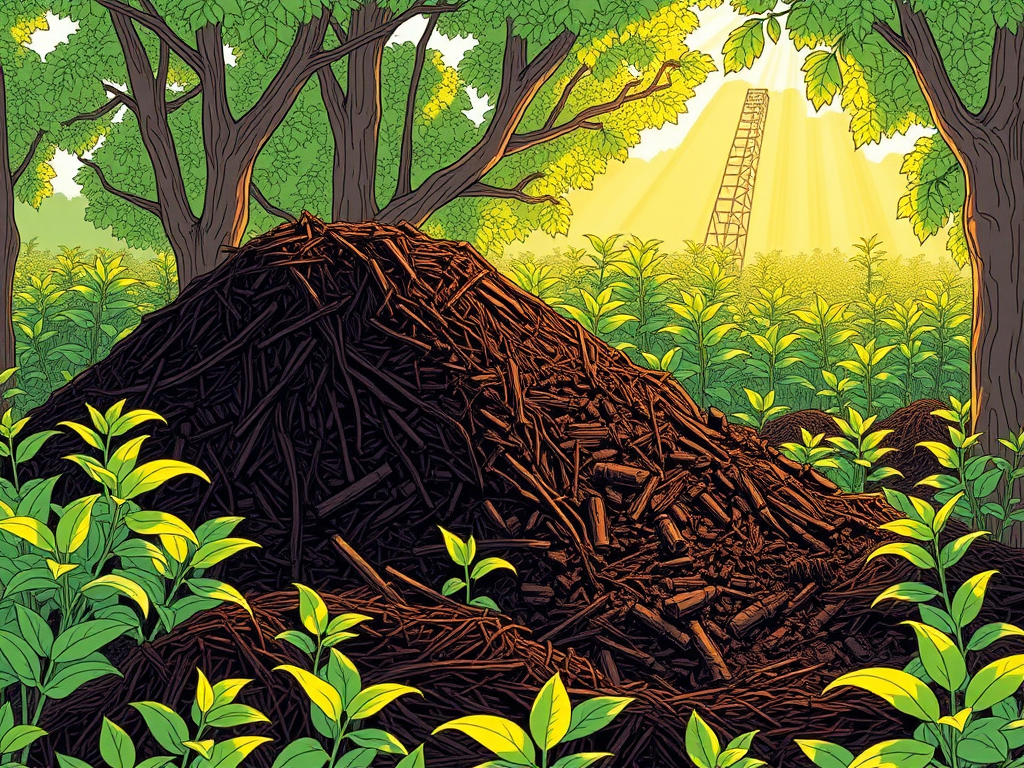
In a recent study published in the Bulletin of the Chemical Society of Ethiopia, researchers Mahmoud G.M. Abd El-Rahim, Sen Dou, Randa A. Althobiti, and Gomaa A.M. Ali investigated how different biocharBiochar is a carbon-rich material created from biomass decomposition in low-oxygen conditions. It has important applications in environmental remediation, soil improvement, agriculture, carbon sequestration, energy storage, and sustainable materials, promoting efficiency and reducing waste in various contexts while addressing climate change challenges. More addition methods impact humic acid formation during chicken manure composting. Their findings suggest that the method of biochar application can significantly influence the quality and stability of the resulting compost, particularly its humic acid components.
Composting is a vital process for converting biodegradable waste into organic fertilizer, and additives like biochar can accelerate these biochemical transformations. Biochar, a carbon-rich material produced from agricultural waste through pyrolysisPyrolysis is a thermochemical process that converts waste biomass into bio-char, bio-oil, and pyro-gas. It offers significant advantages in waste valorization, turning low-value materials into economically valuable resources. Its versatility allows for tailored products based on operational conditions, presenting itself as a cost-effective and efficient More, is known to enhance decomposition by providing nutrients and dissolved organic carbon to microorganisms. However, the effectiveness of biochar in composting depends on various factors, including its raw material, pyrolysis conditionsThe conditions under which pyrolysis takes place, such as temperature, heating rate, and residence time, can significantly affect the properties of the biochar produced. More, and application level. Previous research has indicated that applying more than 20% biochar can hinder organic waste biodegradation.
This study specifically explored two application methods: “split addition” (2.5% biochar added four times during the bio-oxidative phase, labeled as Treatment A) and “total addition” (10% biochar added all at once at the beginning, labeled as Treatment B). A control group received no biochar. The core idea behind the split addition method was to prevent the biochar surfaces from becoming coated and clogged by low-molecular-weight organic materials early in the composting process, which can limit biochar’s interaction with forming humic acids.
The results demonstrated a clear advantage for the split addition method. Humic acids (HA) isolated from Treatment A compost exhibited the highest oxygen/carbon (O/C) molar ratio of 0.52. This value was notably close to the O/C molar ratio of natural soil HA (0.55), indicating a higher degree of oxidation and stability in the humic acids produced. In contrast, the HA from Treatment B (total addition) had a lower O/C molar ratio of 0.51, while the control was 0.50. Furthermore, by the end of the 65-day composting period, the O/C molar ratio in Treatment A’s HA increased by 18.18% compared to its initial values, significantly outperforming the 6.25% increase in Treatment B and 13.63% in the control.
Thermal stability measurements, using TGA and DTA analyses, further supported these findings. The HA from Treatment A showed characteristics more similar to soil HA, particularly in its thermal decomposition patterns. This suggests enhanced interaction between the humic acids and the biochar when applied in split doses. The study also found that the split-dose approach led to a significant reduction in total nitrogen loss, with Treatment A reducing loss by 47% compared to the control, while Treatment B reduced it by 29%. This is a crucial benefit for agricultural applications, as it helps retain valuable nutrients in the compost.
The research highlights that dividing the total amount of biochar into smaller, sequential doses during composting promotes better surface oxidation of the biochar and fosters more effective humification and stabilization processes. This leads to the formation of humic acids with enhanced structural characteristics and stability, making the resulting compost a more potent and beneficial organic fertilizer for sustainable agriculture.
Source: Abd El-Rahim, M. G. M., Dou, S., Althobiti, R. A., & Ali, G. A. M. (2025). Split application of biochar for humic acids structural characteristics enhancement during chicken manure composting. Bull. Chem. Soc. Ethiop., 39(8), 1493–1508.




Leave a Reply