
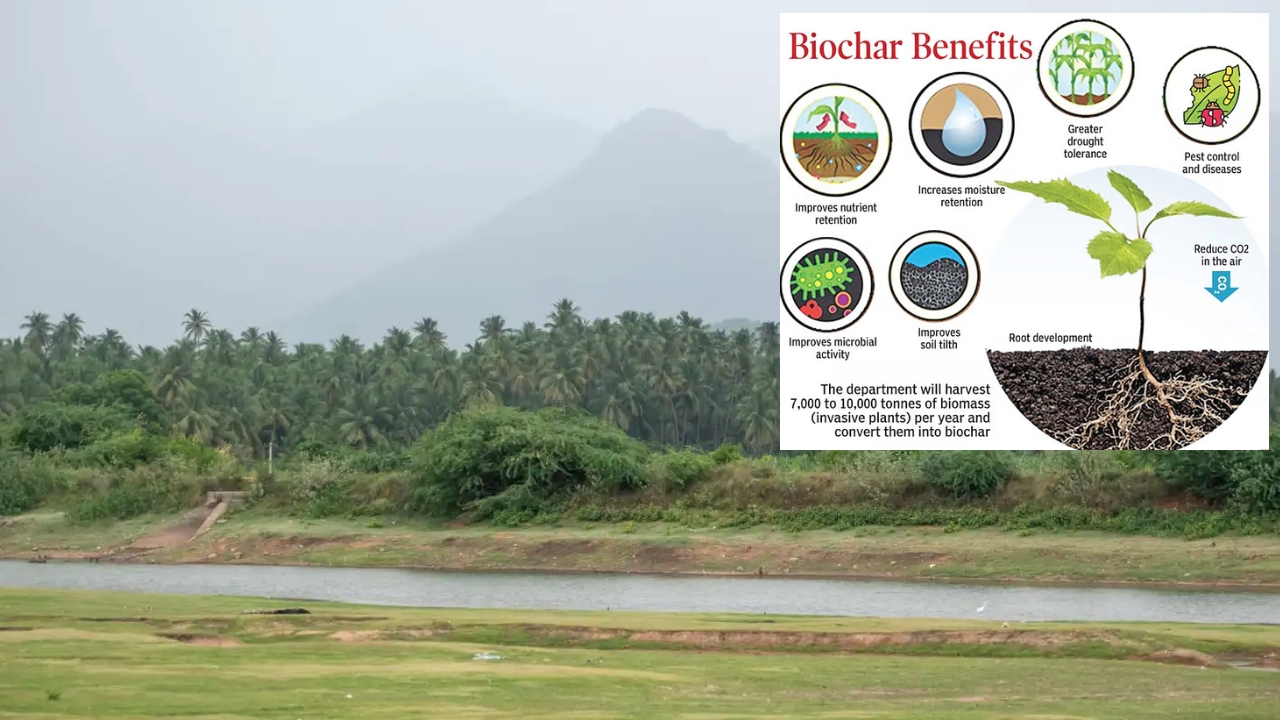
The Tamil Nadu Forest Department, representing a major industrial and ecological hub in South India, has announced the establishment of a specialized biochar manufacturing facility within the Sathyamangalam Tiger Reserve (STR). This initiative is designed to address the proliferation of alien invasive plant species across the ecologically sensitive Western Ghats landscape. By deploying pyrolysisPyrolysis is a thermochemical process that converts waste biomass into bio-char, bio-oil, and pyro-gas. It offers significant advantages in waste valorization, turning low-value materials into economically valuable resources. Its versatility allows for tailored products based on operational conditions, presenting itself as a cost-effective and efficient More technology, the department intends to convert low-value invasive biomassBiomass is a complex biological organic or non-organic solid product derived from living or recently living organism and available naturally. Various types of wastes such as animal manure, waste paper, sludge and many industrial wastes are also treated as biomass because like natural biomass these More into high-value biocharBiochar is a carbon-rich material created from biomass decomposition in low-oxygen conditions. It has important applications in environmental remediation, soil improvement, agriculture, carbon sequestration, energy storage, and sustainable materials, promoting efficiency and reducing waste in various contexts while addressing climate change challenges. More. The project, which involves a budget of ₹8.50 crore, aims to process between 7,000 and 10,000 tonnes of invasive biomass annually, providing a structured approach to land management and carbon sequestration.
The primary challenge addressed by this project is the widespread infestation of invasive species such as Neltuma juliflora, Lantana camara, and Senna spectabilis within the dry deciduous forests and grasslands of the STR. These species outcompete native flora, significantly reducing the availability of fodder for wild herbivores and disrupting vital wildlife corridors. Previous management attempts, such as the “cut, remove, and sell” method for firewood, have proven insufficient due to high re-sprouting rates and limited revenue potential. Furthermore, traditional open burning of this biomass contributes to greenhouse gas emissions and particulate pollution, complicating ecological restoration efforts in these critical biodiversity hotspots.
To resolve these issues, the Forest Department is implementing a pyrolysis-based solution that enables controlled processing and emission management. This technological approach converts the invasive biomass into stable, carbon-rich biochar under low-oxygen conditions. The project will engage local tribal groups and rural communities in the systematic harvesting and processing of these plants, creating a sustainable labor model. By utilizing pyrolysis rather than open burning, the department ensures that the carbon captured by the invasive plants is locked into a stable form that can be used to improve soil fertility or be monetized through the Voluntary Carbon Market (VCM).
The anticipated outcomes of this initiative include the removal of over 70,000 tonnes of invasive biomass over a ten-year period. This reduction in invasive cover is expected to facilitate the recovery of native biodiversity and improve the carrying capacity of the habitat for wildlife. From a climate perspective, the facility is projected to sequester approximately 3,000 tonnes of carbon dioxide equivalent annually. Additionally, the project provides a new revenue stream for the state through the sale of high-value carbon credits and biochar products, while simultaneously supporting the livelihoods of local communities through forest-based employment.



Leave a Reply