
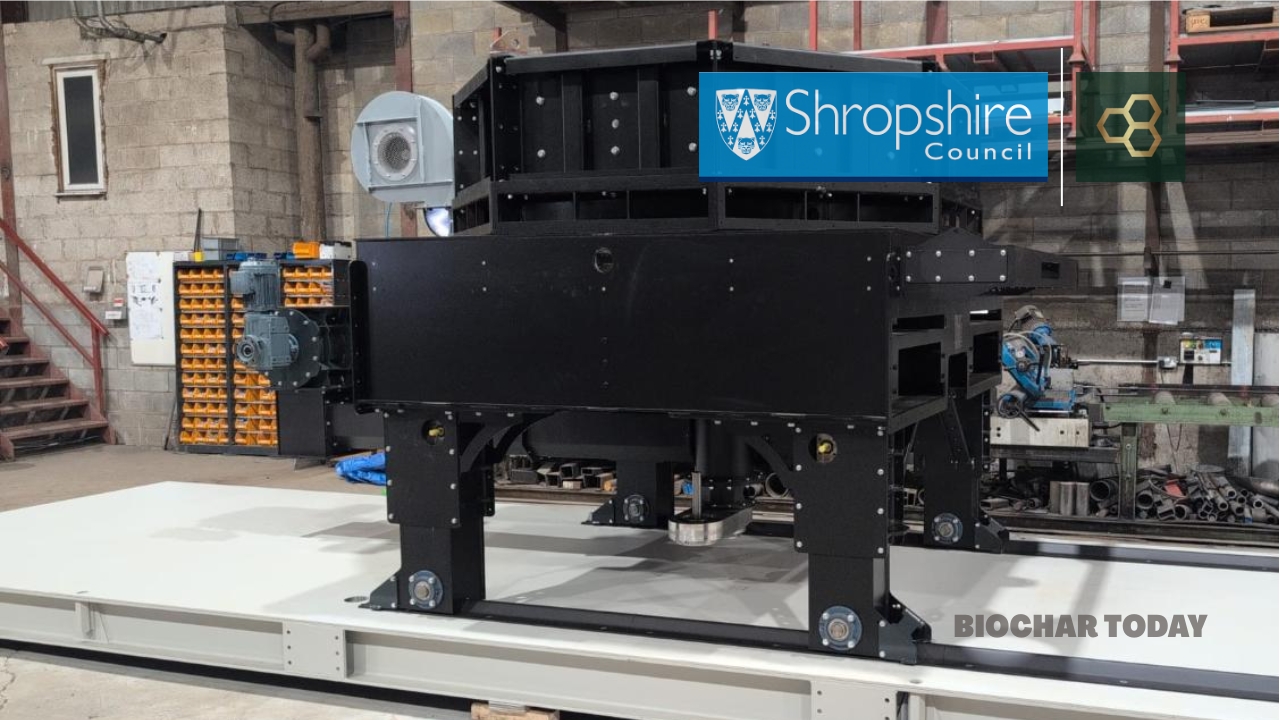
Construction has officially begun on Shropshire Council’s new biocharBiochar is a carbon-rich material created from biomass decomposition in low-oxygen conditions. It has important applications in environmental remediation, soil improvement, agriculture, carbon sequestration, energy storage, and sustainable materials, promoting efficiency and reducing waste in various contexts while addressing climate change challenges. More plant at the Coder Road Business Park in Ludlow, marking a significant milestone for local climate action in the United Kingdom. On January 26, 2026, contractors initiated the first phase of the project, which involves demolishing and removing redundant elements of a former anaerobic digestion plant that had been inactive for several years. This brownfield redevelopment project is being overseen by the council’s joint-venture partner, Biodynamic Carbon Ltd, and follows the success of their initial pilot facility near Welshpool.
The primary challenge addressed by this project is the lack of sustainable disposal routes for local organic waste and the urgent need for local authorities to generate new, reliable revenue streams amidst financial pressures. Prior to this initiative, low-grade wood and plant material were often treated as waste with no onward use case. Furthermore, the council sought an innovative way to meet its net-zero carbon targets while simultaneously protecting essential public services through the sale of high-integrity carbon credits and physical products.
To solve these issues, the project utilizes a £2 million investment (revised to approximately £3.2 million to account for site remediation) to install industrial pyrolysisPyrolysis is a thermochemical process that converts waste biomass into bio-char, bio-oil, and pyro-gas. It offers significant advantages in waste valorization, turning low-value materials into economically valuable resources. Its versatility allows for tailored products based on operational conditions, presenting itself as a cost-effective and efficient More equipment. The new 11-by-15-meter facility will process locally sourced biomassBiomass is a complex biological organic or non-organic solid product derived from living or recently living organism and available naturally. Various types of wastes such as animal manure, waste paper, sludge and many industrial wastes are also treated as biomass because like natural biomass these More, such as timber supply waste and arboricultural arisings from council-managed trees, heating it in an oxygen-free environment. This process will not only produce biochar but also generate a small amount of renewable energy and heat, potentially supporting adjacent businesses.
The outcomes of the Ludlow plant are expected to be substantial, with a projected annual output of 1,000 tonnes of biochar. This volume of production will effectively sequester between 2,000 and 3,000 tonnes of carbon dioxide annually, contributing directly to the region’s green economy. Additionally, the facility is expected to be fully operational later in 2026, creating a self-sustaining income stream through the sale of biochar for use in agriculture, water filtration, and construction materials.


Leave a Reply