


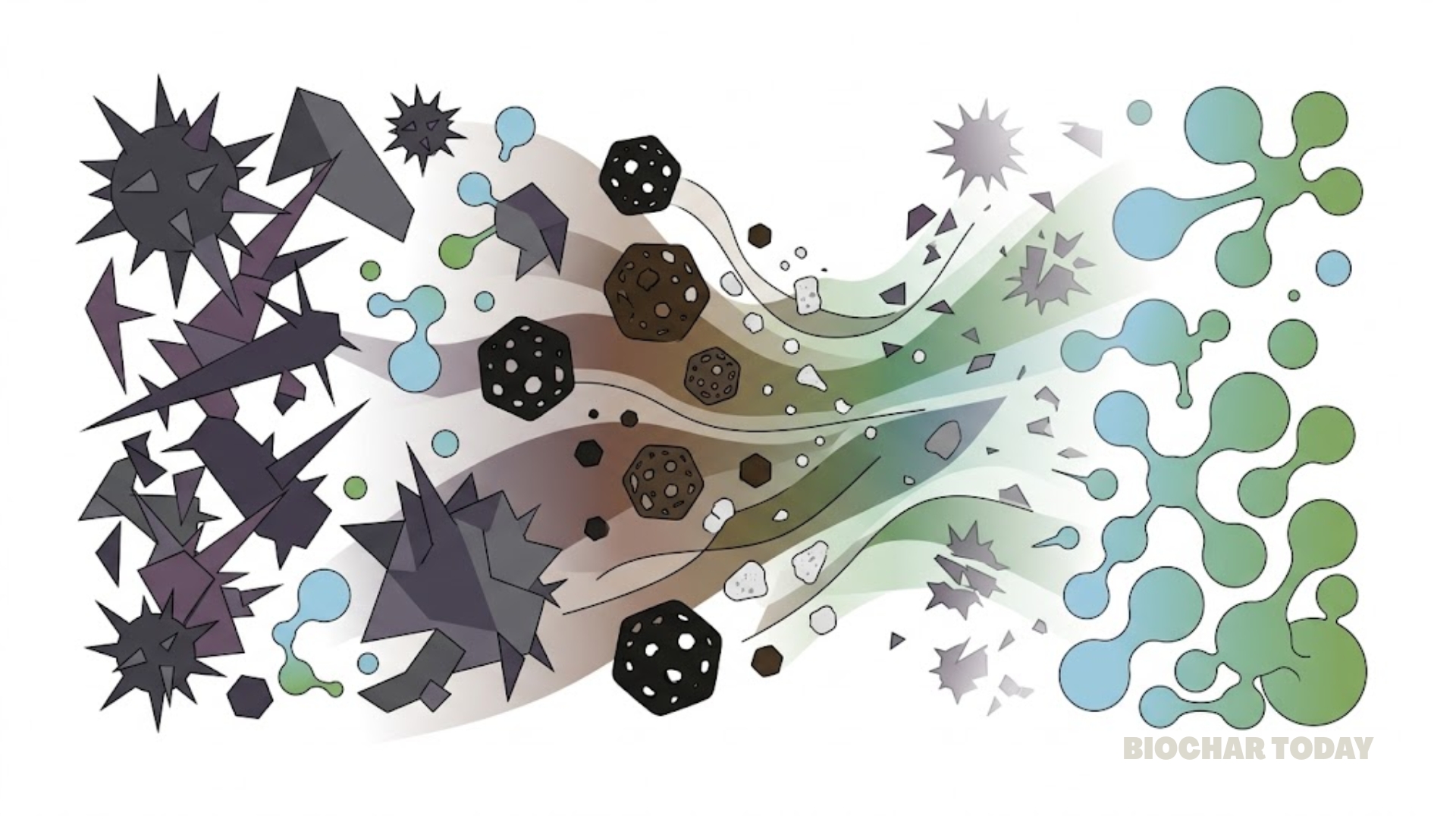
Antibiotic pollution in water is a growing environmental crisis, with conventional wastewater treatments unable to fully remove these persistent pollutants. A promising solution lies in advanced oxidation processes (AOPs), which use reactive molecules to break down pollutants. Among these, persulfate-based AOPs (PS-AOPs) have shown exceptional promise due to their efficiency and adaptability.
A recent review in the Journal of Water Process Engineering highlights the potential of spinel ferrite-modified biocharBiochar is a carbon-rich material created from biomass decomposition in low-oxygen conditions. It has important applications in environmental remediation, soil improvement, agriculture, carbon sequestration, energy storage, and sustainable materials, promoting efficiency and reducing waste in various contexts while addressing climate change challenges. More composites (MFe₂O₄/biochar) for PS-AOPs. These composites combine the catalytic prowess of metal oxides with the adsorptive power of biochar, creating a synergistic “1+1 > 2” effect. The biochar, derived from organic waste, enhances the stability, reusability, and performance of the metal oxides.
The study explores the synthesis, structure, and application of these materials, emphasizing their effectiveness in degrading antibiotic molecules. Key findings include how multi-metallic oxides like MFe₂O₄ improve catalytic activity and magnetic properties for easy recovery. When combined with biochar’s high porosityPorosity of biochar is a key factor in its effectiveness as a soil amendment and its ability to retain water and nutrients. Biochar’s porosity is influenced by feedstock type and pyrolysis temperature, and it plays a crucial role in microbial activity and overall soil health. Biochar More and surface area, these composites achieve superior removal efficiency while minimizing secondary pollution.
Looking ahead, MFe₂O₄/biochar composites could revolutionize wastewater treatment by offering a sustainable and efficient method to combat antibiotic pollution. This review provides a roadmap for researchers to refine these materials, paving the way for cleaner water and a healthier environment.
By harnessing the power of waste-derived biochar and innovative chemistry, we edge closer to solving one of today’s most pressing environmental challenges.



Leave a Reply