
Salehiyoun, et al (2024) Different aspects of biocharBiochar is a carbon-rich material created from biomass decomposition in low-oxygen conditions. It has important applications in environmental remediation, soil improvement, agriculture, carbon sequestration, energy storage, and sustainable materials, promoting efficiency and reducing waste in various contexts while addressing climate change challenges. More addition on semi-dry anaerobic digestion of organic fraction of municipal solid waste in continuous mode. Cleaner Waste Systems. https://doi.org/10.1016/j.clwas.2024.100171
The study explores the use of biochar in semi-dry anaerobic digestion of the organic fraction of municipal solid waste (OFMSW). Conducted in two phases, the research aimed to evaluate how biochar impacts methane production, stability, and reactor recovery from acidification.
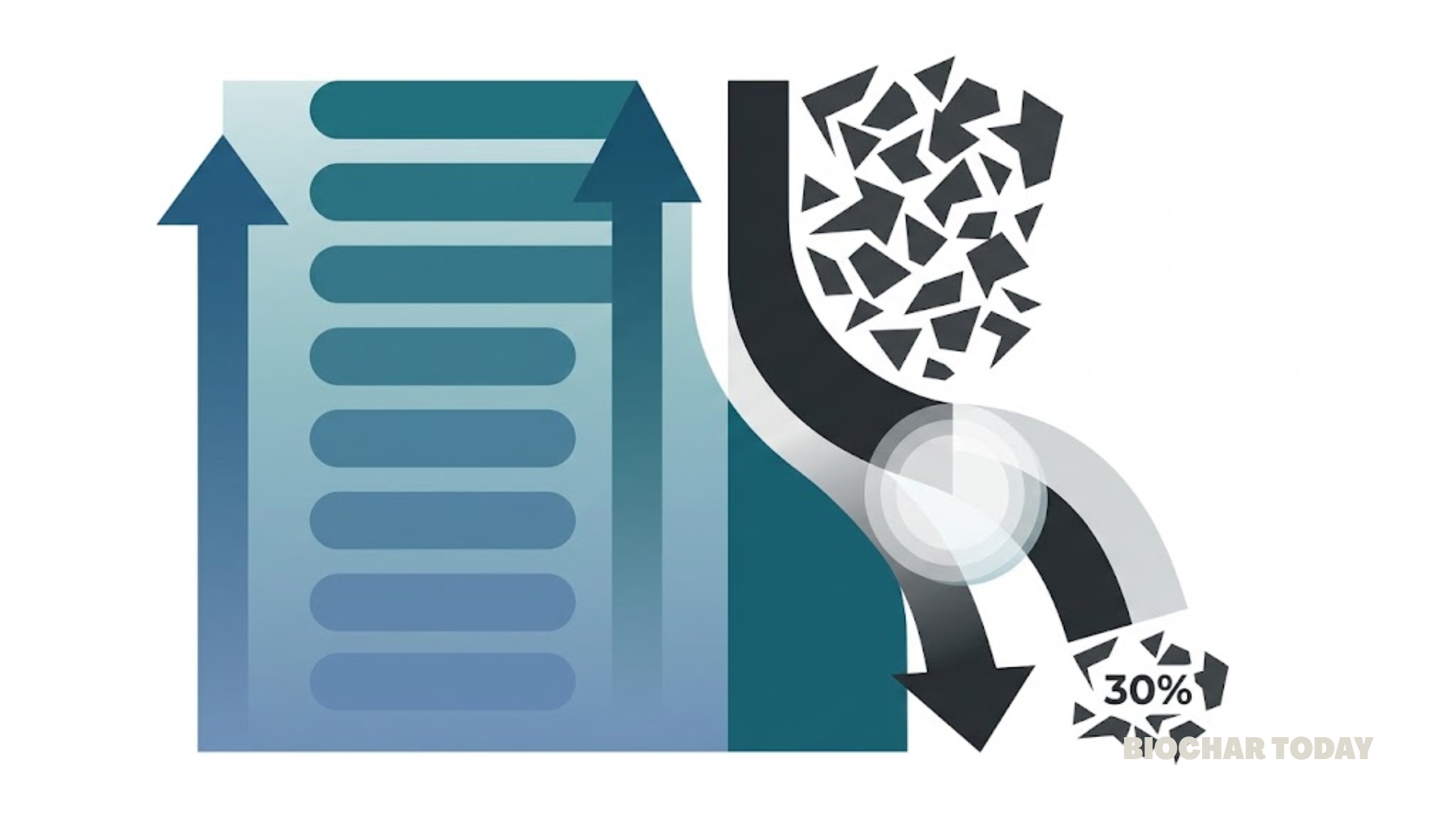
In the first phase, digestion occurred without biochar, progressively increasing the organic loading rate (OLR) until the reactor became acidified. In phase two, biochar (30 g/L) was added, resulting in significant improvements in biogas production and reactor stability. Specifically, biochar raised methane production by 85%, with an OLR of 11 kg VS/m³ per day. Moreover, it helped prevent foaming, a common issue in high OLR conditions.
Biochar’s porous structure facilitates microbial growth and activity, leading to a faster recovery of acidified reactors. However, excessive loading (OLR beyond 14.81 kg VS/m³ per day) caused renewed acidification and foaming, requiring a no-feeding period to restore stability. The study also highlights biochar’s potential to enhance methane production through direct interspecies electron transfer (DIET), which optimizes microbial cooperation.
The findings suggest biochar as a viable additive for enhancing biogas production efficiency in OFMSW digestion, particularly under unstable conditions. However, careful management of OLR and biochar dosage is crucial to prevent operational issues like foaming.



Leave a Reply