
Amjad, M., Hussain, S.M., Ali, S. et al. Agro-Waste BiocharBiochar is a carbon-rich material created from biomass decomposition in low-oxygen conditions. It has important applications in environmental remediation, soil improvement, agriculture, carbon sequestration, energy storage, and sustainable materials, promoting efficiency and reducing waste in various contexts while addressing climate change challenges. More Conversion into a Fish Feed Additive: Assessing its Effects on the Health and Performance of Cyprinus carpio. Waste BiomassBiomass is a complex biological organic or non-organic solid product derived from living or recently living organism and available naturally. Various types of wastes such as animal manure, waste paper, sludge and many industrial wastes are also treated as biomass because like natural biomass these More Valor (2024). https://doi.org/10.1007/s12649-024-02714-x
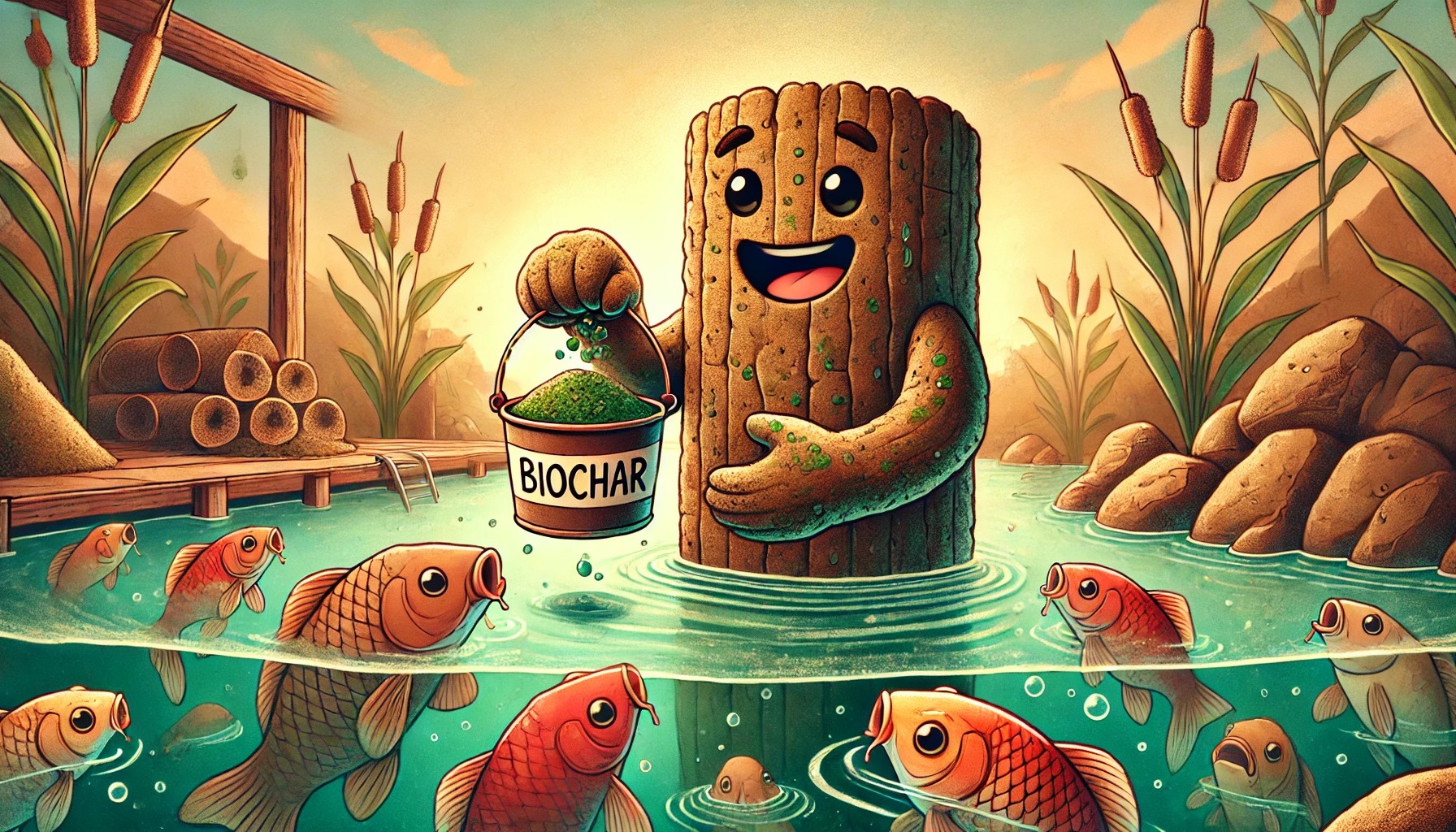
A recent study investigated the use of biochar as a fish feed additive to improve the growth, health, and nutrient absorption of Cyprinus carpio (common carp). Biochar (BC), produced from agricultural waste such as corn cobs, cotton sticks, and household waste, was incorporated into fish feed to assess its effects on fish performance.
The experiment was conducted over 60 days, involving seven different biochar-supplemented diets, each containing 2% biochar derived from various waste materials. The fish fed with corn cob biochar (CCBC) exhibited significantly improved growth, mineral digestibility, and blood health compared to other biochar sources. CCBC supplementation resulted in a 218.53% weight gain and enhanced nutrient absorption, making it the most effective biochar supplement. Conversely, fish fed with biochar from household waste (HWBC) showed poor growth and reduced nutrient digestibility, indicating the importance of selecting an appropriate biochar source.
The study concluded that biochar, particularly from corn cobs, offers a sustainable way to enhance aquaculture productivity by improving fish health and feed efficiency. This approach not only supports the sustainable use of agricultural waste but also promotes the circular economy within aquaculture practices. Future research should explore the mechanisms by which biochar improves nutrient uptake and overall fish health.




Leave a Reply