
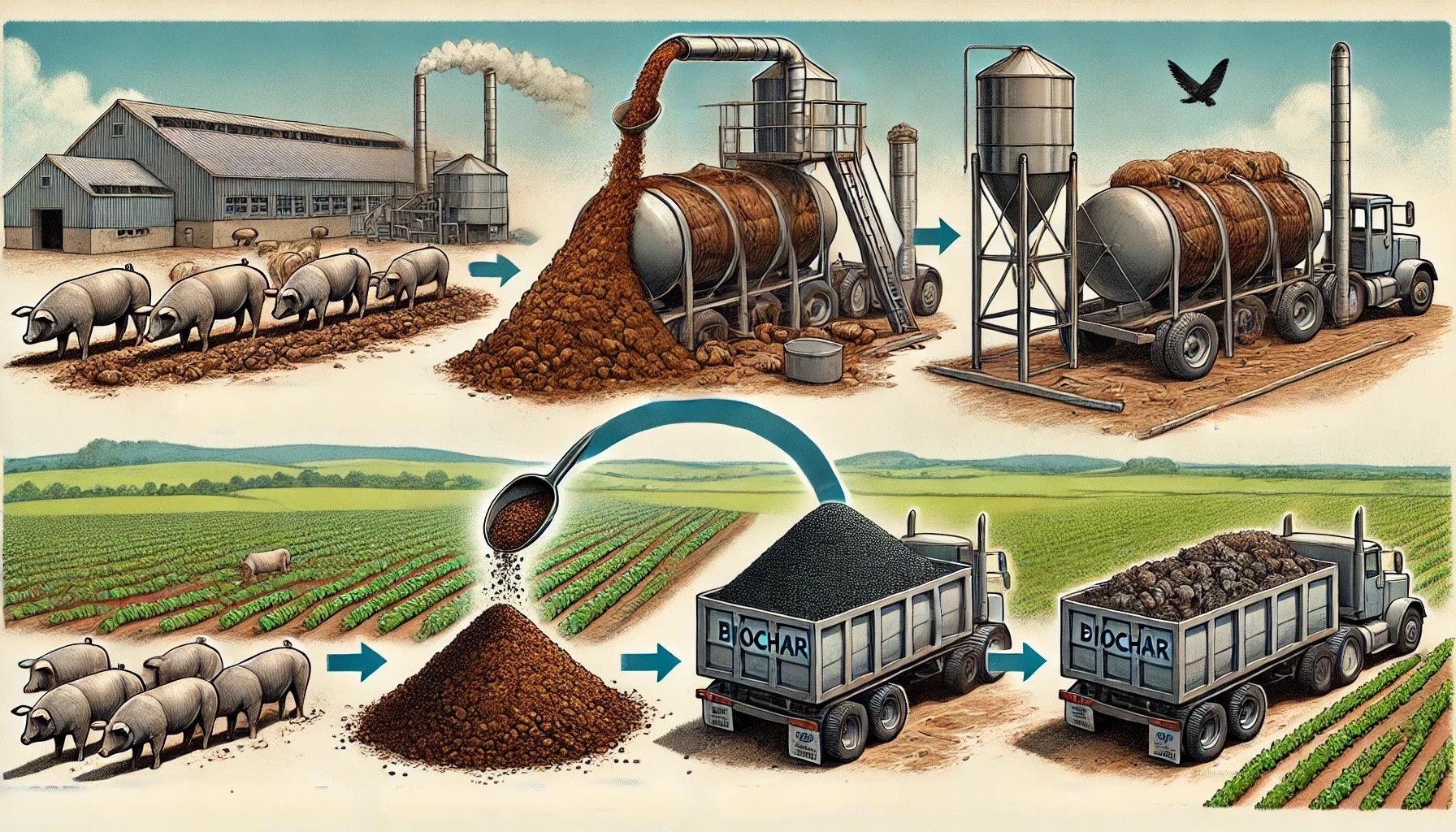
Lee, et al (2024) Stabilization mechanism and long-term stability of endogenous heavy metals in manure-derived biocharBiochar is a carbon-rich material created from biomass decomposition in low-oxygen conditions. It has important applications in environmental remediation, soil improvement, agriculture, carbon sequestration, energy storage, and sustainable materials, promoting efficiency and reducing waste in various contexts while addressing climate change challenges. More. Science of The Total Environment. https://doi.org/10.1016/j.scitotenv.2024.174801
A recent study published in Science of The Total Environment explored how pyrolysisPyrolysis is a thermochemical process that converts waste biomass into bio-char, bio-oil, and pyro-gas. It offers significant advantages in waste valorization, turning low-value materials into economically valuable resources. Its versatility allows for tailored products based on operational conditions, presenting itself as a cost-effective and efficient More can stabilize heavy metals found in livestock manure and examined the long-term stability of these metals in biochar. The research focused on swine manure, noting that heavy metals such as copper and zinc, commonly present due to feed additives, pose environmental risks when manure is used as fertilizer.
Pyrolysis, a process of decomposing organic material at high temperatures in the absence of oxygen, was shown to effectively stabilize these metals. As pyrolysis temperature increased from 300°C to 700°C, the ecological risk index of the heavy metals decreased significantly, with the most stable biochar formed at 600°C. This temperature facilitated the transformation of heavy metals into less harmful forms, such as metal-organic complexes and metal-phosphates, thereby reducing their potential ecological impact.
Long-term stability was further tested through 40 cycles of wet-dry aging. Results demonstrated that the leachability of heavy metals from the biochar remained low, even after extended exposure to environmental conditions. This suggests that the stabilized heavy metals in biochar are unlikely to pose a risk when used as agricultural fertilizer.
The study concluded that manure-derived biochar, processed through pyrolysis, could serve as a viable and environmentally safe fertilizer option. This not only provides a method to manage livestock manure effectively but also offers a sustainable way to reduce the environmental footprint of agricultural practices.


Leave a Reply